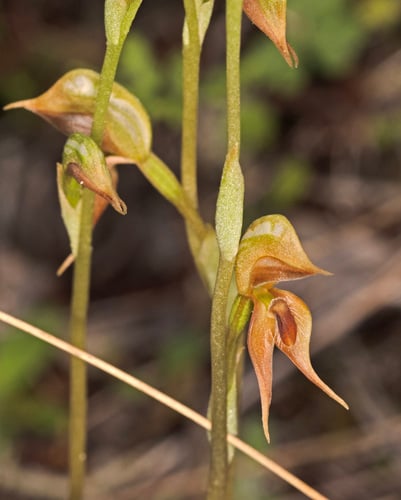
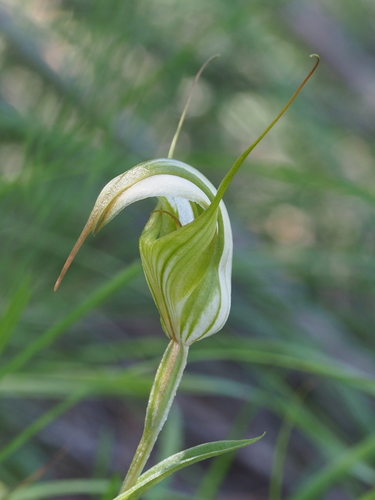
Gymnadenia conopsea
(L.) R.Br.
Fragrant orchid
iNaturalist· cc-by-nc
(c) Vladimir Bryukhov, some rights reserved (CC BY-NC), uploaded by Vladimir Bryukhov
iNaturalist· cc-by-nc
(c) ralph graeser, some rights reserved (CC BY-NC)
Summary
Source: WikipediaGymnadenia conopsea, commonly known as the fragrant orchid or chalk fragrant orchid, is a herbaceous plant of the family Orchidaceae native to northern Europe.
Description
An orchid. It grows 20-60 cm tall. The tubers are oval and 1-4 cm long. They have several short slender lobes. The stem is stout and has 2 or 3 tube shaped sheaths at the base. There are 3-5 leaves on the stalk. The leaves can be widely spaced or clustered. They are 6-20 cm long by 1-2 cm wide. The flowering stalk is 11-26 cm long. It has many flowers densely arranged. The flowers have a scent. They are pink.
Edible Uses
The bulb is cooked and is very nutritious. It is the source of salep, a fine white to yellowish-white powder made by drying and grinding the tuber into flour. Salep is a starch-like substance with a sweetish taste and a faint, somewhat unpleasant smell. It can be made into a drink or added to cereals and used in bread-making. One ounce of salep is said to be enough to sustain a person for a day.
Traditional Uses
The bulb is used in porridge and bread.
This uses section is brief — help expand it
Medicinal Uses
Salep is highly nutritive and demulcent. It has been used as a diet of special value for children and convalescents, prepared by boiling with water and flavouring in the same way as arrowroot. Rich in mucilage, it forms a soothing jelly used to treat irritations of the gastro-intestinal canal. One part salep to fifty parts water is sufficient to make this jelly. The tuber should be harvested as the plant dies down after flowering and setting seed.
Distribution
It is a temperate plant. It grows in grasslands and water-logged meadows between It grows in Sichuan and Yunnan.
Where It Grows
Asia, China, Balkans, Bosnia, Britain, Europe, Japan, Korea, Luxembourg, Mongolia, Russia, Slovenia, Tibet, Turkey, Türkiye,
Propagation
Seed should be surface-sown, preferably as soon as ripe, in a greenhouse, keeping the compost consistently moist. The seed is extremely simple, consisting of a minute embryo surrounded by a single layer of cells with very little food reserve. It depends on a symbiotic relationship with a soil-dwelling fungus whose hyphae invade the seed and are digested by the embryo as a food source. Using soil from around established plants when sowing helps introduce the necessary fungus. Seedlings can be grown on until large enough to move. Division in autumn is possible, though the plant is very intolerant of root disturbance and a large ball of soil should be kept around the plant. Tubers can also be divided as the flowers fade — this species produces a new tuber toward the end of the growing season, and removing it as flowering fades can stimulate further tuber development. The removed tuber should be kept dormant while the remaining plant is encouraged to continue growing to produce new tubers. Division can also be done when the plant has a fully developed rosette of leaves but before flowering: the entire new growth is removed from the old tuber, retaining one or two roots on the old tuber, and potted up. This can often be done without digging up the plant. The old tuber should produce one or two new growths, while the new rosette should continue to grow and flower normally.
Other Uses
None known
Notes
There are about 7 Gymnadenia species.
Synonyms
Also Known As
Basak salebi, Navadni kukovičnik, Salep, Vranjak
References (5)
- W. T. Aiton, Hort. kew. ed. 2, 5:191. 1813
- Cerne, M., 1992, Wild Plants from Slovenia used as Vegetables. Acta Horticulturae 318.
- Ertug, F, Yenen Bitkiler. Resimli Türkiye Florası -I- Flora of Turkey - Ethnobotany supplement
- Plants for a Future database, The Field, Penpol, Lostwithiel, Cornwall, PL22 0NG, UK. http://www.scs.leeds.ac.uk/pfaf/
- Redzic, S. J., 2006, Wild Edible Plants and their Traditional Use in the Human Nutrition in Bosnia-Herzegovina. Ecology of Food and Nutrition, 45:189-232