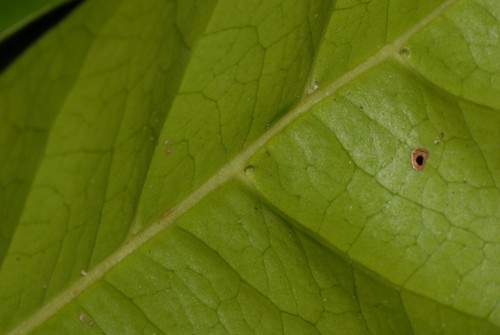
Vangueria madagascariensis
J. F. Gmel.
Spanish tamarind, Smooth wild-medlar
iNaturalist· cc-by-nc
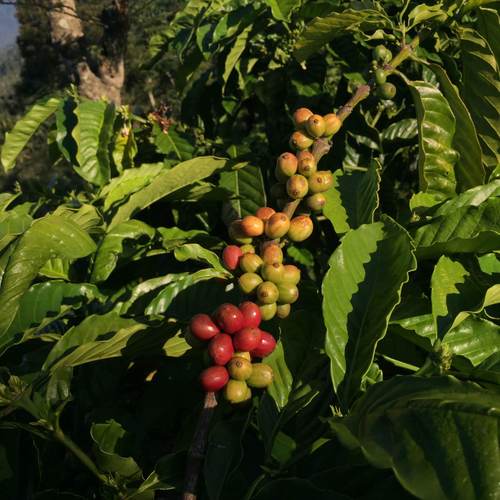
(c) Kate Braun, some rights reserved (CC BY-NC), uploaded by Kate Braun
iNaturalist· cc-by-nc
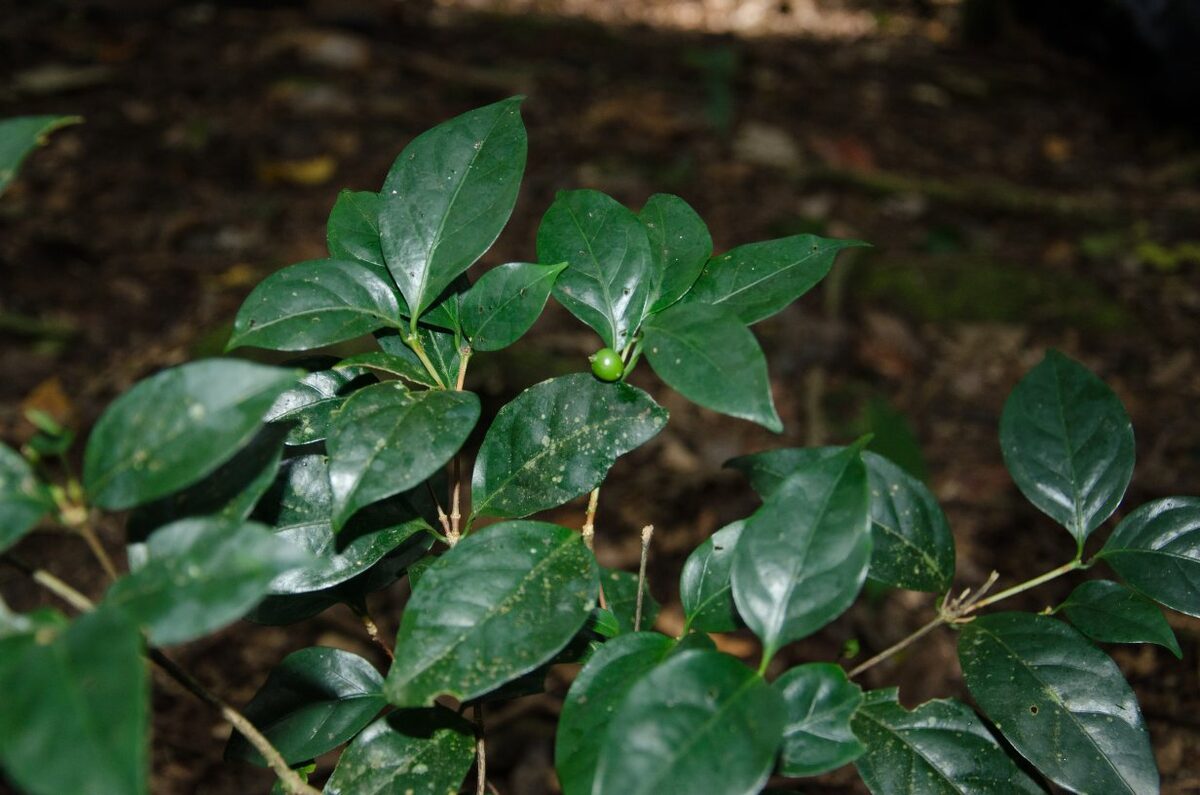
(c) amanda_str, some rights reserved (CC BY-NC)
Summary
Source: WikipediaVangueria madagascariensis, commonly known by the names Spanish-tamarind, tamarind-of-the-Indies, or voa vanga, is a species of flowering plant in the family Rubiaceae native to the African continent having edible fruit. It is the type species of the genus Vangueria and was described in 1791 by Johann Friedrich Gmelin.
Description
A deciduous tree. It often has several stems. It can grow to 15 m high. The bark is pale grey and fairly smooth. It loses its leaves during the year. The leaves are pale green and attractive. They are oval and 8-20 cm long by 12 cm wide and rounded at the base. They are shiny and limp. Leaf stalks are up to 1 cm long. There are leaf stipules on the young shoots. The flowers are greenish white in clusters in the axils of leaves. These are 8 cm long. The flowers are yellow green and 8 mm long. They are small and few. The petals are pale green. Fruit are round, smooth and green with white dots. They are about 4-5 cm across. Often fruit are in bunches of 5-6. Fruit contain 4 or more seeds. The seeds are 1-2 cm long. The fruit are edible.
Edible Uses
Ripe fruit can be eaten raw or stewed; unripe fruit have an apple-like texture, while very ripe shrivelled fruit taste like tamarind. The fruit are especially popular with children and are sold in African markets.
Traditional Uses
The ripe fruit can be eaten raw or stewed. Unripe fruit have a texture like an apple and very ripe shrivelled fruit taste like tamarind. The fruit are especially enjoyed by children.
Medicinal Uses
The fruit are rich in Vitamin C.
Distribution
A tropical plant. It grows in the lowlands. They suit a range of soil types. They have good drought tolerance. It grows in scrub and on the edges of forests. The grow naturally in dry forest edges. They grow from sea level to 2,130 m altitude. It grows in areas with rainfall from 600 to 1200 mm annually. Temperatures are in the range 17°C to 29°C. The plant needs to be in an open sunny position. It can re-grow after fire. It cannot tolerate frost.
Where It Grows
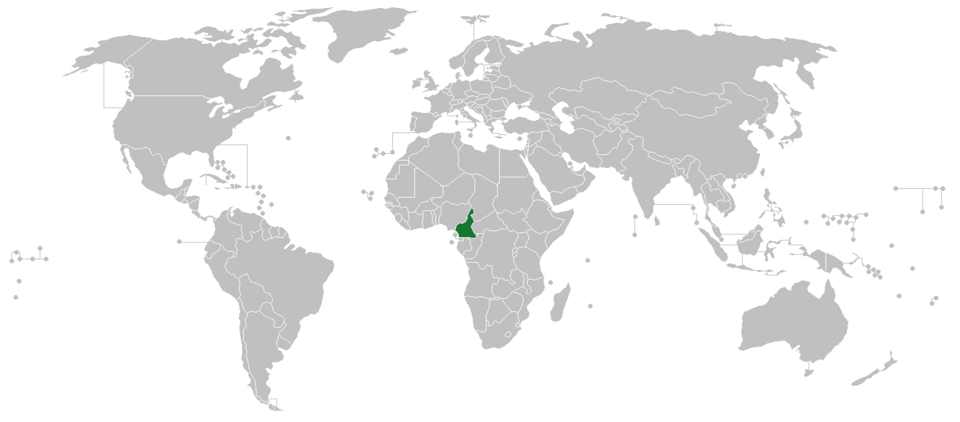
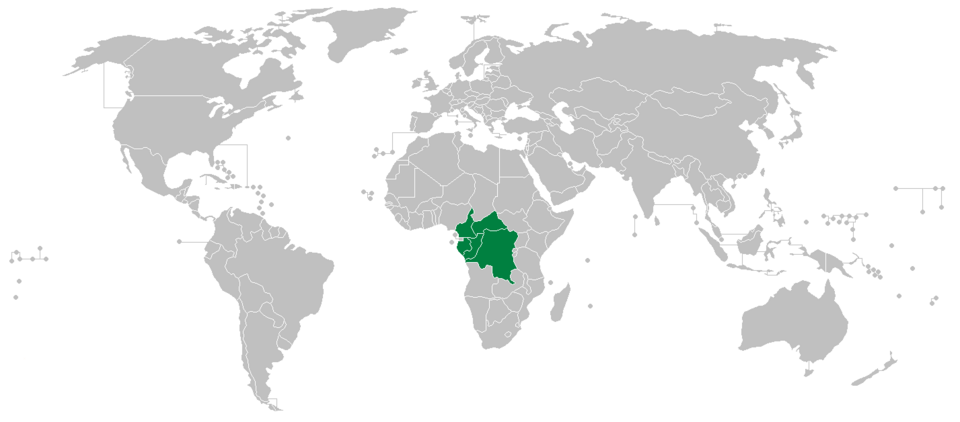
Africa*, Angola, Asia, Australia, Benin, Botswana, Brazil, Cameroon, Caribbean, Central Africa, Central African Republic, CAR, Central America, China, Congo R, Congo DR, Cook Islands, Cuba, Dominican Republic, East Africa, Eritrea, Eswatini, Ethiopia, Gabon, Ghana, Guadeloupe, Guinea, Guinée, Haiti, India, Kenya, Lesotho, Madagascar*, Malawi, Malaysia, Mali, Marquesas, Martinique, Mauritius, Mozambique, Namibia, Nigeria, Pacific, Puerto Rico, Reunion, SE Asia, Senegal, Singapore, South Africa, Southern Africa, South America, South Sudan, Sudan, Swaziland, Tanzania, Togo, Trinidad and Tobago, Uganda, West Africa, West Indies, Zambia, Zimbabwe,
Cultivation
They can be grown from seed or cuttings. Seed can be sown direct or in pots then transplanted. Soaking seed in cold water overnight may help germination. Trees can be cut back and re-grow.
Propagation
Seed germination is difficult owing to the hard seed coat. Nicking the seed or soaking it in cold water overnight may hasten germination. Untreated seed germinates well but sporadically, taking up to 6 weeks. Seed can retain its viability for a year if dried properly. There are 500-600 seeds/kg.
Other Uses
The wood is suitable for building construction, tool handles and carving. It is popular as a source of both firewood and charcoal.
Production
Trees grow rapidly. Because the fruit persist on the tree fruit need to be picked. Plants flower between October and January. It takes about 6-8 months from flower fertilisation to fruit ripening.
Other Information
Fruit are sold in markets in Africa. The fruit are eaten especially by children. The fruit are popular. It is a cultivated food plant.
Notes
The fruit are rich in Vitamin C.
Nutrition
| Part | Moisture | kJ | kcal | Protein | Vit A | Vit C | Iron | Zinc |
|---|---|---|---|---|---|---|---|---|
| Fruit | 12 | — | — | 9.8 | — | — | — | — |
Synonyms
Also Known As
Bergel, Bururi, Dimbliksha, Engumi, Erakwtu, Gara, Ikormosiyoi, Kamolwet, Kanoy, Katkara tenga, Kikomoa, Kikomua, Kirkir, Knoy, Komol, Komolwo, Loshoro, Mdaria, Mesho, Moyen, Msada, Msambalawe, Mubiru, Mudhukanta, Muhilu, Mukomoa, Mulande-nu-kue, Mviru, Ngoromosui, Odeyo, Ol-gumei, Surangaro, Tamarind of the Indies, Tamarindo, Voa-vanga
References (61)
- Addis, G., Asfaw, Z & Woldu, Z., 2013, Ethnobotany of Wild and Semi-wild Edible Plants of Konso Ethnic Community, South Ethiopia. Ethnobotany Research and Applications. 11:121-141
- Altschul, S.V.R., 1973, Drugs and Foods from Little-known Plants. Notes in Harvard University Herbaria. Harvard Univ. Press. Massachusetts. no. 4240 (As Vangueria edulis)
- Ambasta, S.P. (Ed.), 2000, The Useful Plants of India. CSIR India. p 668
- Asfaw, Z. and Tadesse, M., 2001, Prospects for Sustainable Use and Development of Wild Food Plants in Ethiopia. Economic Botany, Vol. 55, No. 1, pp. 47-62
- Ballal, M. E., et al, 2014, Ethno-botany of Natural Forests of Nuba Mountains, South Kordofan State, Sudan. Journal of Forest Poducts & Industries. 3(1):13-19
Show all 61 references Hide references
- Burkill, H. M., 1985, The useful plants of west tropical Africa, Vol. 4. Kew.
- Burkill, I.H., 1966, A Dictionary of the Economic Products of the Malay Peninsula. Ministry of Agriculture and Cooperatives, Kuala Lumpur, Malaysia. Vol 2 (I-Z) p 2259 (As Vangueria edulis)
- Bussman, R. W., 2006, Ethnobotanyof the Samburu of Mt Nyiru, South Turkana, Kenya. Journal of Ethnobiology and Ethnomedicine. 2:35
- Dale, I. R. and Greenway, P. J., 1961, Kenya Trees and Shrubs. Nairobi. p 478 (As Vangueria acutiloba)
- Dalziel, J. M., 1937, The Useful plants of west tropical Africa. Crown Agents for the Colonies London.
- Ethiopia: Famine Food Field Guide. http://www.africa.upenn.edu/faminefood/category3.htm
- Facciola, S., 1998, Cornucopia 2: a Source Book of Edible Plants. Kampong Publications, p 213
- FAO. 1983, Food and fruit-bearing forest species 1: Examples from Eastern Africa. FAO Food and Forestry Paper 44/1 p 123
- Food Composition Tables for use in Africa FAO http://www.fao.org/infoods/directory No. 101053
- Fox, F. W. & Young, M. E. N., 1982, Food from the Veld. Delta Books. p 328 (As Vangueria robynsii)
- Hedrick, U.P., 1919, (Ed.), Sturtevant's edible plants of the world. p 671
- Hines, D. A. & Eckman, K., 1993, Indigenous multipurpose trees of Tanzania: Uses and economic benefits for people. FAO Forestry Department. p 225
- http://www.fao.org/forestry/25323-096344a3de335832e8f363c3ac5184a66.pdf (As Vangueria acutiloba)
- Hu, Shiu-ying, 2005, Food Plants of China. The Chinese University Press. p 685 (As Vangueria edulis)
- Ichikawa, M., 1980, The Utilization of Wild Food Plants by the Suiei Dorobo in Northern Kenya. J. Anthrop. Soc. Nippon. 88(1): 25-48 (As Vangueria acutiloba)
- Jardin, C., 1970, List of Foods Used In Africa, FAO Nutrition Information Document Series No 2.p 167 (Also as Vangueria acutiloba)
- JSTOR Global Plants edible
- Katende, A.B., Birnie, A & Tengnas B., 1995, Useful Trees and Shrubs for Uganda. Identification, Propagation and Management for Agricultural and Pastoral Communities. Technical handbook No 10. Regional Soil Conservation Unit, Nairobi, Kenya. p 652
- Kenya Trees, Shrubs, Lianas, 1994, nzdl.org
- Little, E. L., et al, 1974, Trees of Puerto Rico and the Virgin Islands. USDA Handbook 449. Forestry Service. p 978
- Lorenzi, H., Bacher, L., Lacerda, M. & Sartori, S., 2006, Brazilian Fruits & Cultivated Exotics. Sao Paulo, Instituto Plantarum de Estuados da Flora Ltda. p 524 (As Vangueria edulis)
- Lovett, J. C. et al, Field Guide to the Moist Forest Trees of Tanzania. p 145
- Lulekal, E., et al, 2011, Wild edible plants in Ethiopia: a review on their potential to combat food insecurity. Afrika Focus - Vol. 24, No 2. pp 71-121
- Macmillan, H.F. (Revised Barlow, H.S., et al) 1991, Tropical Planting and Gardening. Sixth edition. Malayan Nature Society. Kuala Lumpur. p 311
- Maroyi, A., 2018, Vangueria madagascariensis Fruit Tree: Nutritional, Phytochemical, Pharmacological, and Primary Health Care Applications as Herbal Medicine. Hindawi Scientifica Volume 2018, Article ID 4596450, 17 pages
- Martin, F. W., et al, 1987, Perennial Edible Fruits of the Tropics. USDA Handbook 642 p 56
- Maundu, P. et al, 1999, Traditional Food Plants of Kenya. National Museum of Kenya. 288p
- Mbuya, L.P., Msanga, H.P., Ruffo, C.K., Birnie, A & Tengnas, B., 1994, Useful Trees and Shrubs for Tanzania. Regional Soil Conservation Unit. Technical Handbook No 6. p 498
- Mengistu, F. & Hager, H., 2008, Wild Edible Fruit Species Cultural Domain, Informant Species Competence and Preference in Three Districts of Amhara Region, Ethiopia. Ethnobotany Research & Applications 6:487-502
- Miguel, E., et al, 1989, A checklist of the cultivated plants of Cuba. Kulturpflanze 37. 1989, 211-357
- Milow, P., et al, 2013, Malaysian species of plants with edible fruits or seeds and their evaluation. International Journal of Fruit Science. 14:1, 1-2
- Msuya, T. S., et al, 2010, Availability, Preference and Consumption of Indigenous Foods in the Eastern Arc Mountains, Tanzania, Ecology of Food and Nutrition, 49:3, 208-227
- Musinguzi, E., et al, 2006, Utilization of Indigenous Food Plants in Uganda: A Case Study of South-Western Uganda. AJFAND Vol. 6(2):
- Mutie, F. M., et al, 2023, Important Medicinal and Food Taxa (Orders and Families) in Kenya, Based on Three Quantitative Approaches. Plants 2023, 12, 1145
- Newman, 1970,
- NYBG Herbarium "edible" (Also as Vangueria edulis)
- Ocho, D. L., et al, 2012, Assessing the levels of food shortage using the traffic light metaphor by analyzing the gathering and consumption of wild food plants, crop parts and crop residues in Konso, Ethiopia. Journal of Ethnobiology and Ethnomedicine 8:30
- Oryema, C., et al, 2013, Edible wild fruit species of Gulu District, Uganda. International Journal of Biology and Biological Sciences Vol 2(4) pp 068-082
- Plants of Haiti Smithsonian Institute http://botany.si.edu/antilles/West Indies
- Ruffo, C. K., Birnie, A. & Tengnas, B., 2002, Edible Wild Plants of Tanzania. RELMA p 706
- Salih, N. K. M., & Ali, A. H., 2014, Wild food trees in Eastern Nuba Mountain, Sudan: Use, diversity, and threatening factors. Journal of Agriculture and Rural Development in the Tropics and Subtropics Vol. 115 No. 1 pp 1-7
- Schatz, G.E., 2001, Generic Tree Flora of Madagascar. Royal Botanical Gardens, Kew and Missouri Botanical Garden. p 345
- Schmidt, E., Lotter, M., & McCleland, W., 2007, Trees and shrubs of Mpumalanga and Kruger National Park. Jacana Media p 656
- Shumsky, S., et al, 2014, Institutional factors affecting wild edible plant (WEP) harvest and consumption in semi-arid Kenya. Land Use Policy 38(2014) 48-69
- Staples, G.W. and Herbst, D.R., 2005, A tropical Garden Flora. Bishop Museum Press, Honolulu, Hawaii. p 498
- Styger, E., et al, 1999, Indigenous fruit trees of Madagascar: potential components of agroforestry systems to improve human nutrition and restore biological diversity. Agroforestry Systems 46: 289-310 (As Vangueria edulis)
- Swaziland's Flora Database http://www.sntc.org.sz/flora
- Syst. nat. 2(1):367. 1791
- Termote, C., et al, 2014, Assessing the potential of wild foods to reduce the cost of a nutritionally adequate diet: An example from eastern Baringo District, Kenya. Food and Nutrition Bulletin, vol. 35, no. 4
- USDA, ARS, National Genetic Resources Program. Germplasm Resources Information Network - (GRIN). [Online Database] National Germplasm Resources Laboratory, Beltsville, Maryland. Available: www.ars-grin.gov/cgi-bin/npgs/html/econ.pl (10 April 2000)
- Vivien, J., & Faure, J.J., 1996, Fruitiers Sauvages d'Afrique. Especes du Cameroun. CTA p 292
- von Katja Rembold, 2011, Conservation status of the vascular plants in East African rain forests. Dissertation Universitat Koblenz-Landau p 185
- Wiersema, J. H. & Leon, B., 2013, World Economic Plants. A Standard Reference CRC Press. 2nd Ed. p 711
- http://cookislands.bishopmuseum.org
- World Checklist of Useful Plant Species 2020. Royal Botanic Gardens, Kew
- www.worldagroforestrycentre.org/treedb/