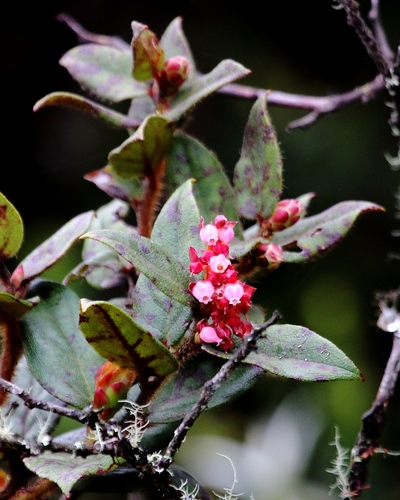
Vaccinium delavayi
Franchet
Sontram Delavay
iNaturalist· cc-by-nc
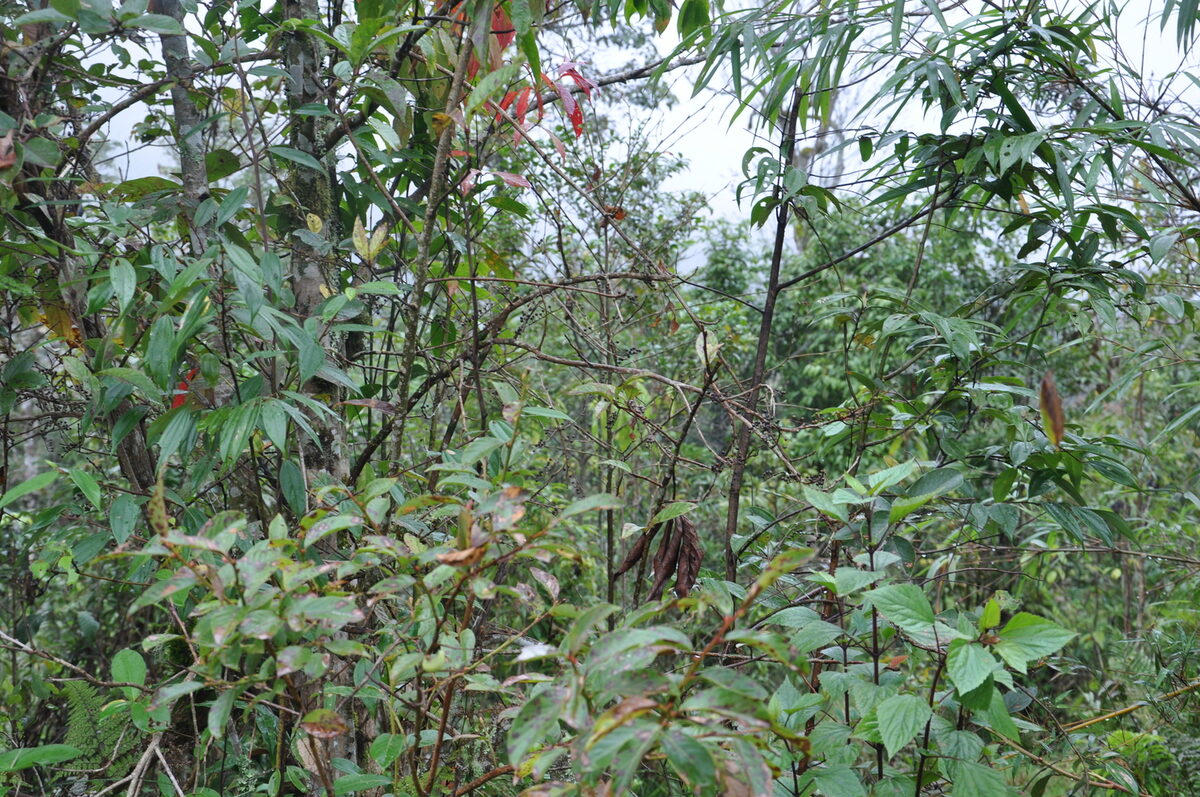
(c) JODY HSIEH, some rights reserved (CC BY-NC), uploaded by JODY HSIEH
iNaturalist· cc-by-nc
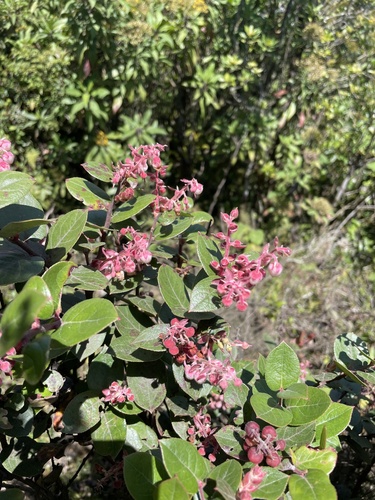
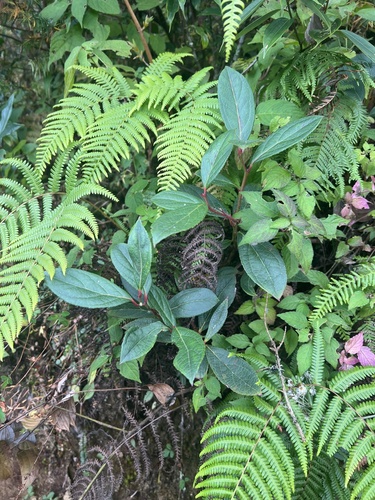
(c) JODY HSIEH, some rights reserved (CC BY-NC)
Description
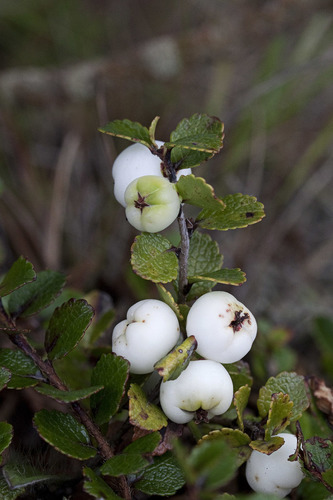
A compact shrub. It is densely branched and evergreen. It grows 30-90 cm high. Young growth is angled, hairy and is tinged with red. The leaves are rough. They are small and 1.25 cm long by 5 mm wide. They are on short stalks. They have a short sharp point at the tip. The leaves are closely packed on the shoots. The flowers are in groups 1-2 cm long. They hang down and are urn shaped. They are greenish white and can have pink tinges. The fruit is 4 mm across. It is edible. The fruit are blue-purple to black.
Edible Uses
The berries are edible.
Distribution
A subtropical plant. It grows naturally as an epiphyte in trees and in cracks in rocks. It can grow in shade. It can tolerate frost.
Where It Grows
Asia, Britain, China, Europe, Indochina, Myanmar, SE Asia, Taiwan, Tibet, Vietnam,
Cultivation
Plants can be grown from seed or cuttings.
Dangerous Lookalikes
This plant can be confused with the following toxic species. Always verify identification carefully before consuming any wild plant.
Deadly Nightshade
Atropa belladonna
Joan Simon from Barcelona, España
Sontram Delavay
Vaccinium delavayi
(c) JODY HSIEH, some rights reserved (CC BY-NC), uploaded by JODY HSIEH
Deadly Nightshade: Tall herbaceous plant (1-2m), single shiny black cherry-sized berries, star-shaped calyx, large oval leaves, sweet but dangerous taste.
Sontram Delavay: Low woody shrub, berries in clusters with crown/remnant calyx ring, sweet taste.
Also Known As
Sontram delavay
References (4)
- Brickell, C. (Ed.), 1999, The Royal Horticultural Society A-Z Encyclopedia of Garden Plants. Convent Garden Books. p 1039
- J. Bot. (Morot) 9:367. 1895
- Pham-Hoang Ho, 1999, An Illustrated Flora of Vietnam. Nha Xuat Ban Tre. p 617
- Trehane, J., 2004, Blueberries, Cranberries and Other Vacciniums. Timber Press. p 220