Vaccinium angustifolium
Aiton
Low-bush blueberry
wikimedia· cc0
rawpixel.com (via Wikimedia Commons)
wikimedia· cc-by-sa
User:Verne Equinox (via Wikimedia Commons)
wikimedia· cc-by-sa
mricon on Flickr (via Wikimedia Commons)
iNaturalist· cc-by-nc-nd
(c) Seabrooke Leckie, some rights reserved (CC BY-NC-ND)
iNaturalist· cc-by-nc
(c) Anita363, some rights reserved (CC BY-NC)
iNaturalist· cc-by-nc-nd
(c) Captain Tenneal, some rights reserved (CC BY-NC-ND)
Summary
Source: WikipediaVaccinium angustifolium, commonly known as the wild lowbush blueberry, is a species of blueberry native to eastern and central Canada and the northeastern United States. It is the most common commercially used wild blueberry and is considered the "low sweet" berry.
Description
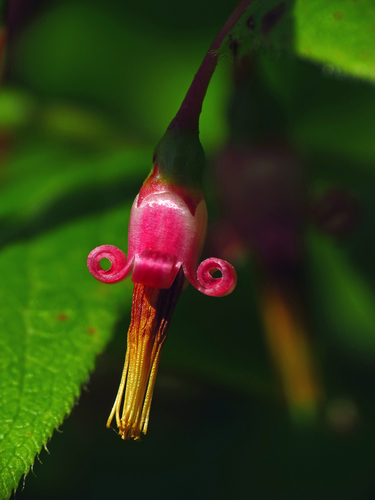
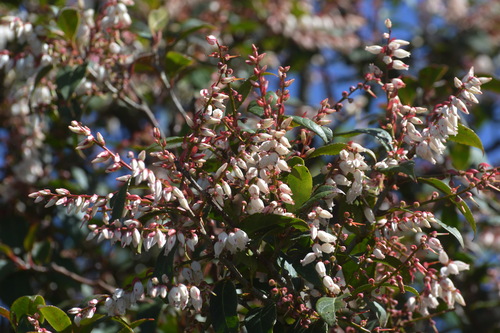
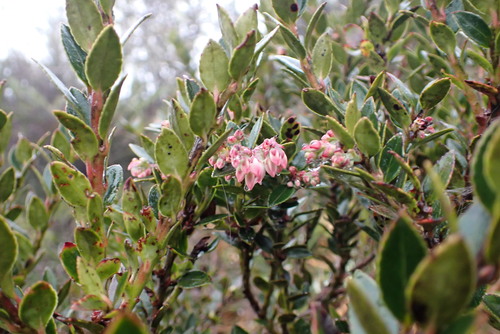
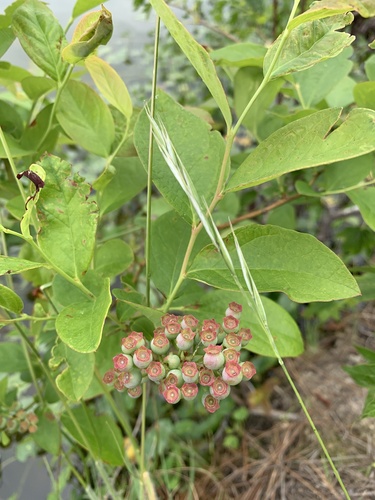
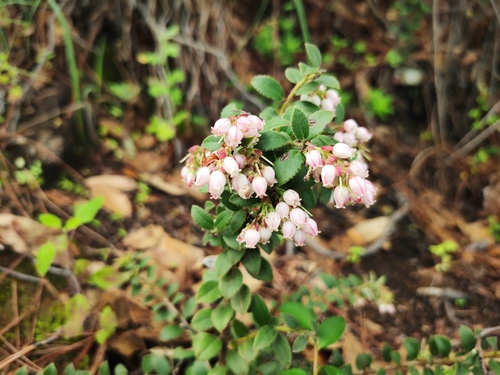
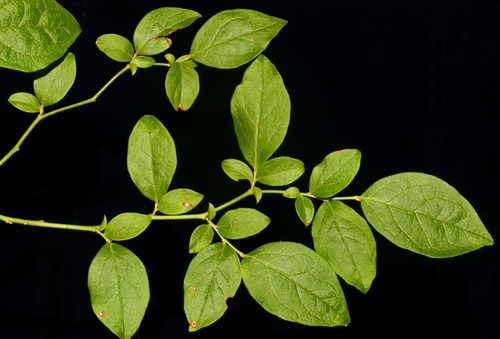
A small shrub. It grows 30 cm high. It has wiry, twiggy shoots. It forms a low spreading mat with underground stems or rhizomes up to 10 m long. It puts out uprights from nodes on these stems. The plants become dormant during winter. The leaves are narrow and sword shaped. They are 1.3-3 cm long. They often have teeth along the edge. They turn red in the autumn. The flowers are white in short compact racemes. They are bell shaped. They have a reddish streak. The flowers are 5 mm long. The fruit are large bluish black berries. They vary in colour and size. They can be 2-12 mm across. Several named cultivated varieties occur.
Edible Uses
The fruit can be eaten raw, cooked, or used in preserves. It has a very sweet, pleasant flavour with a slight hint of honey. Widely grown for the canning industry, it is considered the best of the lowbush blueberries. The fruit, about 12mm in diameter, can also be dried and used like raisins. This is the earliest commercially grown blueberry to ripen. A tea can be made from the leaves and dried fruits.
Traditional Uses
The fruit can be eaten raw. The berries are also cooked by boiling and canned. They are used for muffins, cookies, pies and other products. They can be dried.
Medicinal Uses
A tea made from the leaves has been used as a blood purifier and to treat infant colic. It has also been used to induce labour and as a tonic following a miscarriage.
Distribution
It is a temperate plant. They grow in open bogs and on exposed rocky soils and in dry peat soil. It can grow with a soil pH of 2.8-6.0. It can tolerate a wide range of temperatures. A snow covering helps protect the plant buds from heavy frost. It suits hardiness zones 2-8.
Where It Grows
Canada, North America, USA,
Cultivation
Requires a moist but freely-draining lime free soil, preferring one that is rich in peat or a light loamy soil with added leaf-mould. Prefers a very acid soil with a pH in the range of 4.5 to 6, plants soon become chlorotic when lime is present. Succeeds in full sun or light shade though it fruits better in a sunny position. Requires shelter from strong winds. A very hardy plant, tolerating temperatures down to about -40°c. Dislikes root disturbance, plants are best grown in pots until being planted out in their permanent positions. Cultivated for its edible fruits, there are some named varieties. It succeeds in cold northerly locations such as Maine in N. America and in C. Sweden. However, it is said to have little or no value as a fruit crop in Britain. The typical species is not as well known as its subspecies V. angustifolium laevifolium. House. Plants in this genus are notably resistant to honey fungus. A clumping plant, forming a colony from shoots away from the crown but with a limited spread.
Propagation
Seed should be sown in late winter in a greenhouse using a lime-free potting mix, barely covered. Stored seed may require up to 3 months of cold stratification. Alternatively, sow seed in a greenhouse as soon as it is ripe. Once seedlings reach about 5cm tall, prick them out into individual pots and grow on in a lightly shaded position in the greenhouse for at least their first winter. Plant out into permanent positions in late spring or early summer, after the last expected frosts. Cuttings of half-ripe wood, 5–8cm with a heel, can be taken in August in a frame, though this is slow and difficult. Layering can be done in late summer or early autumn, or in spring according to some reports, and takes 18 months. Division of suckers can be carried out in spring or early autumn.
Other Uses
None known.
Production
The small berries are often picked using a dustpan like rake with fine teeth and this is pulled through the bushes. The fruit need to be harvested in fine weather when dry. Yields of 5,000 kg per hectare are possible.
Other Information
It is grown commercially in Canada and the USA.
Notes
The berries are high in antioxidants. They have health benefits.
Dangerous Lookalikes
This plant can be confused with the following toxic species. Always verify identification carefully before consuming any wild plant.
Deadly Nightshade
Atropa belladonna
Joan Simon from Barcelona, España
Low-bush blueberry
Vaccinium angustifolium
rawpixel.com (via Wikimedia Commons)
Deadly Nightshade: Tall herbaceous plant (1-2m), single shiny black cherry-sized berries, star-shaped calyx, large oval leaves, sweet but dangerous taste.
Low-bush blueberry: Low woody shrub, berries in clusters with crown/remnant calyx ring, sweet taste.
Synonyms
Also Known As
Late sweet blueberry, Low sweet blueberry, Sweethurts, Upland lowbush blueberry
References (28)
- Beckstrom-Sternberg, Stephen M., and James A. Duke. "The Foodplant Database." http://probe.nalusda.gov:8300/cgi-bin/browse/foodplantdb.(ACEDB version 4.0 - data version July 1994)
- Brickell, C. (Ed.), 1999, The Royal Horticultural Society A-Z Encyclopedia of Garden Plants. Convent Garden Books. p 1039
- Elias, T.S. & Dykeman P.A., 1990, Edible Wild Plants. A North American Field guide. Sterling, New York p 164
- Esperanca, M. J., 1988. Surviving in the wild. A glance at the wild plants and their uses. Vol. 1. p 318
- Facciola, S., 1998, Cornucopia 2: a Source Book of Edible Plants. Kampong Publications, p 96 (Also as Vaccinium lamarckii)
Show all 28 references Hide references
- Fisk, J. R. & Hoover, E., 2015, Wild Fruits of Minnesota. A Field Guide. University of Minnesota p 31
- Flowerdew, B., 2000, Complete Fruit Book. Kyle Cathie Ltd., London. p 66
- Glowinski, L., 1999, The Complete Book of Fruit Growing in Australia. Lothian. p 158 (Also as Vaccinium lamarckii)
- Harris, C.S. et al, 2014, Investigating Wild Berries as a Dietary Approach to Reducing the Formation of Advanced Glycation Endproducts: Chemical Correlates of In Vitro Antiglycation Activity. Plant Foods Hum Nutr 69:71–77
- Hedrick, U.P., 1919, (Ed.), Sturtevant's edible plants of the world. p 668 (As Vaccinium pensylvanicum)
- Hort. kew. 2:11. 1789
- INFOODS:FAO/INFOODS Databases
- Jackes, D. A., 2007, Edible Forest Gardens
- John, L., & Stevenson, V., 1979, The Complete Book of Fruit. Angus & Robertson p 84
- Kermath, B. M., et al, 2014, Food Plants in the Americas: A survey of the domesticated, cultivated and wild plants used for Human food in North, Central and South America and the Caribbean. On line draft. p 891
- Kiple, K.F. & Ornelas, K.C., (eds), 2000, The Cambridge World History of Food. CUP p 1734
- MacKinnon, A., et al, 2009, Edible & Medicinal Plants of Canada. Lone Pine. p 114
- Michael, P., 2007, Edible Wild Plants and Herbs. Grub Street. London. p 24
- Moerman, D. F., 2010, Native American Ethnobotany. Timber Press. p 582
- Plants for a Future database, The Field, Penpol, Lostwithiel, Cornwall, PL22 0NG, UK. http://www.scs.leeds.ac.uk/pfaf/
- Reis, S. V. and Lipp, F. L., 1982, New Plant Sources for Drugs and Foods from the New York Botanical Garden herbarium. Harvard. p 229 (As Vaccinium lamarckii)
- Slocum, P.D. & Robinson, P., 1999, Water Gardening. Water Lilies and Lotuses. Timber Press. p 138
- Smith, P.M., 1979, Blueberry, in Simmonds, N.W., (ed), Crop Plant Evolution. Longmans. London. p 306
- Trehane, J., 2004, Blueberries, Cranberries and Other Vacciniums. Timber Press. p 87, 216
- USDA, ARS, National Genetic Resources Program. Germplasm Resources Information Network - (GRIN). [Online Database] National Germplasm Resources Laboratory, Beltsville, Maryland. Available: www.ars-grin.gov/cgi-bin/npgs/html/econ.pl (10 April 2000)
- van Wyk, B., 2005, Food Plants of the World. An illustrated guide. Timber press. p 373 Bull. Torrey Bot. Club 71:180. 1943 (As Vaccinium lamarckii)
- Wiersema, J. H. & Leon, B., 2013, World Economic Plants. A Standard Reference CRC Press. 2nd Ed. p 709
- World Checklist of Useful Plant Species 2020. Royal Botanic Gardens, Kew