Umbilicus rupestris
(Salisb.) Dandy
Pennywort, Navelwort, Wall pennywort
iNaturalist· cc-by-nc
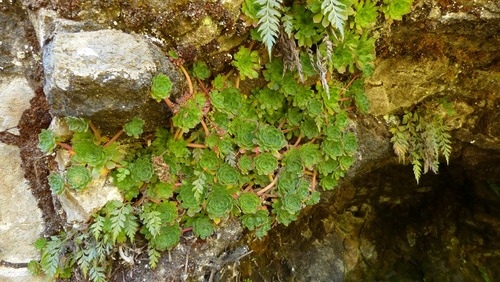
(c) David Earl, some rights reserved (CC BY-NC), uploaded by David Earl
iNaturalist· cc-by-nc
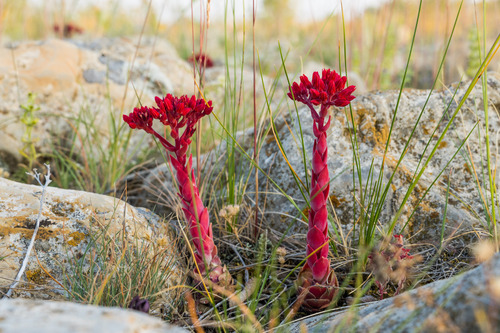
(c) Cédric DEL RIO, some rights reserved (CC BY-NC), uploaded by Cédric DEL RIO
iNaturalist· cc-by-nc
(c) Laura Jennings, some rights reserved (CC BY-NC), uploaded by Laura Jennings
Summary
Source: WikipediaUmbilicus rupestris is an evergreen perennial reaching 0.3 m tall. Hardy to UK zone 7. Flowers June to August with hermaphroditic, self-fertile blooms pollinated by insects or self-pollination; seeds ripen July to September. Grows in light sandy and medium loamy soils with good drainage. Tolerates mildly acid, neutral, and basic pH levels. Can grow in semi-shade or full sun and prefers moist soil.
Description
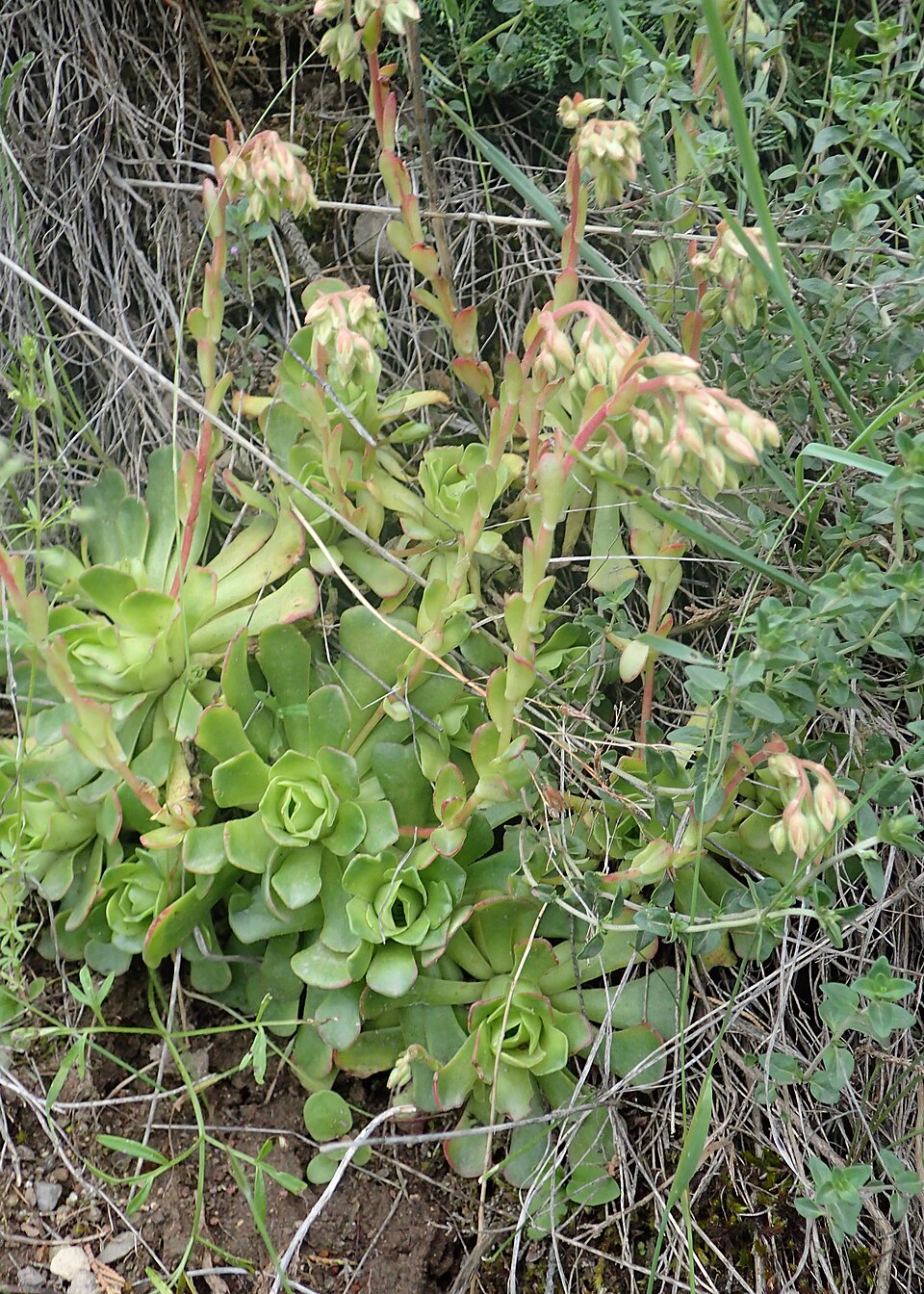
A herb which forms tubers and keeps growing from year to year. The leaves near the base are round. They have a long stalk. The edges of the leaves are scalloped. The leaves up the stem become gradually smaller up the stem. The flowers are pale green to creamy white and can have a pink tinge. They are tube shaped and 7-10 mm long. They hang down. They grow in long tapered groups.
Edible Uses
The leaves can be eaten raw or cooked. They have a mild, pleasant flavour in winter and early spring and can be used generously in salads at that time. The flavour becomes noticeably stronger in summer and the leaves are less enjoyable then.
Traditional Uses
The leaves are eaten in salads. They can be fried with other vegetables.
This uses section is brief — help expand it
Medicinal Uses
The leaves are mildly analgesic. The juice and plant extract have a long-standing reputation for treating epilepsy. Leaves are also made into a poultice for use on piles, slight burns, and scalds. A decoction of the leaves is considered cooling and diuretic, and the juice taken internally is said to be beneficial for inflammations of the liver and spleen.
Distribution
It is a temperate plant. They grow on rocks, cliffs and old walls. They grow in coastal and mountain regions.
Where It Grows
Africa, Andorra, Britain, Europe, France, Greece, Ireland, Italy, Mediterranean, North Africa, Portugal, Sicily, Spain, Turkey, Türkiye, USA,
Propagation
Sow seed in spring in a cold frame, barely covering it. Once large enough to handle, prick seedlings into individual pots and plant out in early summer. Division in spring is very straightforward — divisions can be planted directly into their permanent positions. Leaf cuttings are also an option.
Other Uses
None known
Synonyms
Also Known As
Pampina di uricchia, Uriccieddi
References (8)
- Blamey, M and Grey-Wilson, C., 2005, Wild flowers of the Mediterranean. A & C Black London. p 73
- Blanco-Salas, J., et al, 2019, Wild Plants Potentially Used in Human Food in the Protected Area “Sierra Grande de Hornachos” of Extremadura (Spain). Sustainability 2019, 11, 456
- Geraci, A., et al, 2018, The wild taxa utilized as vegetables in Sicily (Italy): a traditional component of the Mediterranean diet. Journal of Ethnobiology and Ethnomedicine (2018) 14:14
- Irving, M., 2009, The Forager Handbook, A Guide to the Edible Plants of Britain. Ebury Press p 294
- Michael, P., 2007, Edible Wild Plants and Herbs. Grub Street. London. p 242
Show all 8 references Hide references
- Pasta, S., et al, 2020, An Updated Checklist of the Sicilian Native Edible Plants: Preserving the Traditional Ecological Knowledge of Century-Old Agro-Pastoral Landscapes. Frontiers in Plant Science. Volume 11|Article 388
- Plants for a Future database, The Field, Penpol, Lostwithiel, Cornwall, PL22 0NG, UK. http://www.scs.leeds.ac.uk/pfaf/
- H. J. Riddelsdell et al., Fl. Gloucestershire 611. 1948