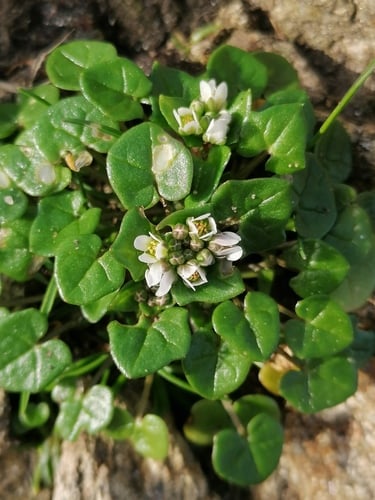
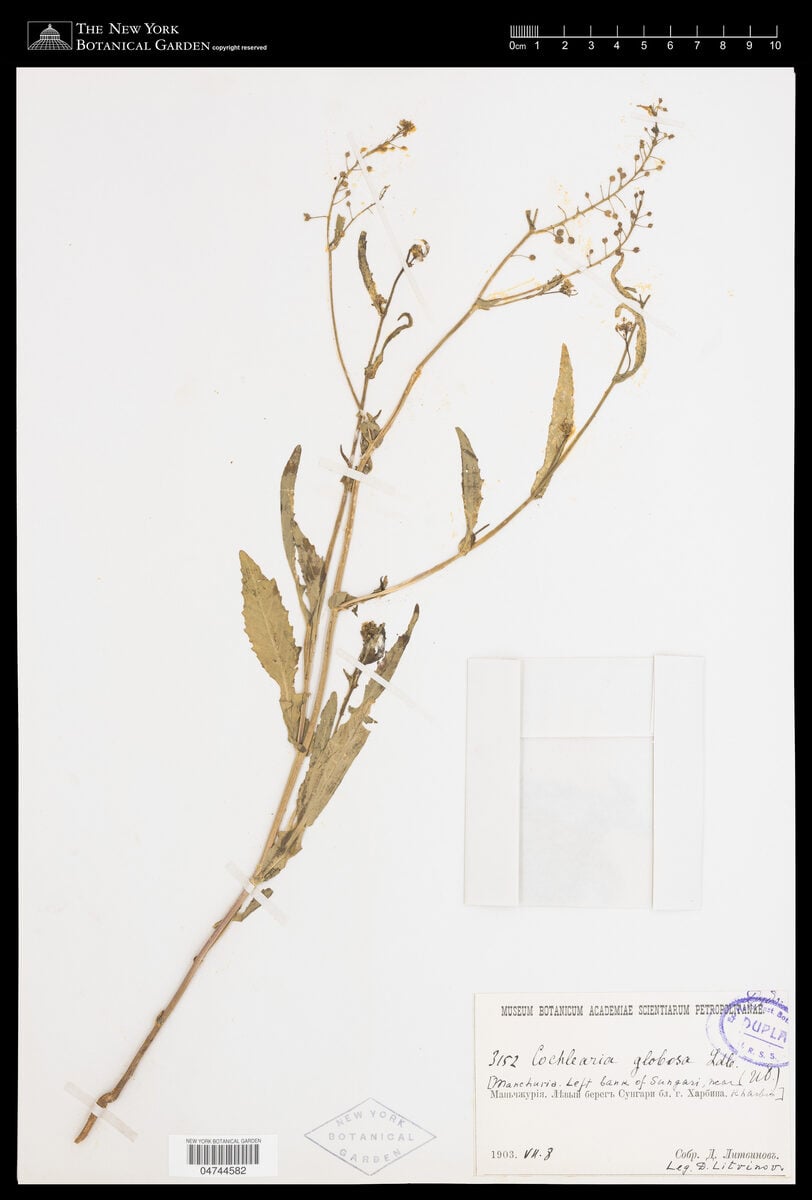
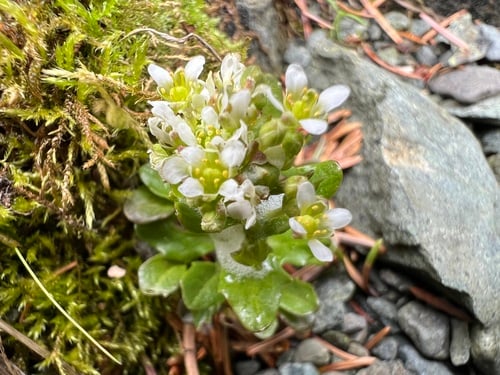
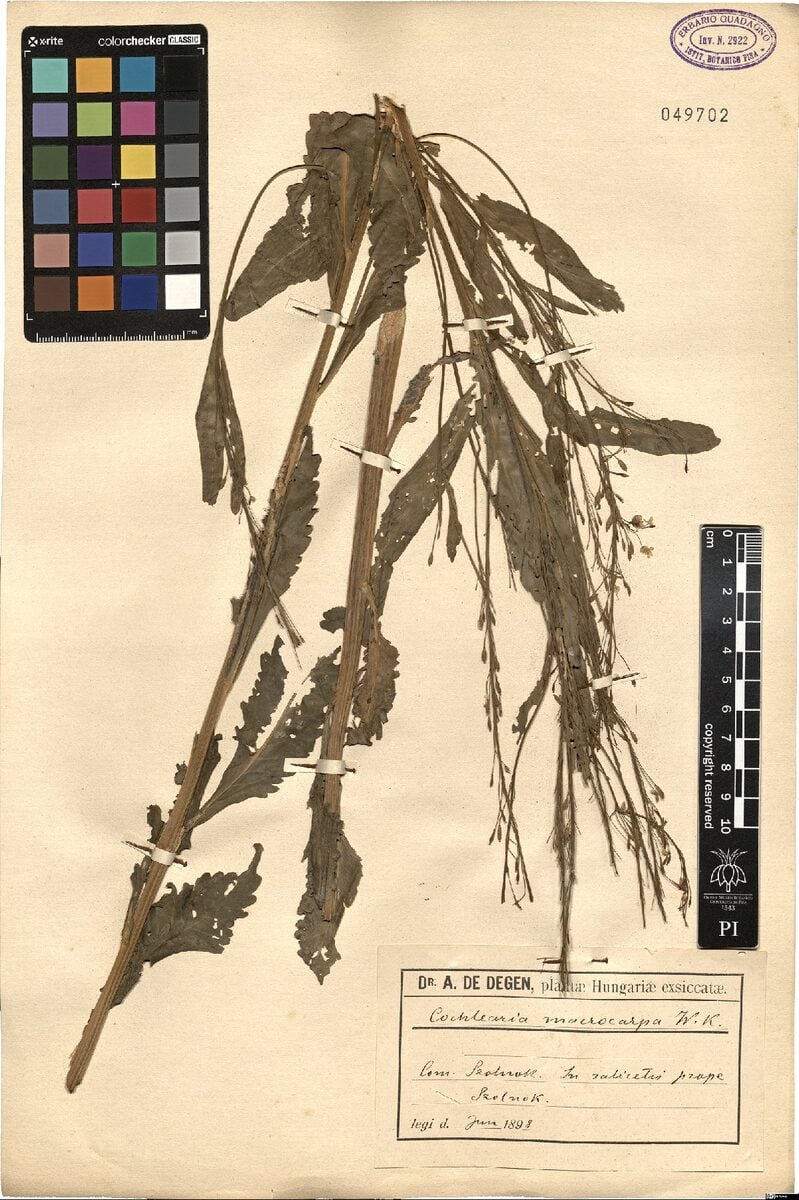
Turritis glabra
L.
Tower cress, Tower mustard, Rock cress
iNaturalist· cc-by-nc
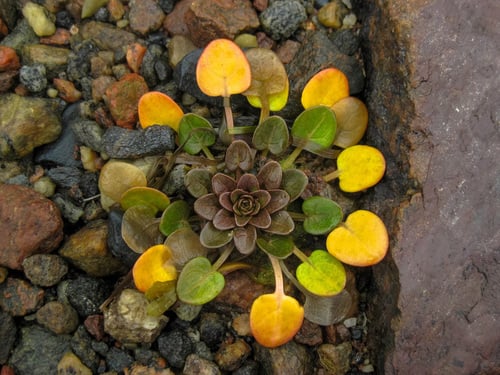
(c) Alan Wells, some rights reserved (CC BY-NC)
iNaturalist· cc-by
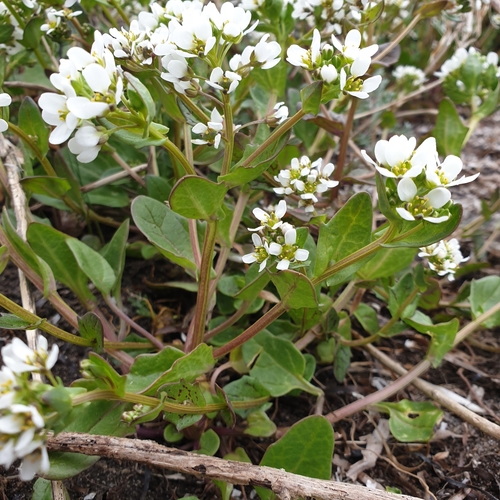
(c) Tom Norton, some rights reserved (CC BY)
iNaturalist· cc-by
(c) Tom Norton, some rights reserved (CC BY)
Summary
Source: WikipediaTurritis glabra, commonly known as tower rockcress or tower mustard, is a tall, slim, grey-green plant with small creamy flowers at the top of the stem. It usually grows on poor chalky or sandy soils, in open situations. It is native to Europe, Asia, and North Africa, and it is widespread in North America where it is also probably native. It can be found in many other parts of the world as an introduced species.
Description
A cabbage family herb. It takes 2 years to complete its life cycle. It grows 50-120 cm tall. The stems are usually unbranched and the lower parts are hairy. The leaves are in a ring at the base and alternate up the stem. These are 5-15 cm long and 2-3 cm wide. The leaves get smaller up the plant. The leaves on the stems are 2-8 cm long. The flowers are pale yellow. The fruit is a pod that is 4 angled and 4-7 cm long. There are many seeds.
Edible Uses
Young leaves are edible cooked. An infusion of the plant can also be used as a beverage.
Traditional Uses
The leaves are cooked as a vegetable. It is seasoned with oil, lemon and salt.
This uses section is brief — help expand it
Medicinal Uses
An infusion of the plant has been used to check a cold when it first appears. It is also given to children as a general preventative for sickness when illness is about.
Distribution
It is a temperate plant.
Where It Grows
Afghanistan, Africa, Asia, Australia, Britain, Central Asia, China, Europe, Finland, Himalayas, India, Italy, Japan, Kazakhstan, Korea, Kyrgyzstan, Mediterranean, Mongolia, Nepal, North Africa, North America, Pakistan, Russia, Scandinavia, Sicily, South Africa, Southern Africa, Tajikistan, Turkmenistan, Uzbekistan,
Cultivation
An easily grown plant, doing well in ordinary well-drained soil. It also succeeds in dry soils and on walls. Suitable for the wild garden in situations similar to those in its wild habitat.
Propagation
Seed — sow late summer in situ.
Other Uses
None known
Notes
There is one Turritis species.
Synonyms
Also Known As
Arabetta maggiore
References (12)
- Flora of China @ efloras.org Volume 8
- Fl. taur.-caucas. 2:126. 1808 (As Arabis perfoliata)
- Guillarmod, J., 1971,
- Hwang, H., et al, 2013, A Study on the Flora of 15 Islands in the Western Sea of Jeollanamdo Province, Korea. Journal of Asia-Pacific Biodiversity Vol. 6, No. 2 281-310 (As Arabis glabra)
- Lentini, F. and Venza, F., 2007, Wild food plants of popular use in Sicily. J Ethnobiol Ethnomedicine. 3: 15 (As Arabis turrita)
Show all 12 references Hide references
- Peters, C. R., O'Brien, E. M., and Drummond, R.B., 1992, Edible Wild plants of Sub-saharan Africa. Kew. p 98
- Plants for a Future database, The Field, Penpol, Lostwithiel, Cornwall, PL22 0NG, UK. http://www.scs.leeds.ac.uk/pfaf/
- READ (As Arabis glabra and Arabis perfoliata)
- Syst. Verz. 195. 1800 (As Arabis glabra)
- Sp. pl. 2:666. 1753
- Urgamal, M., Oyuntsetseg, B., Nyambayar, D. & Dulamsuren, Ch. 2014. Conspectus of the vascular plants of Mongolia. (Editors: Sanchir, Ch. & Jamsran, Ts.). Ulaanbaatar, Mongolia. “Admon“ Press. 334pp. (p. 79-90).
- Welcome, A. K. & Van Wyk, B.-E., 2019, An inventory and analysis of the food plants of southern Africa. South African Journal of Botany 122 (2019) 136–179