Turraea nilotica
Kotschy et Peyr.
Bushveld honeysuckle tree, Small mahogany
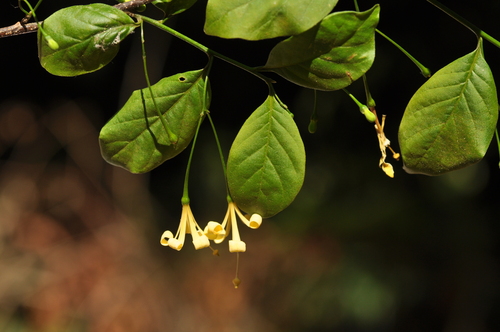
iNaturalist· cc-by-nc
(c) Graeme White, some rights reserved (CC BY-NC), uploaded by Graeme White
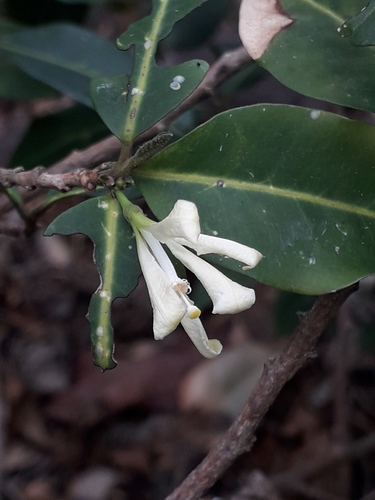
iNaturalist· cc-by-nc
(c) Troos van der Merwe, some rights reserved (CC BY-NC)
Description
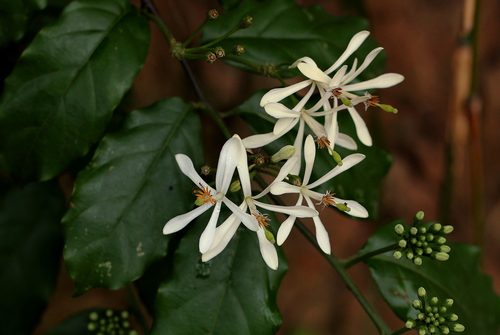
A deciduous shrub or tree. It grows 2-4 m high. It can be 10 m high. The bark is grey. The leaves are large and oval. They are 16 cm long by 10 cm wide. Underneath it is covered with hairs. The base tapers into the leaf stalk. The flowers are greenish-white but turn yellow with age. Petals are 2.2 cm long by 0.3 cm wide. They occur in dense clusters along the younger branches. The fruit is almost round. It is a thinly wooded capsule. It is 5-10 mm across. It splits to release blackish seeds.
Edible Uses
The fruit are eaten, especially by children.
Traditional Uses
CAUTION; The dried leaves are poisonous. The fruit are eaten.
This uses section is brief — help expand it
Known Hazards
The dried leaves are poisonous.
Distribution
A tropical plant. It grows in open wooded grassland and on rocky ridges. It can grow on termite mounds. It grows between 60-1,525 m above sea level.
Where It Grows
Africa, Botswana, East Africa, Kenya, Malawi, Mozambique, South Africa, Southern Africa, Sudan, Tanzania, Uganda, Zambia, Zimbabwe,
Other Information
The fruit are eaten especially by children.
Notes
There are about 66-70 Turraea species.
Synonyms
Also Known As
Bonco-bonco, Chetsa, Chipindura, Isidlamvundala, Kanjedza, Kokote, Mkulabala, Msindila, Mulya-nsefu, N'tunda, Ntunda
References (9)
- Drummond, R. B., 1981, Common Trees of the Central Watershed Woodlands of Zimbabwe, National Herbarium Salisbury. p 104
- Exell, A.W. et al, (Ed), 1963, Flora Zambesiaca Vol 2 Part 1 Crown Agents, London. p 310
- Fowler, D. G., 2007, Zambian Plants: Their Vernacular Names and Uses. Kew. p 47
- Jardin, C., 1970, List of Foods Used In Africa, FAO Nutrition Information Document Series No 2.p 166
- JSTOR Global Plants edible
Show all 9 references Hide references
- Palgrave, K.C., 1996, Trees of Southern Africa. Struik Publishers. p 380
- Peters, C. R., O'Brien, E. M., and Drummond, R.B., 1992, Edible Wild plants of Sub-saharan Africa. Kew. p 147
- Williamson, J., 2005, Useful Plants of Malawi. 3rd. Edition. Mdadzi Book Trust. p 252
- World Checklist of Useful Plant Species 2020. Royal Botanic Gardens, Kew