Tulipa sylvestris
L.
Wild tulip
iNaturalist· cc-by-nc
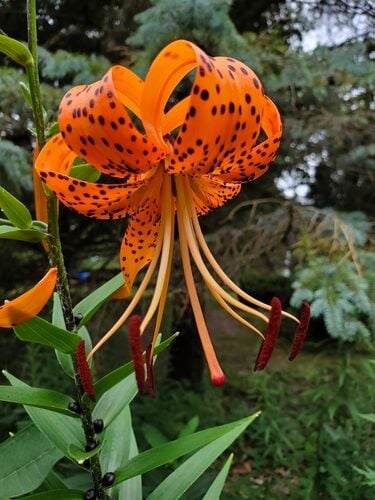
(c) ritaxanka, some rights reserved (CC BY-NC)
iNaturalist· cc-by-nc
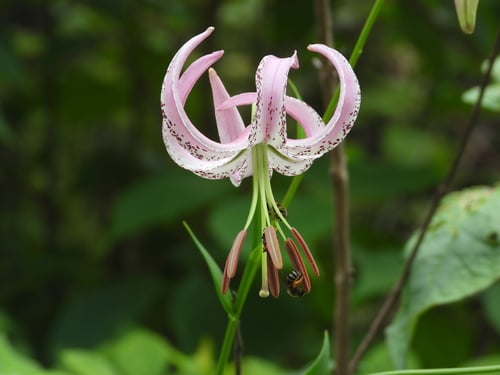
(c) Вадим, some rights reserved (CC BY-NC)
iNaturalist· cc-by-nc
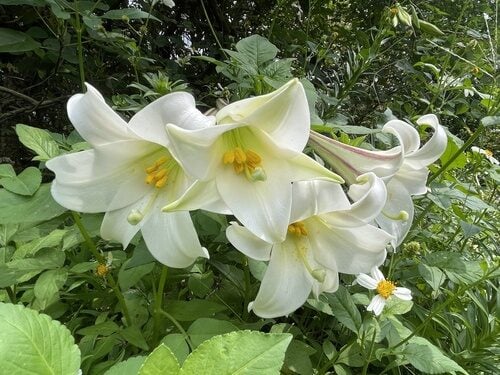
(c) Вадим, some rights reserved (CC BY-NC)
Summary
Source: WikipediaTulipa sylvestris, the wild tulip or woodland tulip, is a Eurasian and North African species of wild tulip, a plant in the lily family. Its native range extends from Portugal and Morocco to western China, covering most of the Mediterranean and Black Sea Basins, and Central Asia. The species is also cultivated as an ornamental and naturalized in central and northern Europe as well as a few scattered locations in North America. It was first recorded as being naturalised in Britain in the late 17th century.
Description
A tall lily family plant. It has a bulb. It grows 25-45 cm high and spreads 10-15 cm wide. The leaves are narrow and dark green. The stems are thin and fleshy. The flowers are yellow but can have red or green tinges on the outside. The tips curve out. The flowers have a scent.
Edible Uses
None known
Medicinal Uses
None known
Known Hazards
The bulb and the flowers have been known to cause dermatitis in sensitive people, though up to 5 bulbs a day can be eaten without ill-effect.
Distribution
It is a temperate plant. It suits hardiness zones 3-8.
Where It Grows
Africa, Australia, Europe, Iran, Mediterranean, Middle East, North Africa, Slovenia,
Cultivation
Easily grown in a well-drained soil. It can be naturalized in short grass. The plant is often found growing in chalk pits in the wild and so should do well on alkaline soils. The plant can increase quite rapidly by means of underground stolons and can be difficult to eradicate. Bulbs can be harvested after the plants have died down in July, stored in a cool dry place and then replanted in October. The flowers have a most pronounced perfume. This species is in cultivation in Britain under the name 'Tabriz'.
Propagation
Seed is best sown in a shady part of a cold frame as soon as it is ripe in early summer, or in early autumn. A spring sowing of stored seed in the greenhouse also succeeds. Sow thinly so seedlings can grow on without disturbance through their first growing season, applying liquid feeds to the pot if necessary. Once plants go dormant, divide the bulbs and pot 3–4 per pot. Grow on in the greenhouse for at least another year before planting out when dormant. Offsets can be divided in July. Larger bulbs can go straight into permanent positions or be stored in a cool place and planted out in late autumn. Smaller bulbs are best potted and grown on in a cold frame for a year, then planted out when dormant from late summer to mid-autumn.
Other Uses
None known Special Uses Scented Plants
Notes
There are about 100 Tulipa species and many cultivated varieties.
Synonyms
Also Known As
Divji tulipan
References (6)
- Blamey, M and Grey-Wilson, C., 2005, Wild flowers of the Mediterranean. A & C Black London. p 474
- Brickell, C. (Ed.), 1999, The Royal Horticultural Society A-Z Encyclopedia of Garden Plants. Convent Garden Books. p 1034
- Cundall, P., (ed.), 2004, Gardening Australia: flora: the gardener's bible. ABC Books. p 1438
- Hibbert, M., 2002, The Aussie Plant Finder 2002, Florilegium. p 302
- http://www.botanic-gardens-ljubljana.com/en/plants
Show all 6 references Hide references
- Sp. pl. 1:305. 1753