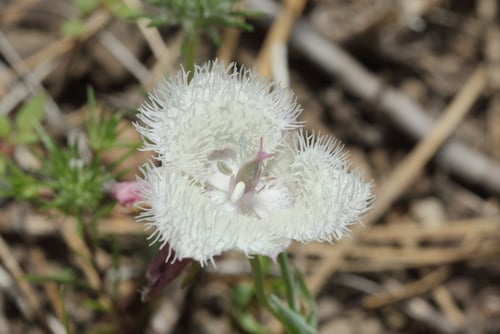
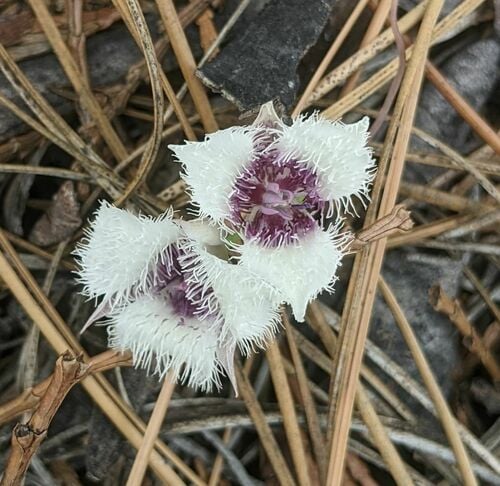
Tulipa montana
Lindl.
Iranian tulip, Mountain tulip
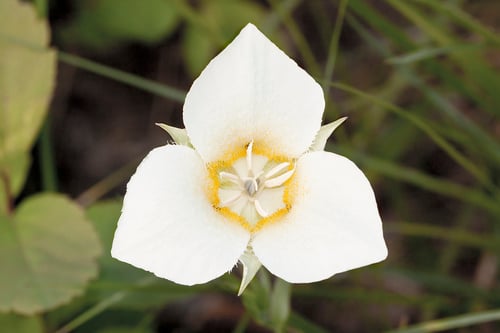
iNaturalist· cc-by-nc-sa
(с) Shayan Ghiaseddin, некоторые права защищены (CC BY-NC-SA), загрузил Shayan Ghiaseddin
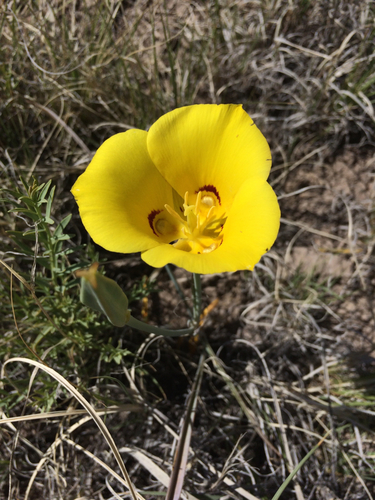
iNaturalist· cc-by-nc
(c) lucscheldeman, some rights reserved (CC BY-NC)
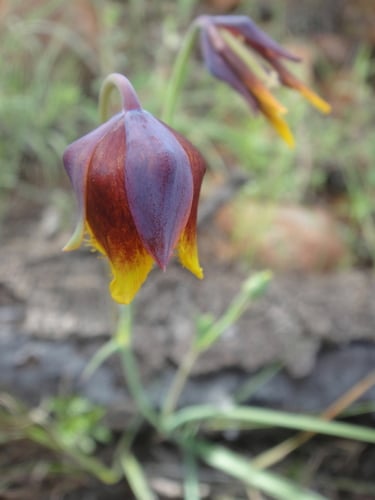
iNaturalist· cc-by-nc
(c) sepehr_akhlaghifard, some rights reserved (CC BY-NC)
Summary
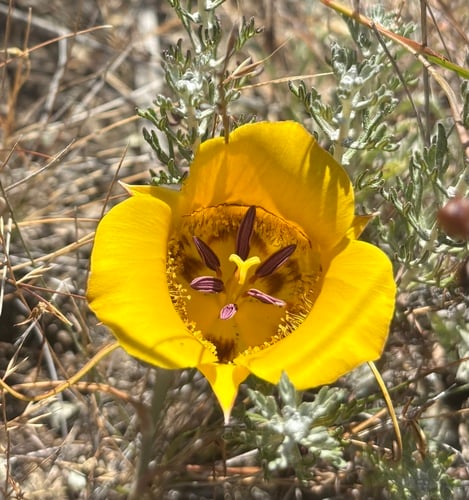
Source: WikipediaTulipa montana is a species of tulip native to the mountains of Iran and Turkmenistan. With its deep red petals (there is also a yellow morph) it has been proposed as a candidate for the Biblical Rose of Sharon, whose identity is unknown. Richard Wilford in his 2006 book Tulips writes, "This really is one of the most alluring of the smaller tulip species".
Description
A lily family plant. It has a bulb. It grows 5-15 cm high and spreads 10-15 cm wide. The leaves are narrow and blue-green with purple tints. They are 15 cm long. There are 3-6 leaves per bulb. The flowers are large and goblet shaped and bright red.
Edible Uses
The bulb is edible cooked. It can be dried, ground into a powder, and mixed with cereals when making bread.
Medicinal Uses
None known
Known Hazards
Although no records of toxicity have been seen for this species, the bulbs and the flowers of at least one member of this genus have been known to cause dermatitis in sensitive people, though up to 5 bulbs a day of that species can be eaten without ill-effect.
Distribution
It suits hardiness zones 6-9.
Where It Grows
Australia, Central Asia, Iran, Middle East,
Cultivation
Requires a very well-drained sandy soil in a sunny position. Bulbs can be harvested after the plants have died down in July, stored in a cool dry place and then replanted in October. This species is closely related to T. linifolia and T. maximowiczii.
Propagation
Seed is best sown in a shady part of a cold frame as soon as it is ripe in early summer, or in early autumn. A spring sowing of stored seed in the greenhouse also succeeds. Sow thinly so seedlings can grow on without disturbance through their first growing season, applying liquid feeds to the pot if necessary. Once plants go dormant, divide the bulbs and pot 3–4 per pot. Grow on in the greenhouse for at least another year before planting out when dormant. Offsets can be divided in July. Larger bulbs can go straight into permanent positions or be stored in a cool place and planted out in late autumn. Smaller bulbs are best potted and grown on in a cold frame for a year, then planted out when dormant from late summer to mid-autumn.
Other Uses
None known Special Uses
Notes
There are about 100 Tulipa species and many cultivated varieties.
Synonyms
References (4)
- Bot. Reg. 13: t. 1106. 1827
- Cundall, P., (ed.), 2004, Gardening Australia: flora: the gardener's bible. ABC Books. p 1437
- Plants for a Future database, The Field, Penpol, Lostwithiel, Cornwall, PL22 0NG, UK. http://www.scs.leeds.ac.uk/pfaf/
- World Checklist of Useful Plant Species 2020. Royal Botanic Gardens, Kew