Erythronium montanum
A.Wats.
Avelanche lily, Western wood lily
iNaturalist· cc-by-nc
(c) smilodonichthys, some rights reserved (CC BY-NC)
iNaturalist· cc-by-nc
(c) smilodonichthys, some rights reserved (CC BY-NC)
iNaturalist· cc-by-nc
(c) Kate Turner, some rights reserved (CC BY-NC)
Summary
Source: WikipediaErythronium montanum, the avalanche lily or white avalanche lily, is a member of the lily family native to coastal British Columbia and the alpine and subalpine Olympic and Cascade Ranges of the Pacific Northwest of Washington and Oregon. Erythronium montanum flowers shortly after the snow melts in late spring, in damp subalpine woodlands and alpine meadows, often in extensive patches. Blooming plants may persist into midsummer about the edges of snowfields. In the central Cascades, it is often found flowering admixed with Clintonia uniflora and Trillium ovatum at the lower elevation end of its range, and with Pulsatilla occidentalis(syn. Anemone occidentalis) at higher elevations. Distinguishing characteristics of this species are the oblong-lanceolate unmottled leaves and tepals that are white with a yellow base. Except for flower color, it is similar to Erythronium grandiflorum, which has a range that includes that of E. montanum.
Description
A small bulb plant. The stems are leafy. They grow 30-60 cm high from a scaly bulb. The flower is orange. The fruit is a capsule 2-4 cm long. There are several flat seeds.
Edible Uses
The bulb can be eaten raw, cooked, or dried for later use. It was an important food source for indigenous North American peoples. The narrowly ovoid bulbs grow up to 6cm long.
Medicinal Uses
None known
Known Hazards
Although no records of toxicity have been seen for this species, the following notes have been seen for another member of this genus and so some caution is advised. Skin contact with the bulbs has been known to cause dermatitis in sensitive people.
Distribution
It grows in moist subalpine meadows in the Rocky Mountains.
Where It Grows
Canada, North America, USA,
Cultivation
Prefers slightly acid soil conditions but succeeds in chalky soils if these contain plenty of humus. Requires semi-shade, preferably provided by trees or shrubs, and a well-drained soil. Succeeds in almost any light soil, preferring one that is rich in humus. Plants are hardy to at least -15°c. This alpine species does not endure in lowland gardens. Bulbs should be planted about 7cm deep.
Propagation
Seed is best sown as soon as it is ripe in a shady position in a cold frame. Water lightly in summer; germination should occur in autumn or winter. Stored seed requires a period of cold stratification and should be sown as early in spring as possible in a cold frame. Sow thinly to avoid the need to prick out seedlings in their first year, and give occasional liquid feeds to prevent nutrient deficiency. When plants go dormant, pot up the small bulbs 2–3 per pot and grow them on in a shady greenhouse for another 2–3 years before planting out into permanent positions while dormant in late summer. Bulbs can also be divided in summer as the leaves die down. Larger bulbs can go straight into permanent positions, while smaller ones are better potted and grown on in a shady greenhouse for a year before planting out when dormant in late summer.
Other Uses
None known
Notes
There are about 22 Erythronium species.
References (2)
- Plants for a Future database, The Field, Penpol, Lostwithiel, Cornwall, PL22 0NG, UK. http://www.scs.leeds.ac.uk/pfaf/
- Porsild, A.E., 1974, Rocky Mountain Wild Flowers. Natural History Series No. 2 National Museums of Canada. p 98
More from Liliaceae
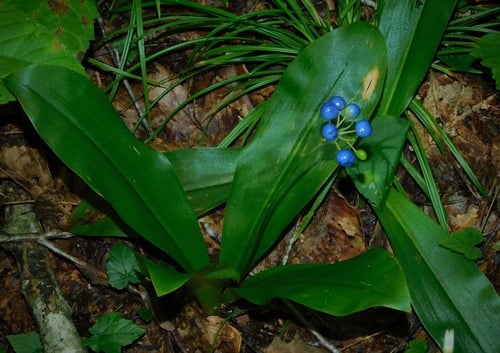
Clintonia umbellulata
Speckled wood lily
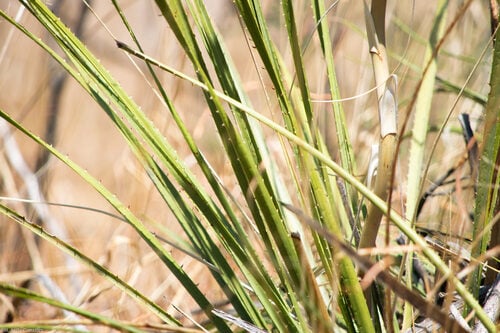
Dasylirion simplex
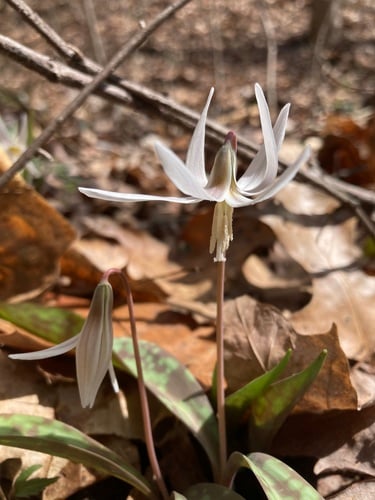
Erythronium albidum
White trout-lily, Blonde Lilian, White dogtooth violet
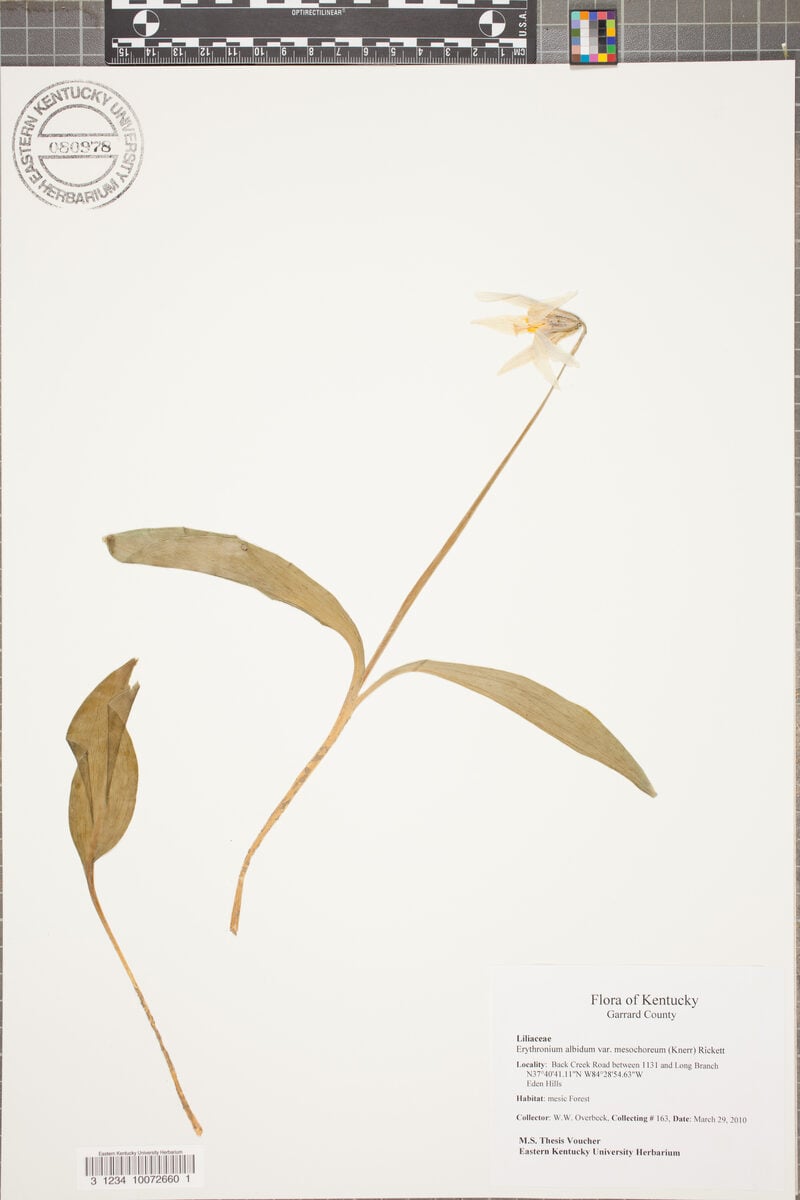
Erythronium albidum mesochoreum - (Kuerr.)Ricket.
Prairie Trout Lily
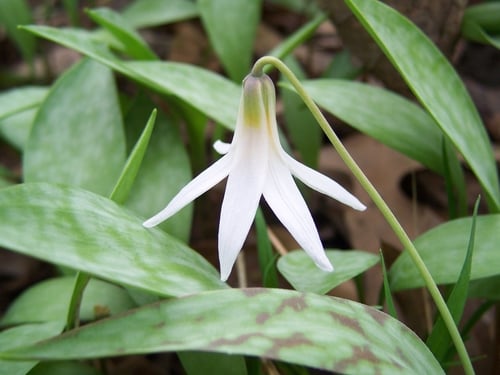
Erythronium albidum var. mesochoreum
Fawnlily
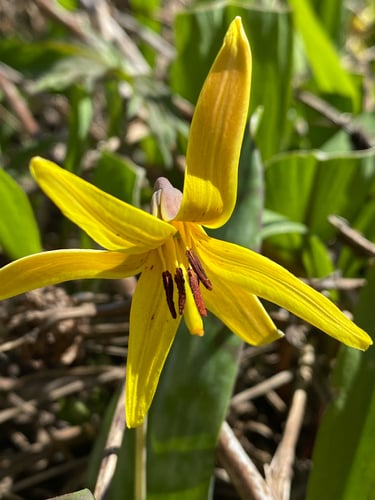
Erythronium americanum
Trout lily, Dog tooth violet, Prairie fawnlily, Snake lily, Yellow adder's tongue, Amberbell