Trochocarpa clarkei
(F.Meull.) F. Muell.
Lilac berry
iNaturalist· cc-by-nc
(c) judithvc, some rights reserved (CC BY-NC), uploaded by judithvc
iNaturalist· cc-by-nc
(c) Robert Pergl, some rights reserved (CC BY-NC)
Summary
Source: WikipediaTrochocarpa clarkei, commonly known as lilac berry, is a species of flowering plant in the family Ericaceae. It is a dense, often low-lying shrub with oblong leaves and bisexual flowers arrange in dense flowering spikes, usually on old wood, with maroon and green petals joined at the base to from an urn-shaped to bell-shaped tube with dense tufts of hairs in the throat. The fruit is a bluish-purple drupe.
Description
A shrub. It grows 30 cm tall. It lies along the ground and forms roots at the node. The small branches are hairy. The leaves are narrowly oblong and 3-11 mm long by 1.2-3.5 mm wide. The flowers are in spikes of 5-11 flowers. They occur in the axils of leaves on old wood. The fruit are a flattened round shape and 7-8 mm long. They are bluish-purple.
Edible Uses
The fruit can be eaten raw.
Medicinal Uses
None known.
Distribution
It is a temperate plant. It grows in alpine regions in Victoria.
Where It Grows
Australia*,
Cultivation
We have very little information on this species and do not know if it will be hardy in Britain, though judging by its native range it is likely to succeed outdoors in the mildest areas of the country. It is likely to require a warm sheltered position, probably preferring a position in light woodland. Plants self-layer.
Propagation
Sow seed in a greenhouse as soon as it is ripe where possible, otherwise in early spring. Prick seedlings out into individual pots once large enough to handle and grow on in the greenhouse for at least their first winter. Cuttings are best taken in July or August in a frame. As with many members of this family, plants likely have very fine root systems, so take great care when transplanting. Division of self-layered branches is also possible.
Other Uses
None known.
Notes
There are about 14 Trochocarpa species. It is rare.
Synonyms
References (3)
- Flora of Victoria
- Plants for a Future
- Rare plants of Victoria
More from Ericaceae
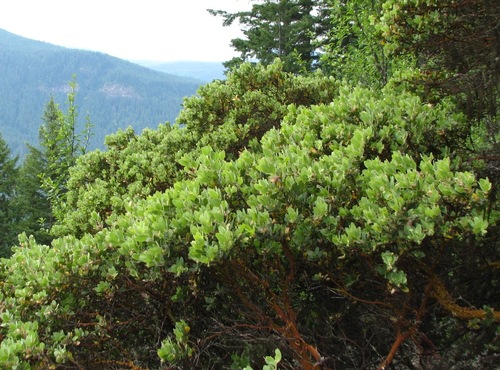
Arctostaphylos columbiana
Hairy manzanita, Columbian manzanita
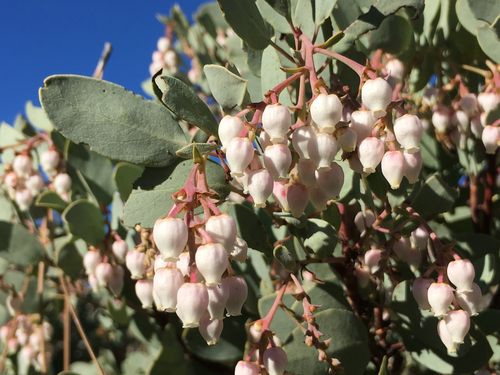
Arctostaphylos glauca
Bigberry manzanita, Great-berried manzanita
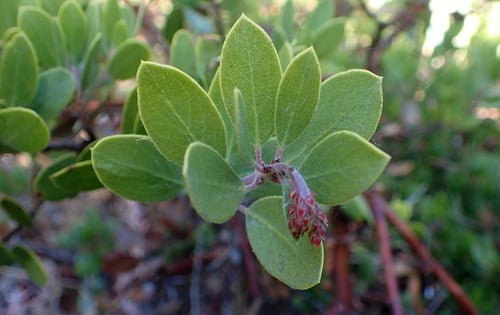
Arctostaphylos hookeri
Monterey manzanita
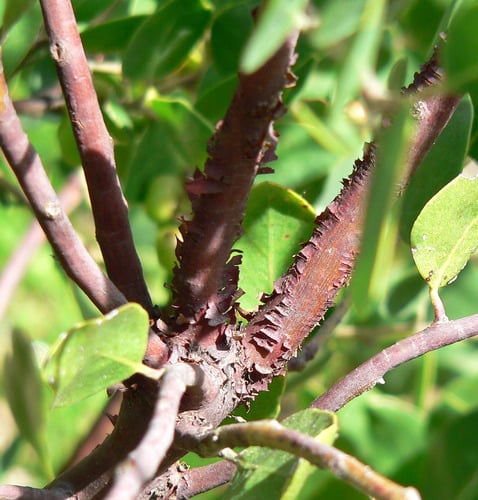
Arctostaphylos manzanita
Manzanita, Common manzanita
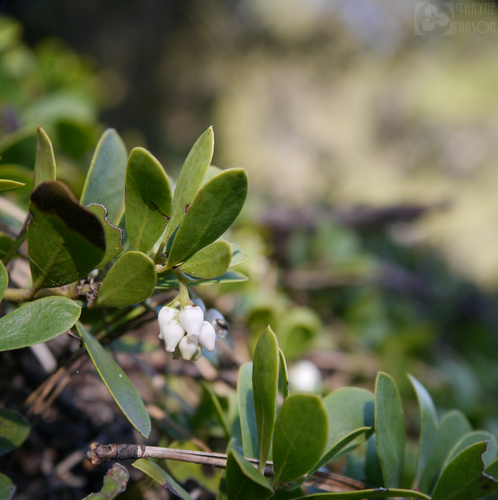
Arctostaphylos nevadensis
Pine-mat manzanita, Dwarf manzanita
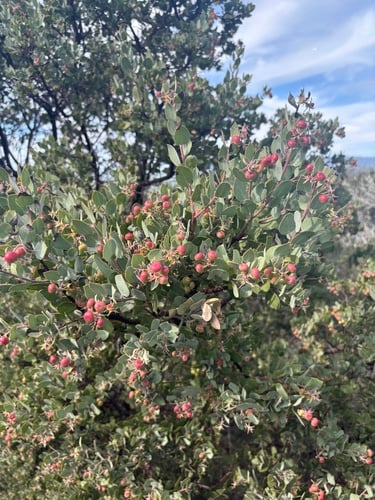
Arctostaphylos obispoensis
Serpentine manzanita