Trigonella suavissima
Lindley
Cooper clover, Sweet Fenugreek, Menindie Clover
iNaturalist· cc-by-nc
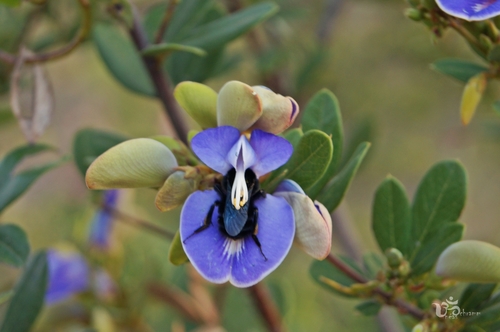
(c) Tom Hunt, some rights reserved (CC BY-NC), uploaded by Tom Hunt
iNaturalist· cc-by
(c) Nina Kerr, some rights reserved (CC BY), uploaded by Nina Kerr
iNaturalist· cc-by-nc
(c) Tom Hunt, some rights reserved (CC BY-NC), uploaded by Tom Hunt
Summary
Source: WikipediaTrigonella suavissima is a herbaceous plant that is endemic to Australia. It is a member of the genus Trigonella and the family Fabaceae. Common names include Cooper clover, Menindee clover, calomba, Darling trigonella, sweet fenugreek, channel clover, sweet-scented clover and Australian shamrock. The species was formally described by English botanist John Lindley, based on plant material collected during an expedition by Thomas Mitchell.
Description
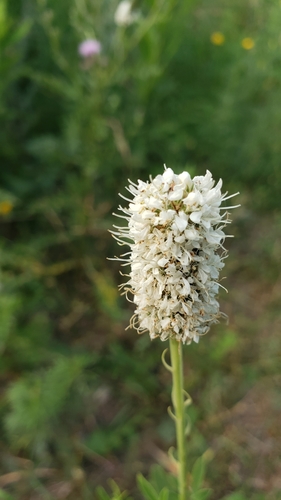
An annual herb. It lies along the ground. It grows 30 cm high. The flowers are pale yellow.
This description is brief — help expand it
Edible Uses
The leaves are cooked and are noted for being tender and delicious.
Medicinal Uses
None known.
Known Hazards
The major consumers of Trigonella suavissima are the Aboriginals, which they called Galuuba. Facilitating engagement through strong relationships between primary healthcare and Aboriginal and Torres Strait Islander peoples. However, it was recorded that Trigonella suavissima was eaten raw by the people in Diamantina in Queensland, Australia. Experts also found that besides toxic compounds, the species also contain various secondary compounds such as saponins and flavonols that have medical uses. It cannot replace current grain legumes like Cicer arietinum i.e. chickpeas, Lupinus angustifolius i.e. blue lupins and Pisum sativum i.e. peas, Trigonella suavissima is still a viable option as a substitute when the harvest of the grain crops are unsustainable under arid climate and infertile soil. Trigonella suavissima has a close relationship with other grain legume crops over the world. As it grows in dry areas with limited water and infertile soil, it acts as a resource for foreign legume breeders to improve adaptation of their plants to adverse climate and environment.
Distribution
It can grow in tropical and temperate areas. It grows on red loamy soils, flood plains and seepage areas.
Where It Grows
Australia,
Cultivation
We have very little information on this species and do not know if it will be hardy in Britain, though judging by its native range it could succeed outdoors in the milder areas of the country. The following notes are based on the general needs of the genus. Succeeds in ordinary garden soil. Prefers a well-drained loamy soil in full sun. This species has a symbiotic relationship with certain soil bacteria, these bacteria form nodules on the roots and fix atmospheric nitrogen. Some of this nitrogen is utilized by the growing plant but some can also be used by other plants growing nearby. When removing plant remains at the end of the growing season, it is best to only remove the aerial parts of the plant, leaving the roots in the ground to decay and release their nitrogen.
Propagation
Pre-soak seed for 12 hours in warm water, then sow in spring directly in situ.
Other Uses
None known. This plant is a nitrogen fixer.
References (10)
- Cancilla, D., 2018, Ethnobotanical and Ethnozoological Values Desktop Assessment - Eliwana Project. p 40
- Cherikoff V. & Isaacs, J., The Bush Food Handbook. How to gather, grow, process and cook Australian Wild Foods. Ti Tree Press, Australia p 191
- Cribb, A.B. & J.W., 1976, Wild Food in Australia, Fontana. p 132
- Hedrick, U.P., 1919, (Ed.), Sturtevant's edible plants of the world. p 656
- Lazarides, M. & Hince, B., 1993, Handbook of Economic Plants of Australia, CSIRO. p 241
Show all 10 references Hide references
- Low, T., 1992, Bush Tucker. Australia’s Wild Food Harvest. Angus & Robertson. p 138
- T. L. Mitchell, Three exped. Australia 1:253. 1838
- Paczkowska, G . & Chapman, A.R., 2000, The Western Australian Flora. A Descriptive Calatogue. Western Australian Herbarium. p 452
- Pascoe, B., 2018, Dark Emu. Aboriginal Australia and the birth of Agriculture. Magabala books, p 33
- Plants for a Future database, The Field, Penpol, Lostwithiel, Cornwall, PL22 0NG, UK. http://www.scs.leeds.ac.uk/pfaf/