Artemisia pontica
Linnaeus
Roman wormwood
iNaturalist· cc-by-sa
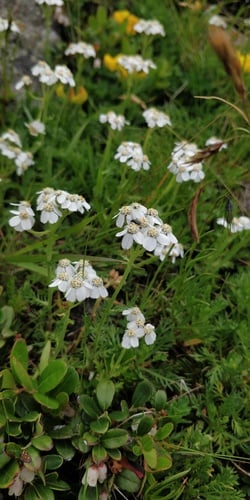
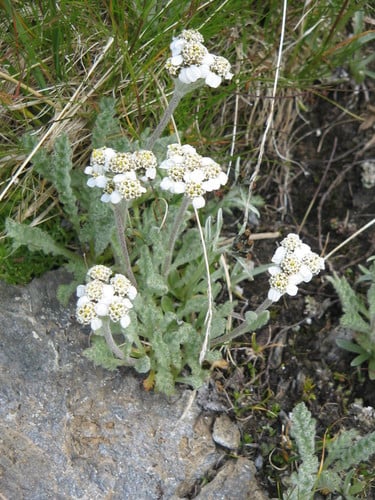
(c) T.Voekler, sommige rechten voorbehouden (CC BY-SA)
iNaturalist· cc-by-nc
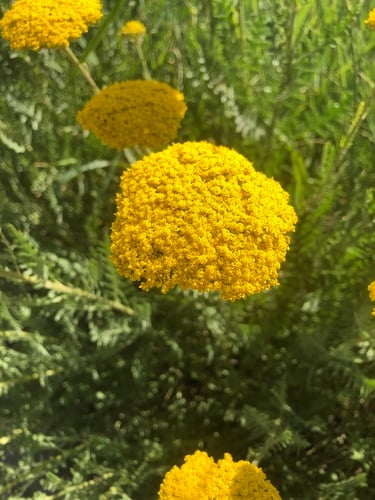
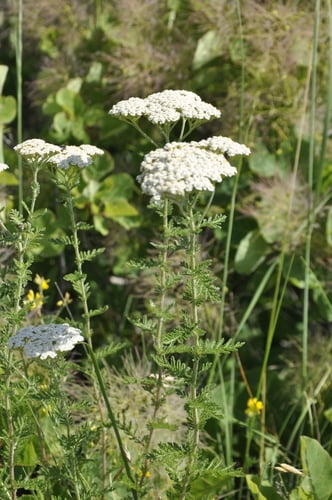
(c) Sebastian J. Dunkl, sommige rechten voorbehouden (CC BY-NC), geüpload door Sebastian J. Dunkl
iNaturalist· cc-by-nc
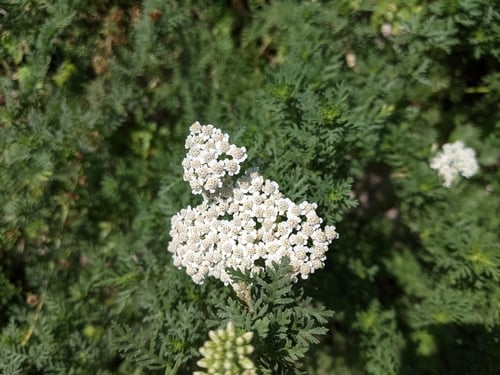
(c) Сергей, sommige rechten voorbehouden (CC BY-NC), geüpload door Сергей
Summary
Source: WikipediaArtemisia pontica, the Roman wormwood or small absinthe, is an herb used in the production of absinthe and vermouth. Originating in southeastern Europe (the specific name refers to the Pontus area on the shores of the Black Sea), it is naturalized over much of Eurasia from France to Xinjiang, and is also found in the wild in northeastern North America. Artemisia pontica is called "little absinthe" because it is smaller in stature and leaf than the "great absinthe" A. absinthium. It grows as a rhizomatous perennial with erect stems up to 100 centimetres (39 in) tall; the grey foliage is finely divided and aromatic. Flowers are small, yellowish, and appear in loose panicles at stem tips. The essential oil contains cineol, camphor, thujone, and borneol among other components. It is said to be less bitter than great absinthe and is the principal flavoring of vermouth. It is commercially cultivated in Spain and Lithuania. The English botanist John Hill, in his Virtues of British Herbs, says about this plant: "The Wormwood wine so famous with the Germans, is made with Roman Wormwood, put into the juice, and work’d with it : it is a strong and an excellent wine, not unpleasant, yet of such efficacy to give an appetite, that the Germans drink a glass with every other mouthful, and that way eat for hours together, without sickness or indigestion".
Description
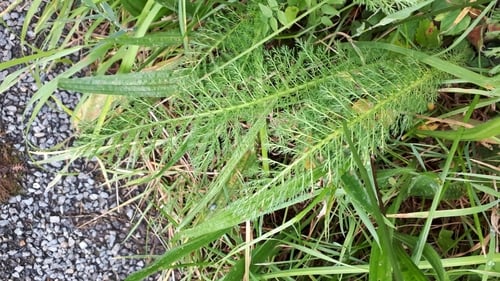
A fleshy stemmed herb. It grows 80 cm tall and spreads 60 cm wide. It has underground stems or rhizomes. The leaves are long and feathery. They are compound and divided 1 or 2 times. They are greyish-green and downy. The flowers are small and yellow and in sprays.
Edible Uses
The leaves are used as a flavouring, notably in Vermouth and other drinks.
Traditional Uses
It is used to flavour drinks. It flavours Vermouth.
This uses section is brief — help expand it
Distribution
It is a temperate plant. It grows in rocky slopes, dry valleys, steppe, hills; low to middle elevations in China. It suits hardiness zones 4-9. Brisbane Botanical Gardens.
Where It Grows
Asia, Australia, Austria, Canada, Central Asia, China, Europe*, France, Germany, Hawaii, Italy, Kazakhstan, Mediterranean, North America, Pacific, Russia, Siberia, Switzerland, Tasmania, USA,
Cultivation
It can be grown by cuttings.
Notes
There are about 300 Artemisia species.
Also Known As
Petite absinthe, Small absinthe
References (13)
- Bodkin, F., 1991, Encyclopedia Botanica. Cornstalk publishing, p 104
- Brouk, B., 1975, Plants Consumed by Man. Academic Press, London. p 333
- Brown, D., 2002, The Royal Horticultural Society encyclopedia of Herbs and their uses. DK Books. p 133
- Cundall, P., (ed.), 2004, Gardening Australia: flora: the gardener's bible. ABC Books. p 190
- Facciola, S., 1998, Cornucopia 2: a Source Book of Edible Plants. Kampong Publications, p 34
Show all 13 references Hide references
- Hibbert, M., 2002, The Aussie Plant Finder 2002, Florilegium. p 33
- Ling Yuou-ruen & C. J. Humphries, ASTERACEAE (Draft), Tribe ANTHEMIDEAE Cassini, in Flora of China
- Seidemann J., 2005, World Spice Plants. Economic Usage, Botany, Taxonomy. Springer. p 55
- Sp. pl. 2:847. 1753
- Staples, G.W. and Herbst, D.R., 2005, A tropical Garden Flora. Bishop Museum Press, Honolulu, Hawaii. p 154
- Trendafilova, A., et al, 2020, Research Advances on Health Effects of Edible Artemisia Species and Some Sesquiterpene Lactones Constituents. Foods 2021, 10, 65. p 4
- Wiersema, J. H. & Leon, B., 2013, World Economic Plants. A Standard Reference CRC Press. 2nd Ed. p 72
- World Checklist of Useful Plant Species 2020. Royal Botanic Gardens, Kew