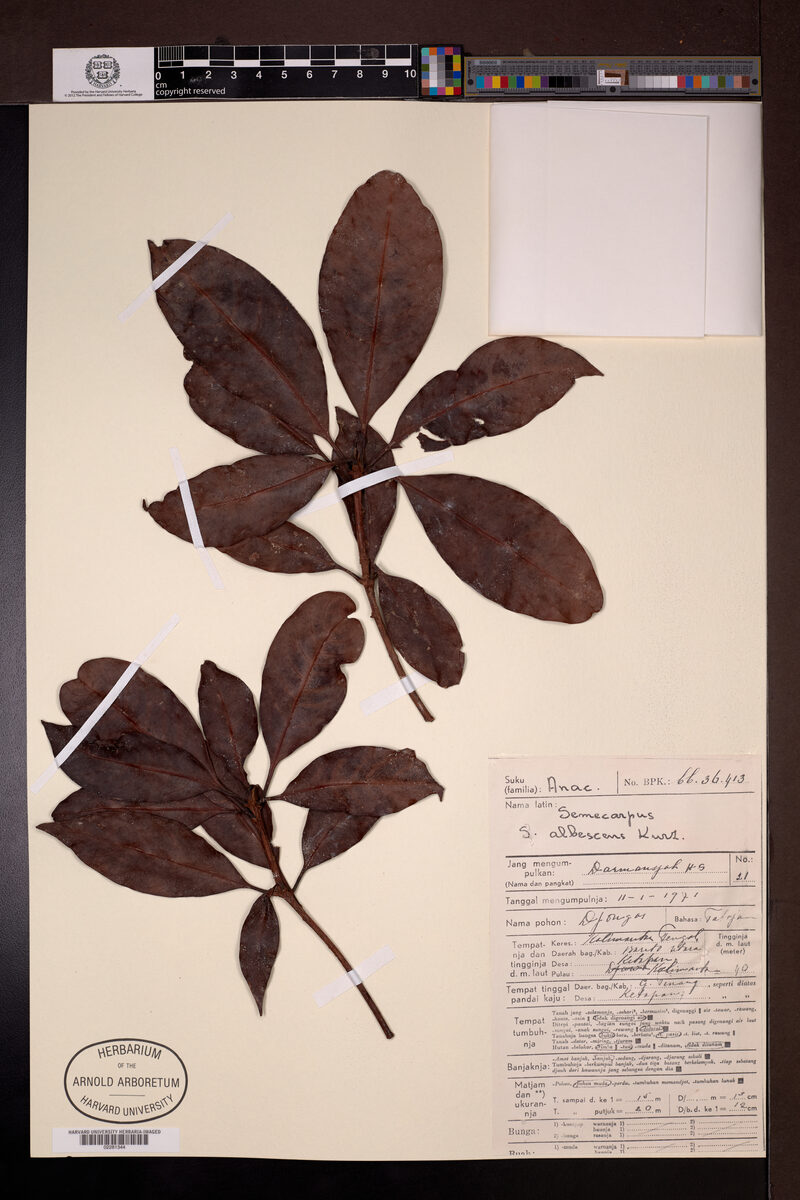
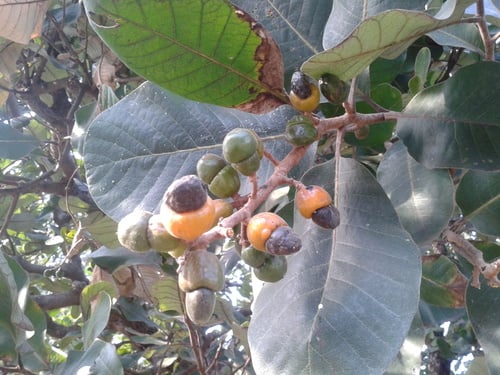
Trichoscypha acuminata
Engl.
iNaturalist· cc-by-nc
(c) krasik, some rights reserved (CC BY-NC)
iNaturalist· cc-by-nc
(c) Oliver Haumann, some rights reserved (CC BY-NC), uploaded by Oliver Haumann
Summary
Source: WikipediaTrichoscypha acuminata, commonly called amvout, is a species of plant in the family Anacardiaceae. It is found in Nigeria, Cameroon, Equatorial Guinea, Central African Republic, Gabon, the Congos and Angola. Mature trees reach 20m in height and leaves are up to 1.5m long. Its natural habitat is rain forest. Fruits are dark red and edible.
Description
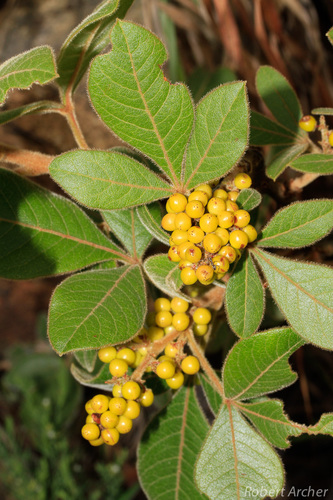
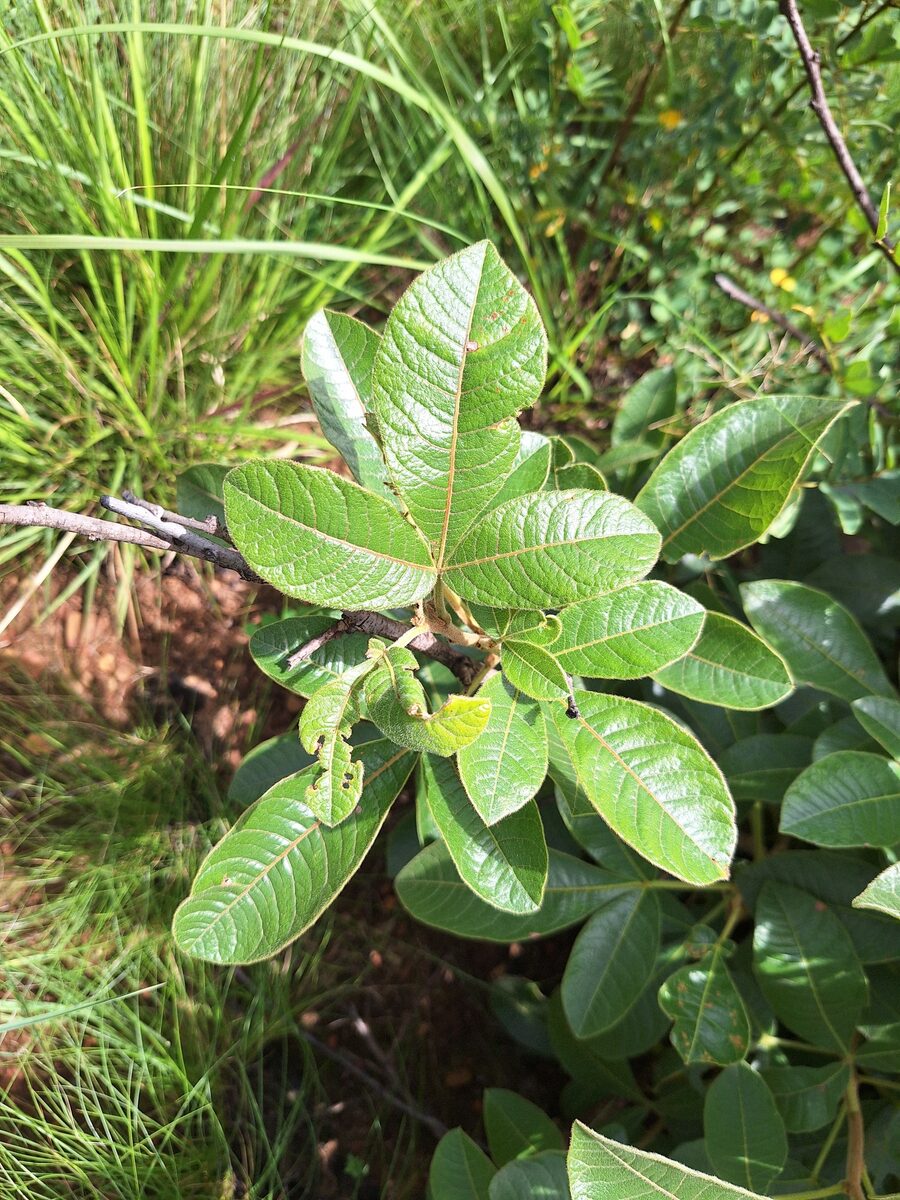
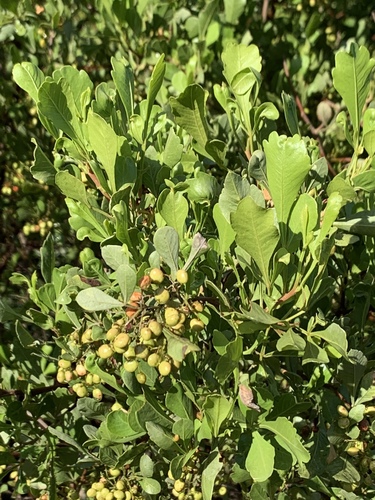
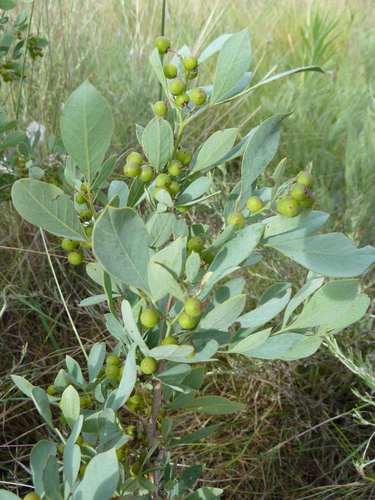
A tree. It grows 20 m high. The trunk is straight and 50 cm across. The leaves are crowded at the ends of branches. The leaves have 7-17 leaflets. The leaflets are oblong and 15-20 cm long by 3-7 cm wide. The flowers are on the stems. The male flowering shoots are 30 cm long. The flowers are pink to red. The fruit is oval and 6 cm long by 3.5 cm wide. They are dark red when ripe. They are edible.
Edible Uses
The fruit is eaten raw and is sweet. The juice is used for drinks. Both fruit and seeds are edible, and fruit are sold locally.
Traditional Uses
The fruit is eaten raw. They are sweet. The juice is used for drinks.
This uses section is brief — help expand it
Medicinal Uses
The bark, and also that of other closely related species, is used as a remedy against constipation in infants. A bark decoction is given to women to treat sterility and dysmenorrhoea, and for haemorrhage during pregnancy. A bark-decoction is used to wash small-pox pustules and to bathe rheumatics. A decoction is also used in steam baths and in frictions of the lees for bronchial affections, headache, feverish stiffness, pains in the sides or stomach, as a vermifuge and an aphrodisiac. The fruit is given to convalescents and to anaemic people as a tonic. A trace of saponin is reported present in the bark Tannins are present in the bark and roots.
Distribution
A tropical plant. It grows in the humid rain-forest in West Africa. It grows between 90-1,500 m above sea level.
Where It Grows
Africa, Angola, Cameroon, Central Africa, Central African Republic, CAR, Congo DR, Congo R, Equatorial Guinea, Gabon, Ghana, Nigeria, West Africa,
Production
Plants flower in April and May.
Other Information
Fruit are sold locally.
Synonyms
Also Known As
Amvout, Dole, Indoya, Naola, Ngoyo
References (16)
- Billong Fils, P. E., et al, 2020, Ethnobotanical survey of wild edible plants used by Baka people in southeastern Cameroon. Journal or Ethnobiology and Ethnomedicine. 16:64 p 9
- Breteler FN. 2004. The genus Trichoscypha (Anacardiaceae) in Lower Guinea and Congolia: A synoptic revision. Adansonia 26: 97-127.
- Burkill, H. M., 1985, The useful plants of west tropical Africa, Vol. 1. Kew.
- Dalziel, J. M., 1937, The Useful plants of west tropical Africa. Crown Agents for the Colonies London.
- Harris, D. J., 2002, The vascular plants of the Dzanga-Sangha Reserve, Central African Republic. National Botanic Garden of Belgium, 2002. – 274 pages p 40
Show all 16 references Hide references
- Jardin, C., 1970, List of Foods Used In Africa, FAO Nutrition Information Document Series No 2.p 165
- JSTOR Global Plants edible
- Moutsambote, J., 1996, Vegetation forestiere et plantes alimentaires de la region de la Sangha. Chp. 11 of Bien Manger et Bien Vivre. ORSTOM p 118
- Nkeoua, G. & Boundzanga, G. C., 1999, Donnees sur les produits forestieres non ligneux en Republique du Congo. FAO. p 38
- Peters, C. R., O'Brien, E. M., and Drummond, R.B., 1992, Edible Wild plants of Sub-saharan Africa. Kew. p 53
- Raponda-Walker, A & Sillans, R., 1961, Les Plantes Utiles du Gabon. Editions Paul Lechevalier, Paris. p 61 (As Trichoscypha ferruginea) (Drawing)
- Termote, C., et al, 2011, Eating from the wild: Turumbu, Mbole and Bali traditional knowledge of non-cultivated edible plants, District Tshopo, DRCongo, Gen Resourc Crop Evol. 58:585-618
- Vascular Plants of Korup National Park. korupplants.myspecies.info
- Vivien, J. & Faure, J.J., 1985, Abres des forets dense d'Afrique Centrale. Agence de Cooperation Culturelle et Technique. Paris. p 8
- Vivien, J., & Faure, J.J., 1996, Fruitiers Sauvages d'Afrique. Especes du Cameroun. CTA p 31
- World Checklist of Useful Plant Species 2020. Royal Botanic Gardens, Kew