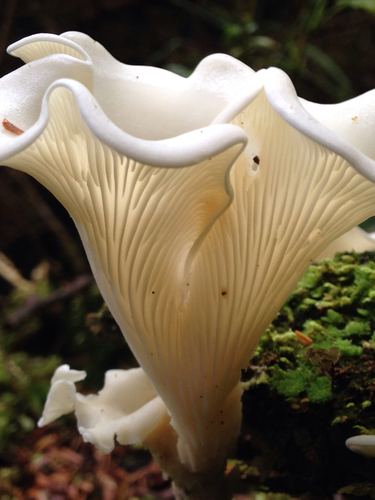
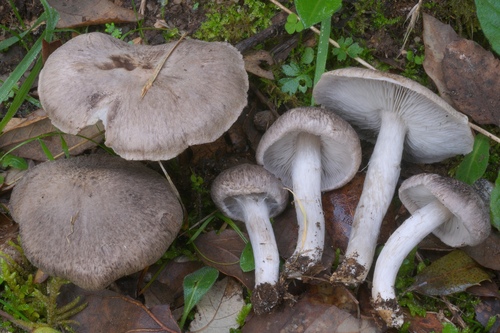
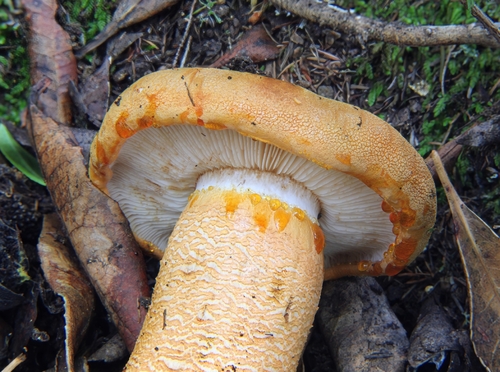
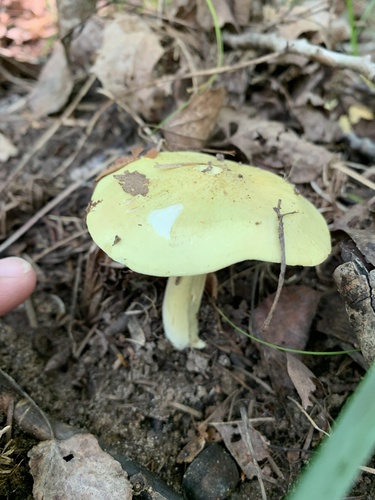
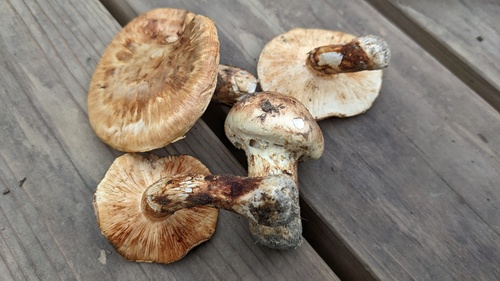
Tricholoma spp.
wikimedia· cc-by-sa
Wikimedia Commons - Dr. Hans-Günter Wagner
wikimedia· cc-by-sa
Wikimedia Commons - Dr. Hans-Günter Wagner
Description
A mushroom in the Tricholomataceae family found in tropical regions.
This description is brief — help expand it
Edible Uses
The fungus/mushroom is edible.
Known Hazards
Tricholoma pardinum is one of several poisonous members of the genus Tricholoma; its large size, fleshy appearance, and pleasant smell and taste add to the risk of its being accidentally consumed. It was responsible for more than twenty percent of cases of mushroom poisoning in Switzerland in the first half of the 20th century. Many cases of poisoning arise in the Jura Mountains. Eating it causes highly unpleasant gastrointestinal symptoms of nausea, dizziness, vomiting, and diarrhea. These arise fifteen minutes to two hours after consumption and often persist for several hours; complete recovery usually takes four to six days. Sweating and anxiety may be evident, and disturbance in liver function has been recorded. Cramping may occur in the calves. In one case, seven people and a cat suffered severe symptoms after sharing a meal that contained only two mushroom caps. The toxin, the identity of which is unknown, appears to cause a sudden inflammation of the mucous membranes lining the stomach and intestines. These symptoms may be severe enough to warrant hospitalisation. Treatment is supportive; antispasmodic medicines may lessen colicky abdominal cramps, and activated charcoal may be administered early on to bind residual toxin. Intravenous fluids may be required if dehydration has been extensive, especially with children and the elderly. Once gastric contents are emptied, metoclopramide may be used in cases of recurrent vomiting.
Distribution
It is a tropical plant.
Where It Grows
Africa,
Notes
CAUTION Tricholoma pardinum and Tricholoma sulphureum are poisonous
References (1)
- Jardin, C., 1970, List of Foods Used In Africa, FAO Nutrition Information Document Series No 2.p 116