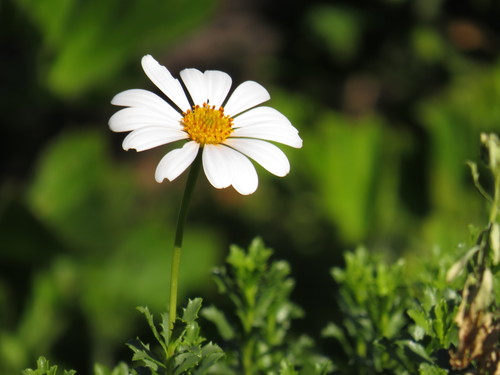
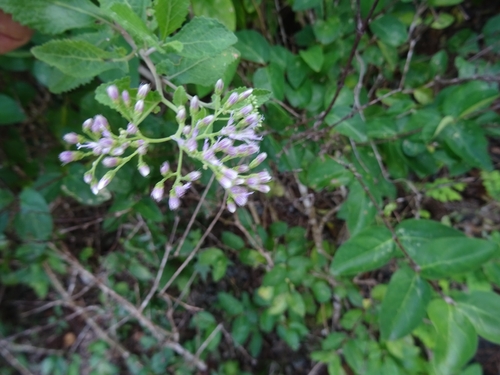
Artemisia ludoviciana
Nutt.
Western Mugwort, White sage
iNaturalist· cc-by-nc
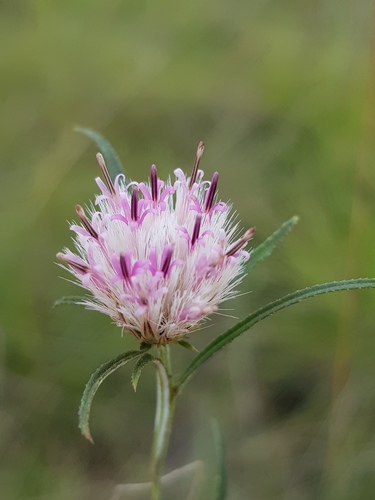
(c) curt_nimz, some rights reserved (CC BY-NC), uploaded by curt_nimz
iNaturalist· cc-by
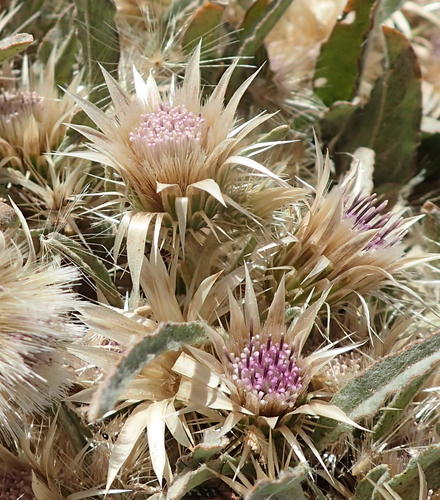
(c) Mary Krieger, some rights reserved (CC BY), uploaded by Mary Krieger
iNaturalist· cc-by
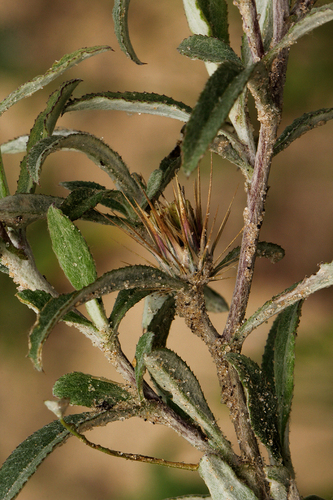
(c) aarongunnar, some rights reserved (CC BY), uploaded by aarongunnar
Summary
Source: WikipediaArtemisia ludoviciana is a North American species of flowering plant in the daisy family Asteraceae, known by several common names, including silver wormwood, western mugwort, Louisiana wormwood, white sagebrush, lobed cud-weed, prairie sage, and gray sagewort. Ludoviciana is the Latinized version of the word Louisiana.
Description
A perennial herb. It grows 60-120 cm high and 60-90 cm wide. The roots spread easily producing upright stems. The leaves are grey. They are sword shaped and can have coarse teeth. The leaves are densely felted underneath. The flowers are tiny and occur in plumes. They are greyish-white.
Edible Uses
Edible Parts: Seed Edible Uses: Condiment Tea Western mugwort leaves provide a pungent seasoning but are unpleasantly bitter. Seeds were historically used, but they are limited in terms of safety and palatability. Overall, a survival food rather than a regular edible [2-3]. Leaves and flowering heads are used as a flavouring or garnish for sauces, gravies, etc. A herb tea is made from the leaves and flowering heads. Seed. No further details are given, but the seed is very small and fiddly to use.
Traditional Uses
The leaves and flower heads are used as a seasoning. They are also made into tea. The chopped leaves are added to sauces and gravies. The seeds are also eaten.
Medicinal Uses
Astringent Deodorant Eczema Poultice Skin The leaves are astringent. They were commonly used by the N. American Indians to induce sweating, curb pain and diarrhoea. A weak tea was used in the treatment of stomach ache and menstrual disorders. Externally, a wash of the leaves was applied to itching, rashes, swellings, boils, sores, etc. The wash was also applied to eczema and as an underarm deodorant. A poultice of the leaves can be applied to spider bites, blisters and burst boils. A snuff of the crushed leaves has been used to treat headaches, the sinuses and nosebleeds.
Known Hazards
There is a report that the plant can cause allergies in some people.
Distribution
It is a temperate plant. It is frost hardy. It suits hardiness zones 5-10.
Where It Grows
Alaska, America, Australia, Belize, Canada, Central America, Guatemala, Mexico, North America*, USA,
Cultivation
Experimental Crop Industrial Crop: Hydrocarbon Management: Coppice. Habitat & Distribution: Very widespread across central and western U.S. Occupies dry slopes, prairies, open woods, and disturbed sites. Many subspecies, distinguished mainly by leaf shape. Growth & Ecology: Rhizomatous perennial forming dense patches. Blooms mid–late summer. Dominant sagewort of many western grasslands. Cultivation: Thrives in dry, well-drained soils in full sun. Tolerates drought and poor fertility.Easily grown in a well-drained circumneutral or slightly alkaline loamy soil, preferring a sunny position. Does well in a sandy soil. Established plants are very drought tolerant. Plants are longer lived, more hardy and more aromatic when they are grown in a poor dry soil. A very polymorphic species. Slugs love the young shoots of this plant and have been known to destroy even well-established plants. A very ornamental plant, spreading by stolons to form loose patches, it can be invasive. There are many named forms selected for their ornamental value. Members of this genus are rarely if ever troubled by browsing deer. USDA zones 3–9. Very hardy.
Propagation
Seed - surface sow from late winter to early summer in a greenhouse, making sure that the compost does not dry out. When large enough to handle, prick the seedlings out into individual pots and grow them on in the greenhouse for their first winter. Plant out in late spring or early summer. Division in spring or autumn. Basal cuttings in late spring. Harvest the young shoots when about10 - 15cm long, pot up in a lightly shaded position in a greenhouse or cold frame and plant them out when well rooted. Very easy.
Other Uses
Deodorant Repellent The plant makes a useful ground cover plant once it is established. The leaves can be placed in the shoes as a foot deodorant. An infusion of the leaves has been used as an underarm deodorant. The soft leaves can be used as a toilet paper. The plant can be burnt to repel mosquitoes. Special Uses Carbon Farming Ground cover
Other Information
It is a cultivated food plant.
Notes
There are about 300 Artemisia species.
Synonyms
Also Known As
Cudweed, Estafiate, Lousiana sage, Louisiana wormwood, Prairie sage, White prairie sage
References (17)
- Beckstrom-Sternberg, Stephen M., and James A. Duke. "The Foodplant Database." http://probe.nalusda.gov:8300/cgi-bin/browse/foodplantdb.(ACEDB version 4.0 - data version July 1994)
- Bodkin, F., 1991, Encyclopedia Botanica. Cornstalk publishing, p 104
- Bremness, L., 1994, Herbs. Collins Eyewitness Handbooks. Harper Collins. p 151
- Brickell, C. (Ed.), 1999, The Royal Horticultural Society A-Z Encyclopedia of Garden Plants. Convent Garden Books. p 141
- Brown, D., 2002, The Royal Horticultural Society encyclopedia of Herbs and their uses. DK Books. p 133
Show all 17 references Hide references
- Cundall, P., (ed.), 2004, Gardening Australia: flora: the gardener's bible. ABC Books. p 190
- Estrada-Castillon, E., et al, 2014, Ethnobotany in Rayones, Nuevo Leon, Mexico. Journal of Ethnobiology and Ethnomedicine, 10:62
- Facciola, S., 1998, Cornucopia 2: a Source Book of Edible Plants. Kampong Publications, p 34
- Gen. N. Amer. pl. 2:143. 1818
- Joyce, D., 1998, The Garden Plant Selector. Ryland, Peters and Small. p 207
- Larios, et al., 2013, Plant management and biodiversity conservation in Náhuatl homegardens of the Tehuacán Valley, Mexico. Journal of Ethnobiology and Ethnomedicine 2013 9:74. (As a subspecies)
- Lord, E.E., & Willis, J.H., 1999, Shrubs and Trees for Australian gardens. Lothian. p 205
- MacKinnon, A., et al, 2009, Edible & Medicinal Plants of Canada. Lone Pine. p 370
- Plants for a Future database, The Field, Penpol, Lostwithiel, Cornwall, PL22 0NG, UK. http://www.scs.leeds.ac.uk/pfaf/
- Seidemann J., 2005, World Spice Plants. Economic Usage, Botany, Taxonomy. Springer. p 54
- Trendafilova, A., et al, 2020, Research Advances on Health Effects of Edible Artemisia Species and Some Sesquiterpene Lactones Constituents. Foods 2021, 10, 65. p 4
- Young, J., (Ed.), 2001, Botanica's Pocket Trees and Shrubs. Random House. p 107