Tragus australianus
S. T. Blake
Small burr grass
iNaturalist· cc-by
(c) Kym Nicolson, some rights reserved (CC BY), uploaded by Kym Nicolson
iNaturalist· cc-by
(c) Kym Nicolson, some rights reserved (CC BY), uploaded by Kym Nicolson
iNaturalist· cc-by
(c) Kym Nicolson, some rights reserved (CC BY), uploaded by Kym Nicolson
Summary
Source: WikipediaTragus australianus, common names (in Australia) Burr grass, Small burrgrass, and Tickgrass, is a summer ephemeral grass (in the Poaceae family), first described by Stanley Thatcher Blake in 1941. It flowers in response to rain. Its native range is mainland Australia, where it is found in arid and semi-arid areas.
Description
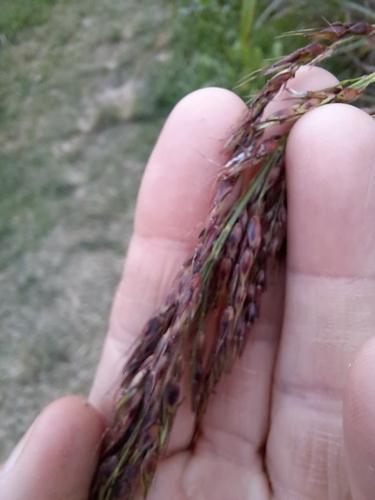
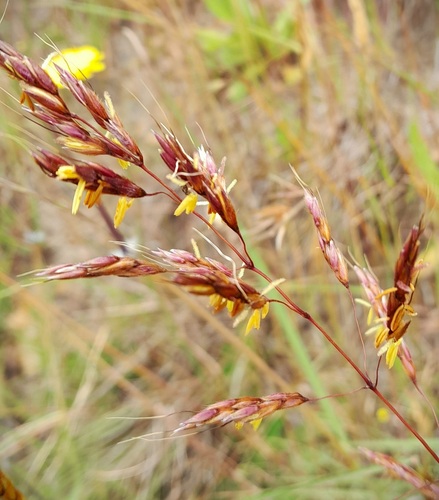
An annual grass. The stems are 40 cm high. It can lie along the ground or be erect. The internodes of the stems are rough and hairy. The ligule in thin and less than 1 mm long. The leaf blades are rigid and narrow. They are spear shaped. They have a rounded base and rigid hairs along the edge. The flower spikes are 5-8 cm long. The spikelets are spiny and burr like.
Edible Uses
The seeds are eaten as a cereal.
Distribution
It grows in drier areas. It grows from tropical to warm temperate places. In Argentina it grows from sea level to 1,100 m above sea level.
Where It Grows
Argentina, Australia, South America,
Notes
There are 7 Tragus species. They grow in tropical and warm temperate regions.