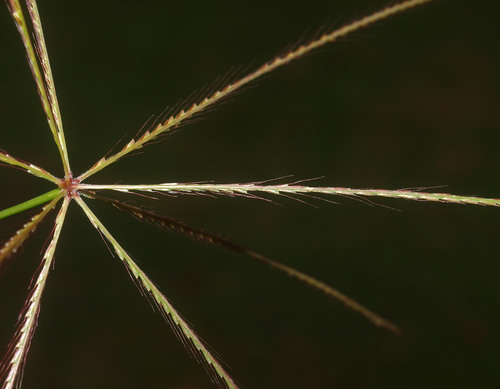
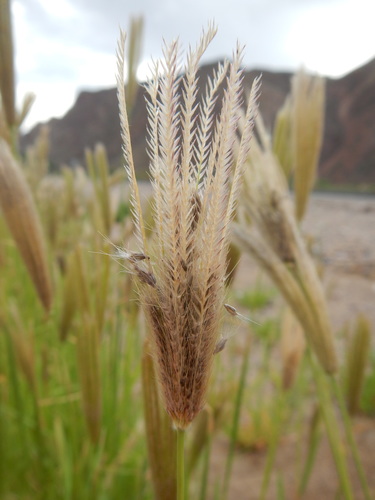
Phyllostachys nigra
(Lodd. ex Lindl.) Munro
Black bamboo, Purple bamboo
iNaturalist· cc-by
(c) the swamp ass, some rights reserved (CC BY)
iNaturalist· cc-by-nc
(c) onidiras-iNaturalist, some rights reserved (CC BY-NC), uploaded by onidiras-iNaturalist
iNaturalist· cc-by
(c) the swamp ass, some rights reserved (CC BY)
Summary
Source: WikipediaPhyllostachys nigra, commonly known as black bamboo or purple bamboo (Chinese: 紫竹), is a species of bamboo, native to Hunan Province of China, and is widely cultivated elsewhere. Growing up to 35 feet tall by 2 inches wide, it forms clumps of slender arching canes which turn black after two or three seasons. The abundant lance-shaped leaves are 4–13 cm (2–5 in) long. Numerous forms and cultivars are available for garden use. The species and the form P. nigra f. henonis have both gained the Royal Horticultural Society's Award of Garden Merit. The form henonis is also known as Henon bamboo and as cultivar 'Henon'.
Description
A large bamboo grass. It grows 1.5-3 m high and spreads 1.8-3 m wide. It can be 10-15 m tall and spread 6-15 m wide. It forms clumps. The canes arch over. The canes are green in the first year then turn mottled to almost black. The canes are hollow and can be 3 cm thick.
Edible Uses
The young shoots are somewhat acrid when raw and require cooking before eating. They are prepared by boiling in one change of water, with the water changed after 8–10 minutes, resulting in a distinctive taste and aroma. Shoots measure about 5cm in diameter and are harvested in spring when they stand about 8cm above the ground, cut roughly 5cm below soil level.
Traditional Uses
The shoots are eaten cooked but the water needs to be changed after 8-10 minutes.
This uses section is brief — help expand it
Medicinal Uses
The leaves are antipyretic and diuretic, used internally to treat fevers (particularly infantile convulsions), vomiting, and nosebleeds. They are harvested during the growing season and dried for later use. The juice pressed from young stems in summer — then dried — is antipyretic, antitussive, expectorant, and sedative, taken internally for lung infections with cough and phlegm. The epidermis of the stem bark, collected from young stems in summer and dried, is antiemetic, depurative, and sedative, used internally for vomiting, nosebleeds, and coughs. The root is astringent, antipyretic, diuretic, and styptic, and has been used in the treatment of rabies; roots are harvested in winter and dried for later use.
Distribution
It is a temperate plant. It is frost hardy. In Hunan in China it grows in open forests on slopes and in valleys between 1,100-1,200 m above sea level. It suits hardiness zones 7-10. Mt Cootha Botanical Gardens. Wittunga Botanical Gardens.
Where It Grows
Asia, Australia, China, Hawaii, India, Indochina, Indonesia, Japan, Korea, Malaysia, Pacific, SE Asia, Tasmania, USA, Vietnam,
Cultivation
It is usually grown by division of the underground rhizomes.
Propagation
Surface sow seed as soon as it is ripe in a greenhouse at around 20°C, keeping the compost consistently moist. Germination usually occurs fairly quickly with good-quality seed, though it can take 3–6 months. Grow seedlings on in a lightly shaded greenhouse until large enough to plant out. Seed is rarely available. Divide in spring as new growth begins; divisions from open ground transplant poorly and will need careful treatment under cover in pots until at least late spring. Divide during wet weather, as small divisions establish better than large clumps. Alternatively, large divisions can be taken from established clumps and moved directly to their permanent positions, provided they are misted or drenched frequently until established. Basal cane cuttings can also be taken in spring.
Other Uses
The canes make good plant supports. Though thin-walled, they are durable and are also used for cabinet work and decorative panels and inlays. The rhizome is worked into umbrella handles, wickerwork, canes, musical instruments, and various handicrafts.
Notes
There are about 80 Phyllostachys species.
Synonyms
Also Known As
Bambu hitam cina, Hainan bamboo, Kuro-chiku, Whangee, Zi Zhu
References (19)
- Ambasta, S.P. (Ed.), 2000, The Useful Plants of India. CSIR India. p 452
- Arora, R. K., 2014, Diversity in Underutilized Plant Species - An Asia-Pacific Perspective. Bioversity International. p 44
- Bremness, L., 1994, Herbs. Collins Eyewitness Handbooks. Harper Collins. p 202
- Chen, B. & Qiu, Z., Consumer's Attitudes towards Edible Wild Plants, Ishikawa Prefecture, Japan. p 24 www.hindawi.com/journals/ijfr/aip/872413.pdf
- Crawford, M., 2012, How to grow Perennial Vegetables. Green Books. p 75
Show all 19 references Hide references
- Crouzet, I., Starosta, P., 1998, Bamboos. Evergreen. p 76f
- Cundall, P., (ed.), 2004, Gardening Australia: flora: the gardener's bible. ABC Books. p 1036
- Facciola, S., 1998, Cornucopia 2: a Source Book of Edible Plants. Kampong Publications, p 46
- Hibbert, M., 2002, The Aussie Plant Finder 2002, Florilegium. p 232
- http://www.plantnames.unimelb.edu.au/sorting/Bamboos_Edible.html
- Joyce, D., 1998, The Garden Plant Selector. Ryland, Peters and Small. p 332
- Kermath, B. M., et al, 2014, Food Plants in the Americas: A survey of the domesticated, cultivated and wild plants used for Human food in North, Central and South America and the Caribbean. On line draft. p 648
- Ryan, S., 2008, Dicksonia. Rare Plants Manual. Hyland House. p 85
- Slocum, P.D. & Robinson, P., 1999, Water Gardening. Water Lilies and Lotuses. Timber Press. p 130
- Staples, G.W. and Herbst, D.R., 2005, A tropical Garden Flora. Bishop Museum Press, Honolulu, Hawaii. p 747
- Sukarya, D. G., (Ed.) 2013, 3,500 Plant Species of the Botanic Gardens of Indonesia. LIPI p 849
- Trans. Linn. Soc. London 26:38. 1868
- Valder, P., 1999, The Garden Plants of China. Florilegium. p 99
- Woodward, P., 2000, Asian Herbs and Vegetables. Hyland House. p 27