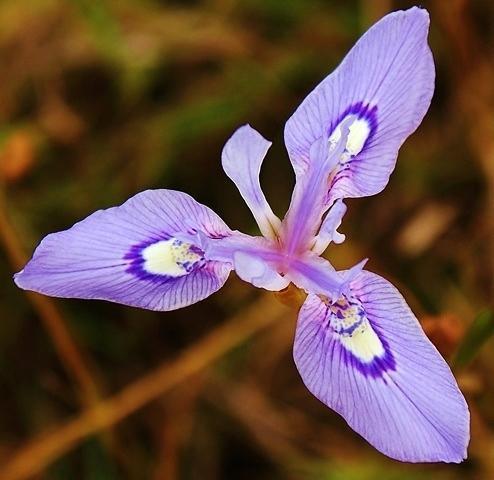
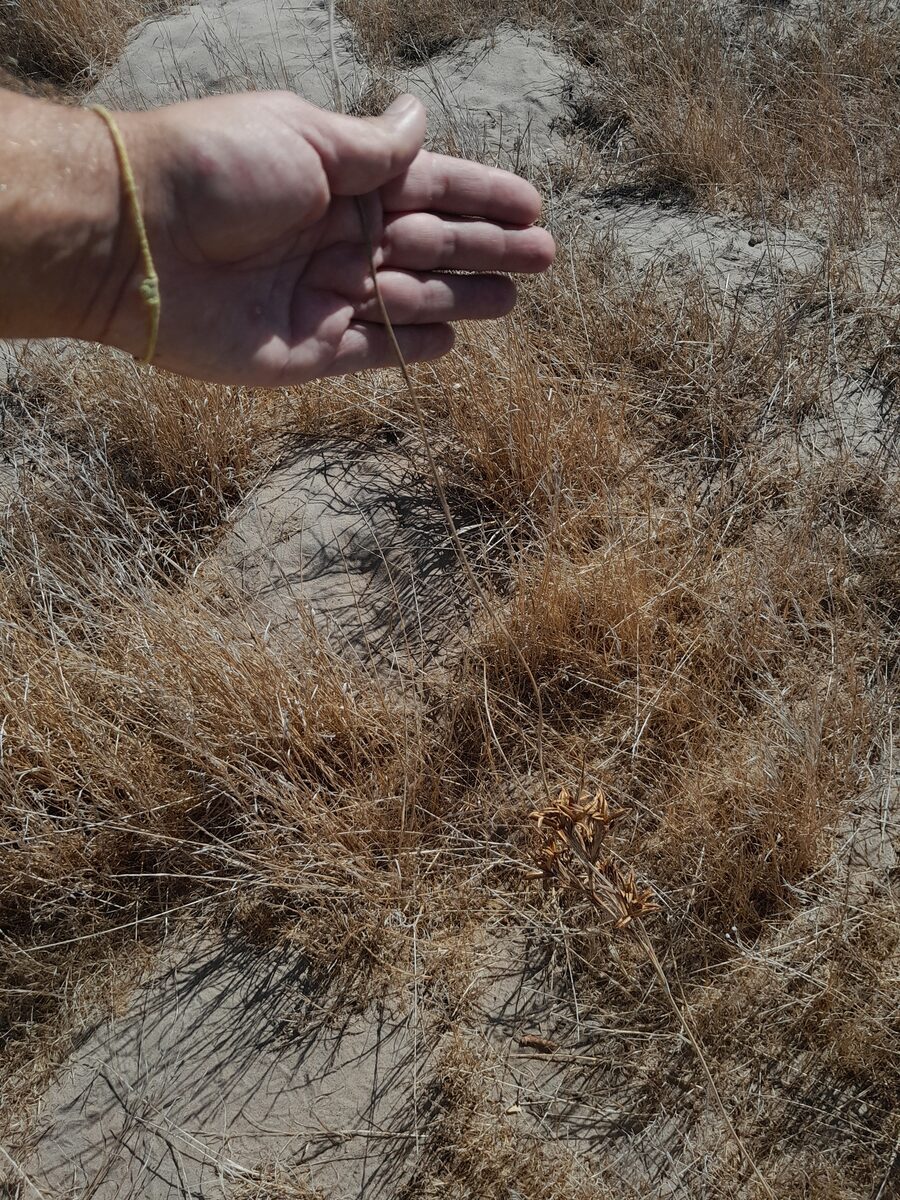
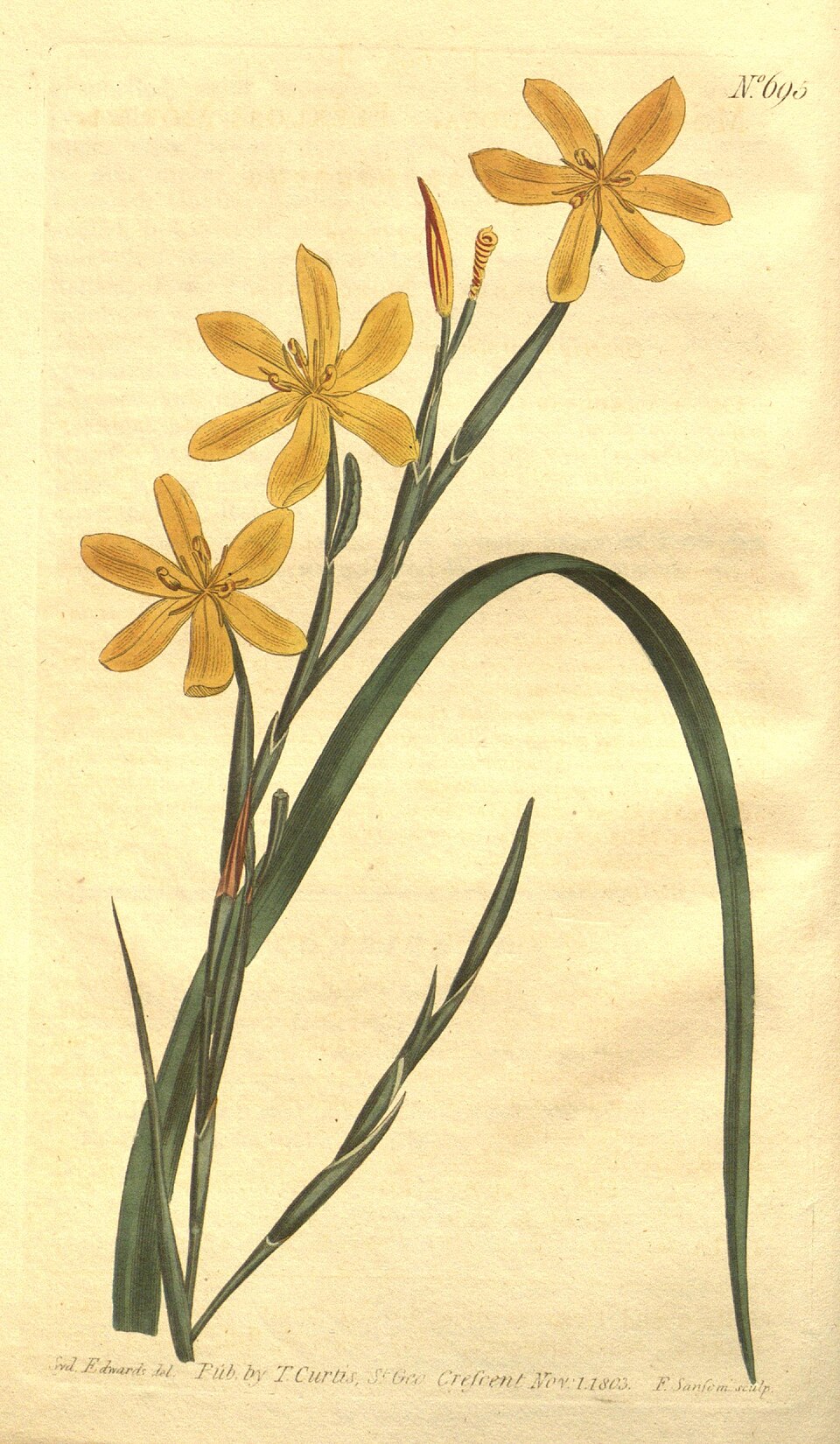
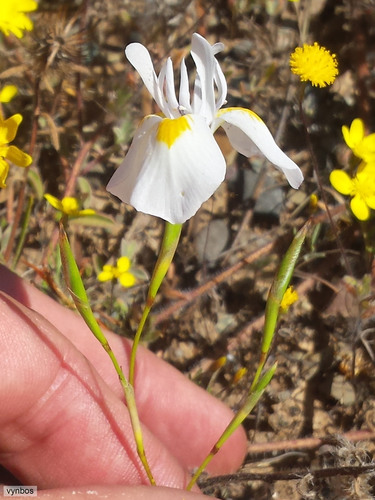
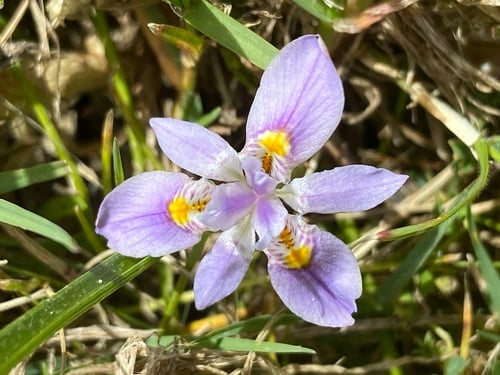
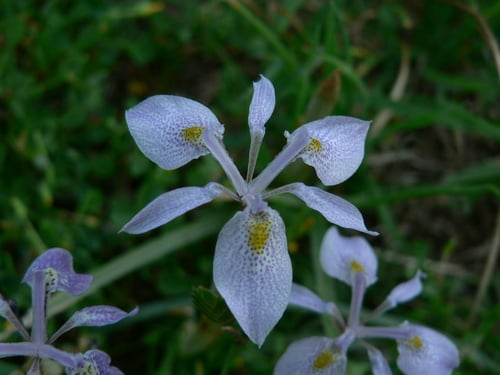
Gladiolus cruentus
S. Moore
iNaturalist· cc-by-nc
(c) Paolo Candotti, some rights reserved (CC BY-NC), uploaded by Paolo Candotti
iNaturalist· cc-by-nc
(c) Paolo Candotti, some rights reserved (CC BY-NC)
Summary
A corm-forming plant reaching 0.9 m (3 ft) tall. Flowers from July to August. Hermaphroditic and insect-pollinated. Grows in light sandy or medium loamy, well-drained soils across mildly acidic to mildly alkaline pH ranges. Requires full sun and prefers moist conditions. Hardy to UK zone 8.
Description
A corm-forming plant reaching 0.9 m (3 ft) tall. Flowers from July to August. Hermaphroditic and insect-pollinated. Grows in light sandy or medium loamy, well-drained soils across mildly acidic to mildly alkaline pH ranges. Requires full sun and prefers moist conditions. Hardy to UK zone 8.
Edible Uses
The flowers can be eaten raw or cooked — added to salads or used as a boiled vegetable.
Traditional Uses
The flower is eaten raw after the anthers are removed. They can be eaten raw in salads or cooked as a vegetable.
This uses section is brief — help expand it
Medicinal Uses
None known.
Distribution
It is a warm temperate plant. It needs well-drained soil. It needs a sunny position. It is best in moist soil. It suits hardiness zone 8.
Where It Grows
Africa*, Australia, Lesotho, South Africa*, Southern Africa,
Cultivation
Prefers a sunny sheltered position in a light sandy neutral to slightly acid soil with a pH between 6.5 and 7. Requires a stony gritty loam. This species is not hardy in the colder areas of the country, it tolerates temperatures down to between -5 and -10°c. This species is one of the parents of the cultivated garden gladiolas.
Propagation
Sow seed in early spring in a greenhouse at 15°C, where it usually germinates freely. Seed can also be sown as soon as ripe in autumn in a warm greenhouse. Sow thinly so seedlings can remain in the pot undisturbed for their first year, with occasional liquid feeding to prevent nutrient deficiency. Pot up small bulbs when dormant in autumn, placing 2–3 per pot, and grow on for another year or two under glass before planting out in late spring. For division, dig up corms in October, dry at around 20°C in well-ventilated conditions, and store in a cool but frost-free place over winter, planting out approximately 10 cm deep in April. Cormlets collected at lifting can be stored the same way; larger ones can be planted out in spring, while smaller ones are best grown on for a year under glass first.
Other Uses
None known.
References (6)
- Fox, F. W. & Young, M. E. N., 1982, Food from the Veld. Delta Books. p 242
- Gillarmod, J., 1971,
- Peters, C. R., O'Brien, E. M., and Drummond, R.B., 1992, Edible Wild plants of Sub-saharan Africa. Kew. p 32
- Plants for a Future database, The Field, Penpol, Lostwithiel, Cornwall, PL22 0NG, UK. http://www.pfaf.org
- Ruiters-Welcome, A. K., 2019, Food plants of southern Africa. Ph.D. thesis. Univ. of Johannesburg p 67
Show all 6 references Hide references
- Welcome, A. K. & Van Wyk, B.-E., 2019, An inventory and analysis of the food plants of southern Africa. South African Journal of Botany 122 (2019) 136–179