Artemisia gmelinii
Weber. ex Stechm.
Russian wormwood
iNaturalist· cc-by
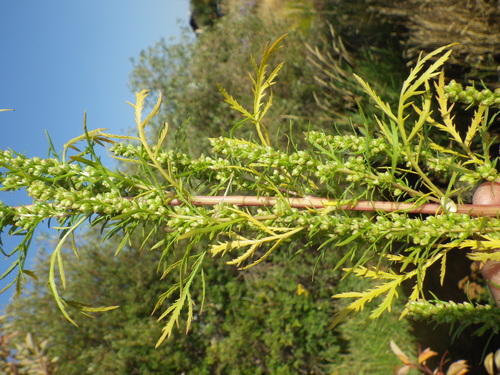
(c) Oleg Kosterin, some rights reserved (CC BY), uploaded by Oleg Kosterin
iNaturalist· cc-by-nc
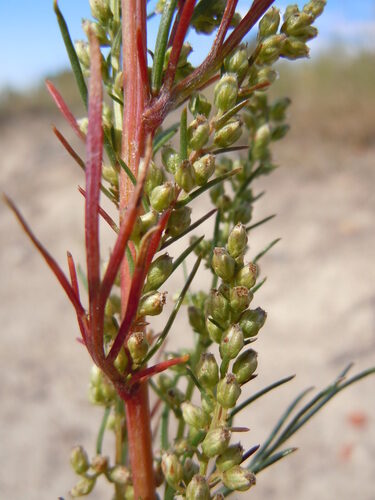
(c) Ринат Султанов, some rights reserved (CC BY-NC), uploaded by Ринат Султанов
iNaturalist· cc-by-nc
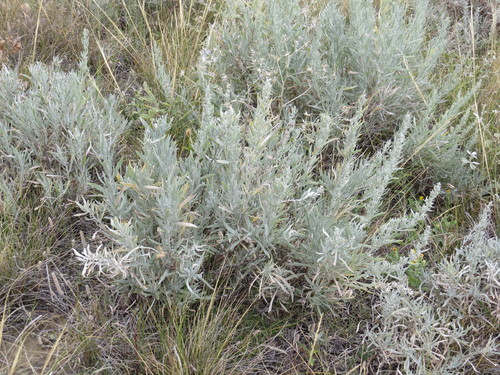
(c) V.S. Volkotrub, some rights reserved (CC BY-NC), uploaded by V.S. Volkotrub
Summary
Source: WikipediaArtemisia gmelinii, also known as Artemisia sacrorum, is a perennial shrub in the family Asteraceae. It is commonly known as Russian wormood or Gmelin's wormwood.
Description
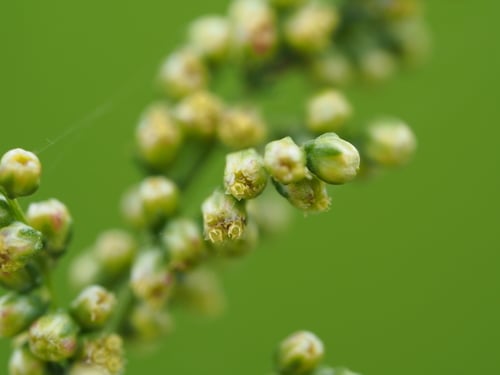
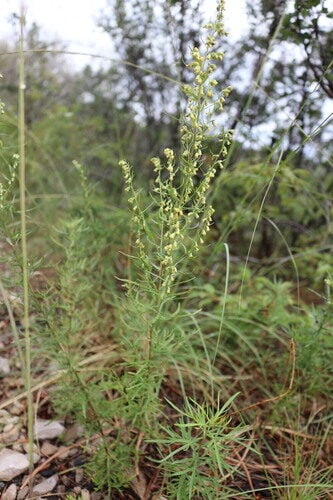
A shrub. It grows 50-100 cm high. It has several upright stems. It has woody rhizomes that can be hairy. The leaves in the middle of the stem are oval or triangle shaped and 2-10 cm long by 2-8 cm wide. They are divided 2 or 3 times. There are 3-5 pairs of segments.
Edible Uses
Edible Parts: Leaves Edible Uses: One report says that the plant is edible but gives no more details.
Traditional Uses
The leaves and flowers are mixed with wheat flour and water to prepare ferments.
This uses section is brief — help expand it
Medicinal Uses
Hepatic The leaf and stem are used in Korea to treat hepatitis, hyperlipaemia and infected cholecystitis. The plant contains flavonoids, sesquiterpenes and other bio-active constituents, though no bio-activites have been recorded scientifically.
Known Hazards
Although no reports of toxicity have been seen for this species, skin contact with some members of this genus can cause dermatitis or other allergic reactions in some people.
Distribution
It is a cool temperate plant. It grows in hills, steppe, semi-desert steppe, meadows, rocky slopes, scrub, dry floodlands, wastelands between 1500-4900 m altitude in China.
Where It Grows
Asia, Afghanistan, Central Asia, China, E Europe, Himalayas, India, Japan, Kazakhstan, Korea, Kyrgyzstan, Mongolia, Nepal, Pakistan, Russia, Siberia, Tajikistan, Uzbekistan,
Cultivation
Easily grown in a well-drained circumneutral or slightly alkaline loamy soil, preferring a warm sunny dry position. Established plants are drought tolerant. Plants are longer lived, more hardy and more aromatic when they are grown in a poor dry soil. This species is closely related to A. sacrorum and often confused with that species. We are not sure if this plant is annual, biennial or perennial, since various reports differ. Members of this genus are rarely if ever troubled by browsing deer.
Propagation
Seed - surface sow from late winter to early summer in a greenhouse, making sure that the compost does not dry out. When large enough to handle, prick the seedlings out into individual pots and grow them on in the greenhouse for their first winter. Plant out in late spring or early summer. Division in spring or autumn. Basal cuttings in late spring. Harvest the young shoots when about10 - 15cm long, pot up in a lightly shaded position in a greenhouse or cold frame and plant them out when well rooted. Very easy.
Other Uses
The plant yields 1% essential oil, which contains 19% essential oil, 6% camphor. Special Uses
Notes
There are about 300 Artemisia species.
Synonyms
Also Known As
Burmack, Burnak, Bu tse, Chumbar, Jan, Mkhan pa, Munya, Tatwan
References (6)
- Ambasta S.P. (Ed.), 2000, The Useful Plants of India. CSIR India. p 55
- Artemis. 17. 1775
- Boesi, A., 2014, Traditional knowledge of wild food plants in a few Tibetan communities. Journal of Ethnobiology and Ethnomedicine 10:75
- Ling Yuou-ruen & C. J. Humphries, ASTERACEAE (Draft), Tribe ANTHEMIDEAE Cassini, in Flora of China
- Plants for a Future database, The Field, Penpol, Lostwithiel, Cornwall, PL22 0NG, UK. http://www.scs.leeds.ac.uk/pfaf/
Show all 6 references Hide references
- Urgamal, M., Oyuntsetseg, B., Nyambayar, D. & Dulamsuren, Ch. 2014. Conspectus of the vascular plants of Mongolia. (Editors: Sanchir, Ch. & Jamsran, Ts.). Ulaanbaatar, Mongolia. “Admon“ Press. 334pp. (p. 199-230).