Thymus vulgaris
L.
Thyme, Common thyme, English thyme, French thyme
iNaturalist· cc-by-nc
(c) Alfonso Sánchez, some rights reserved (CC BY-NC)
iNaturalist· cc-by-nc
(c) Alfonso Sánchez, some rights reserved (CC BY-NC)
iNaturalist· cc-by
(c) Ryan McMinds, some rights reserved (CC BY)
Summary
Source: WikipediaThymus vulgaris (common thyme, German thyme, garden thyme or just thyme) is a species of flowering plant in the mint family Lamiaceae, native to southern Europe from the western Mediterranean to southern Italy. Growing to 15–30 cm (6–12 in) tall by 40 cm (16 in) wide, it is a bushy, woody-based evergreen subshrub with small, highly aromatic, grey-green leaves and clusters of purple or pink flowers in early summer. It is useful in the garden as groundcover, where it can be short-lived, but is easily propagated from cuttings. It is also the main source of thyme as an ingredient in cooking and as a herbal medicine. It is slightly spicier than oregano and sweeter than sage. The Latin specific epithet vulgaris means “common” in the sense of “widespread”.
Description
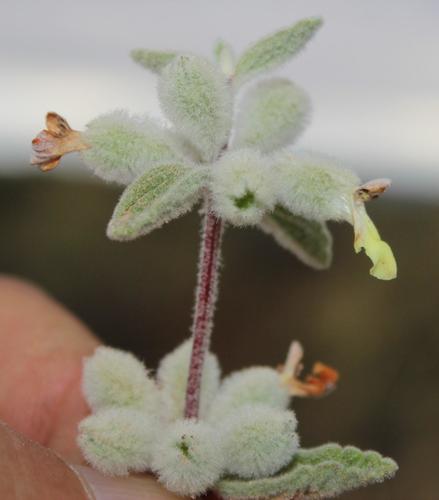
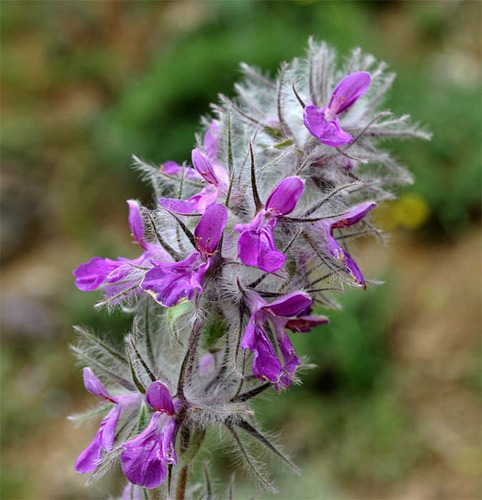
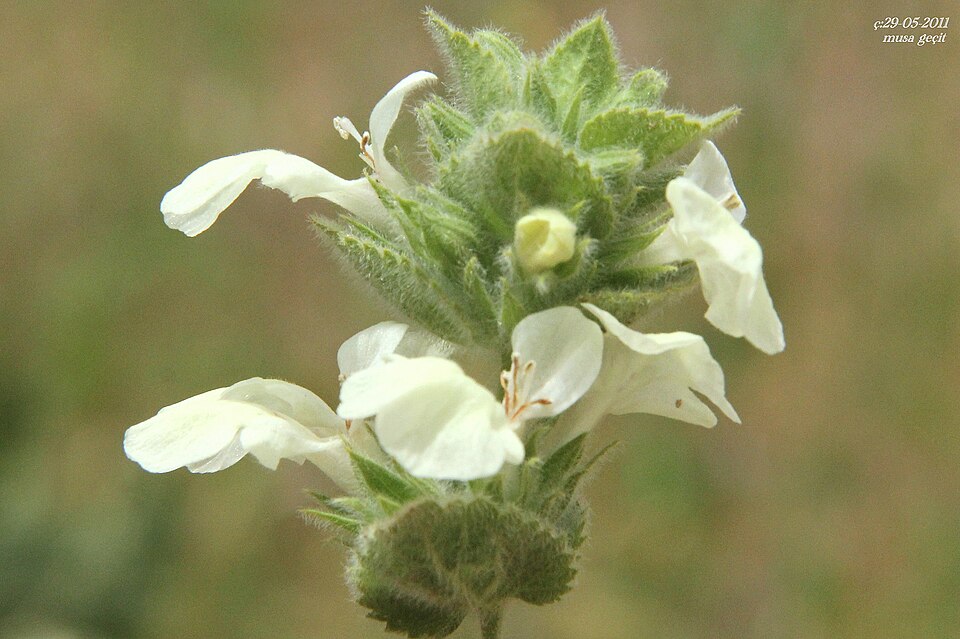
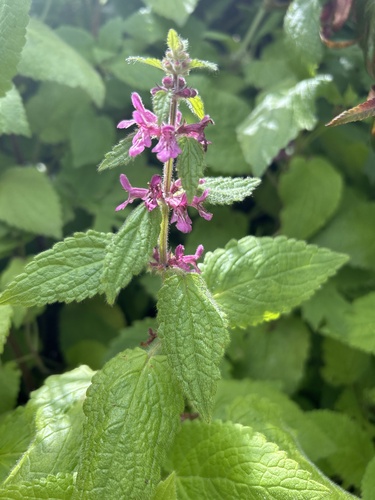
A low shrub. It grows to 20 cm tall and spreads to 30 cm across. It forms a bushy cushion. It keeps growing from year to year. It is an evergreen with woody grey roots. The branches are square in cross section and hairy. The leaves are very small and greenish grey. They do not have leaf stalks and are produced opposite one another. The leaves are 0.6-1.5 cm long. The edges of the leaves curl backwards and the underside of the leaves is very hairy. The flowers are pale mauve or purple. They form tubes with two lips. The flowers occur in rings towards the end of the branches. The plant has a sweet smell.
Edible Uses
The leaves and flowering tops can be eaten raw in salads, used as a garnish, or added as a flavouring to cooked foods — thyme goes especially well with mushrooms and courgettes and is an essential component of bouquet garni. It holds its flavour well through long, slow cooking and can be used fresh or dried. For drying, harvest in early and late summer just before the flowers open and dry quickly. The fresh or dried leaves also make a pungent, spicy aromatic tea. Nutritional values per 100g of dry leaves (276 calories): water 7.8%, protein 9.1g, fat 7.4g, carbohydrate 63.9g, fibre 18.6g, ash 11.7g; minerals — calcium 1890mg, phosphorus 201mg, iron 123.6mg, magnesium 220mg, sodium 55mg, potassium 814mg, zinc 6.2mg; vitamins — A 3800mg, thiamine (B1) 0.51mg, riboflavin (B2) 0.4mg, niacin 4.94mg.
Traditional Uses
The leaves and flowers are used as a seasoning to flavour foods. They are used fresh or dried. They are used to flavour stuffings, fish, meat, cheese, vinegar and gravy. They are added to the brine in which olives are pickled. It is used in soup that contains eggs and bread soaked in olive oil. The fresh or dried leaves can be used for tea. Young shoots are used as a garnish.
Medicinal Uses
Common thyme has a long history of folk use and is very rich in essential oils, which are responsible for most of its medicinal properties. It is particularly valued for its antiseptic and antioxidant effects, and as a tonic for respiratory and digestive complaints. The flowering tops are anthelmintic, strongly antiseptic, antispasmodic, carminative, deodorant, diaphoretic, disinfectant, expectorant, sedative, and tonic. Internally, it is used for dry coughs, whooping cough, bronchitis, bronchial catarrh, asthma, laryngitis, indigestion, gastritis, diarrhoea, and enuresis in children. It should not be prescribed for pregnant women. Externally, it treats tonsillitis, gum diseases, rheumatism, arthritis, and fungal infections. Regular use is considered to have an antioxidant effect, improving the health and longevity of individual body cells. The plant can be used fresh at any time of year, or harvested as it comes into flower and either distilled for the oil or dried for later use. The essential oil is one of the most important oils in aromatherapy, with a keyword of 'Bacterial'; it is used for exhaustion, depression, upper respiratory tract infections, and skin and scalp complaints. The oil can cause allergic reactions and irritation to the skin and mucous membranes.
Known Hazards
A comment has been made in one report on medicinal uses that the plant should be used with caution. No explanation was given. It quite possibly refers to overuse of the essential oil. All essential oils, since they are so concentrated, can be harmful in large doses. Avoid if inflammatory disease of the gastrointestinal tract. Internal use contraindicated especially in pregnancy. Caution if sensitive to grasses. Dilute oil in carrier oil before topical use.
Distribution
A Mediterranean plant. It does best in dry arid places. Plants are occasional in the highlands in the tropics. They grow up to 2600 m altitude. It will grow on most soils and in most locations. It is resistant to drought and frost. They need sun. It suits plant hardiness zones 7-10. In Hobart Botanical gardens.
Where It Grows
Africa, Algeria, Andes, Andorra, Asia, Australia, Belgium, Britain, Bulgaria, Canada, Central America, China*, Colombia, Cook Islands, Congo DR, Costa Rica, Cuba, Czech Republic, Dominican Republic, Ecuador, Egypt, Europe, France, Germany, Greece, Haiti, Hawaii, India, Italy, Japan, Lithuania, Mediterranean, Mexico, Morocco, Myanmar, Nepal, New Zealand, Nigeria, North Africa, North America, Pacific, Papua New Guinea, PNG, Philippines, Portugal, Puerto Rico, Russia, SE Asia, Serbia, Slovenia, South Africa, Southern Africa, Spain, Switzerland, Tasmania, Tunisia, Turkey, Türkiye, USA, West Africa, West Indies,
Cultivation
Prefers a light, dry calcareous soil and a sunny position. Succeeds in dry soils, poor soils and tolerates drought once it is established. Plants can be grown on old walls. Thymes dislike wet conditions, especially in the winter. A layer of gravel on the soil around them will help protect the foliage from wet soils. Thyme is hardy to about -15°c, though it is even hardier when grown on old walls are in well-drained poor light soils. Thyme is commonly grown in the herb garden, there are many named varieties. It is also harvested commercially for its essential oil. The leaves are very aromatic. It is sometimes grown as an annual from seed when used for culinary purposes. The flowers are rich in nectar and are very attractive to honey bees. Thyme is a good companion for most plants, it is said to repel cabbage root flies when grown near brassicas. This is a very difficult genus taxonomically, the species hybridize freely with each other and often intergrade into each other. A clumping mat former. Forming a dense prostrate carpet with a limited spread. Common thyme is primarily self-pollinating. This means it can fertilize itself without relying on pollen from another plant. Thyme is typically harvested in late spring to early summer, just before the plant flowers for the best flavor. Thyme usually flowers in late spring to early summer, generally from June to August (Northern Hemisphere). Thyme is considered a slow to moderate grower, reaching maturity in about 1 to 2 years under optimal conditions.
Propagation
Sow seed in spring in a cold frame, or in autumn in a greenhouse. Surface sow or barely cover the seed, as germination can be erratic. Seed remains viable for three years under normal storage. Once seedlings are large enough to handle, prick them out into individual pots and grow on in the greenhouse for at least their first winter. Plant out into permanent positions in late spring or early summer, after the last expected frosts. Divide plants in spring or autumn — larger divisions can go straight into permanent positions, while smaller ones are best potted up and grown on in light shade in a greenhouse or cold frame until established, then planted out in summer or the following spring. Take cuttings of young shoots, 5–8cm with a heel, in May/June in a frame, or half-ripe wood cuttings, 5–8cm with a heel, in July/August in a frame. Layering is also possible.
Other Uses
An essential oil from the leaves is widely used in perfumery, soaps, toothpastes, and mouthwashes. It has fungicidal properties and is used to prevent mildew. The dried leaves are used in pot-pourri. The plant makes an attractive ground cover for sunny positions — space plants about 30cm apart each way. Dried flowers repel moths from clothing, and the growing plant is said to repel cabbage root fly. The flowers are rich in nectar and pollen, making them highly attractive to bees and butterflies. Dense foliage provides food and shelter for herbivores, insects, and small wildlife, and groundcover that protects overwintering invertebrates. The strong aroma acts as a pest confuser in companion planting.
Production
The leaves are used as a seasoning and dried and stored. They are dried in the shade with warmth and low humidity.
Other Information
It is cultivated.
Notes
There are between 300 and 400 Thymus species.
Nutrition
| Part | Moisture | kJ | kcal | Protein | Vit A | Vit C | Iron | Zinc |
|---|---|---|---|---|---|---|---|---|
| Leaves - dried | 7.8 | 1156 | 277 | 9.1 | 380 | 50 | 123.6 | 6.2 |
| Leaves - fresh | 65.1 | 423 | 101 | 5.6 | 475 | 160 | 17.5 | 1.8 |
Synonyms
Also Known As
Farigola, Samon-phyu, Timo, Tomillo, Thym
References (53)
- Aceituno-Mata, L., et al, 2021, The Persistence of Flavor: Past and Present Use of Wild Food Plants in Sierra Norte de Madrid, Spain. Front. Sustain. Food Syst., 11 January 2021
- Ambasta, S.P. (Ed.), 2000, The Useful Plants of India. CSIR India. p 638
- Arora, R. K., 2014, Diversity in Underutilized Plant Species - An Asia-Pacific Perspective. Bioversity International. p 109
- Bianchini, F., Corbetta, F., and Pistoia, M., 1975, Fruits of the Earth. Cassell. p 200
- Blamey, M and Grey-Wilson, C., 2005, Wild flowers of the Mediterranean. A & C Black London. p 398
Show all 53 references Hide references
- Bodkin, F., 1991, Encyclopedia Botanica. Cornstalk publishing, p 983
- Bonet, M. A. & Valles, J., 2002, Use of non-crop food vascular plants in Montseny biosphere reserve (Catalonia, Iberian Peninsula). International Journal of Food Sciences and Nutrition (2002) 53, 225–248
- Bremness, L., 1994, Herbs. Collins Eyewitness Handbooks. Harper Collins. p 133
- Brickell, C. (Ed.), 1999, The Royal Horticultural Society A-Z Encyclopedia of Garden Plants. Convent Garden Books. p 1011
- Cheifetz, A., (ed), 1999, 500 popular vegetables, herbs, fruits and nuts for Australian Gardeners. Random House p 161
- Cundall, P., (ed.), 2004, Gardening Australia: flora: the gardener's bible. ABC Books. p 1416
- Esperanca, M. J., 1988. Surviving in the wild. A glance at the wild plants and their uses. Vol. 2. p 287
- Facciola, S., 1998, Cornucopia 2: a Source Book of Edible Plants. Kampong Publications, p 137
- Fox, F. W. & Young, M. E. N., 1982, Food from the Veld. Delta Books. p 247
- French, B.R., 1986, Food Plants of Papua New Guinea, A Compendium. Asia Pacific Science Foundation p 388
- Hadfield, J., 2001, The A-Z of Vegetable Gardening in South Africa. Struik p 136
- Hedrick, U.P., 1919, (Ed.), Sturtevant's edible plants of the world. p 650
- Hemphill, I, 2002, Spice Notes. Macmillan. p 391
- Hibbert, M., 2002, The Aussie Plant Finder 2002, Florilegium. p 299
- Hu, Shiu-ying, 2005, Food Plants of China. The Chinese University Press. p 658
- Jackes, D. A., 2007, Edible Forest Gardens
- Janaćković, P. et al, 2019, Traditional knowledge on plant use from Negotin Krajina (Eastern Serbia): An ethnobotanical study. Indian Journal of Traditional Knowledge Vol 18 (1), pp 25-33
- Kapelle, M., et al, 2000, Useful plants within a Campesino Community in a Costa Rican Montane Cloud Forest. Mountain Research and Development, 20(2): 162-171
- Kew Plants of the World Online
- Kiple, K.F. & Ornelas, K.C., (eds), 2000, The Cambridge World History of Food. CUP p 434, 1869
- Kybal, J., 1980, Herbs and Spices, A Hamlyn Colour Guide, Hamlyn Sydney p 192
- Lawton, B.P., 2002, Mints. A Family of Herbs and Ornamentals. Timber Press, Portland, Oregon. p 214
- Lazarides, M. & Hince, B., 1993, Handbook of Economic Plants of Australia, CSIRO. p 236
- Martin, F.W. & Ruberte, R.M., 1979, Edible Leaves of the Tropics. Antillian College Press, Mayaguez, Puerto Rico. p 102, 196
- Michael, P., 2007, Edible Wild Plants and Herbs. Grub Street. London. p 241
- Miguel, E., et al, 1989, A checklist of the cultivated plants of Cuba. Kulturpflanze 37. 1989, 211-357
- Mulherin, J., 1994, Spices and natural flavourings. Tiger Books, London. p 100
- Nassif, F., & Tanji, A., 2013, Gathered food plants in Morocco: The long forgotten species in Ethnobotanical Research. Life Science Leaflets 3:17-54
- Onuminya, T. O., et al, 2017, Comparative proximate and Phytochemical Analysis of leafy vegetables in Lagos State. Nig. J. Pure and Applied Sci. Vol. 30 Issue 3: p 3097f
- Peter, K. V. (Ed.), 2004, Handbook of Herbs and Spices Vol. 2 Woodhead Publishing and CRC Press.
- Plants for a Future database, The Field, Penpol, Lostwithiel, Cornwall, PL22 0NG, UK. http://www.scs.leeds.ac.uk/pfaf/
- Plants of Haiti Smithsonian Institute http://botany.si.edu/antilles/West Indies
- Purseglove, J.W., 1968, Tropical Crops Dicotyledons, Longmans. p 636
- Rigat, M et al, 2009, Ethnobotany of Food Plants in the High River Ter Valley (Pyrenees, catalonia, Iberian Peninsula): Non-Crop Food Vascular Plants and Crop Food Plants with medicinal Properties. Ecology of Food and Nutrition, 48:303-327
- Ruiters-Welcome, A. K., 2019, Food plants of southern Africa. Ph.D. thesis. Univ. of Johannesburg p 72
- Sp. pl. 2:591. 1753
- Staples, G.W. and Herbst, D.R., 2005, A tropical Garden Flora. Bishop Museum Press, Honolulu, Hawaii. p 365
- Tardio, J., et al, Ethnobotanical review of wild edible plants in Spain. Botanical J. Linnean Soc. 152 (2006), 27-71
- Terra, G.J.A., 1973, Tropical Vegetables. Communication 54e Royal Tropical Institute, Amsterdam, p 79
- Torre, de la, L., et al, 2008, Enciclopedia de las Plantas Útiles del Ecuador. Herbario QCA. Pontificia Universidad Católica del Ecuador. p 392
- Tronickova, E. & Krejcova, Z., 1987, Ortaggi, Instituto Geografico de Agostini, Cecoslovacchia. p 194
- Tyagi, R. K., et al, 2004, Conservation of Spices Germplasm in India. Indian J. Plant Genet. Resour. 17(3): 163-174
- van Wyk, B., 2005, Food Plants of the World. An illustrated guide. Timber press. p 365
- Vickery, M.L. and Vickery, B., 1979, Plant Products of Tropical Africa, Macmillan. p 84
- Welcome, A. K. & Van Wyk, B.-E., 2019, An inventory and analysis of the food plants of southern Africa. South African Journal of Botany 122 (2019) 136–179
- Wiersema, J. H. & Leon, B., 2013, World Economic Plants. A Standard Reference CRC Press. 2nd Ed. p 686
- World Checklist of Useful Plant Species 2020. Royal Botanic Gardens, Kew
- Zeven, A. C. & de West, J. M. J., 1982, Dictionary of cultivated plants and their regions of diversity. Wageningen. p 113