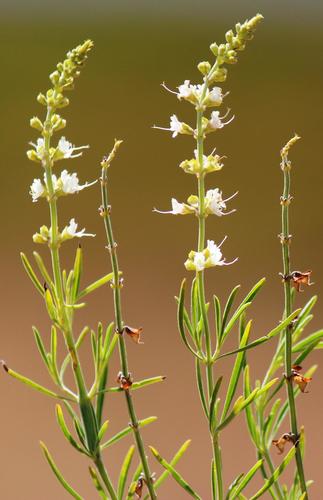
Elsholtzia kachinensis
Prain
Shui xiang ru, Pak luean
iNaturalist· cc-by-nc
(c) paakor, some rights reserved (CC BY-NC), uploaded by paakor
Description
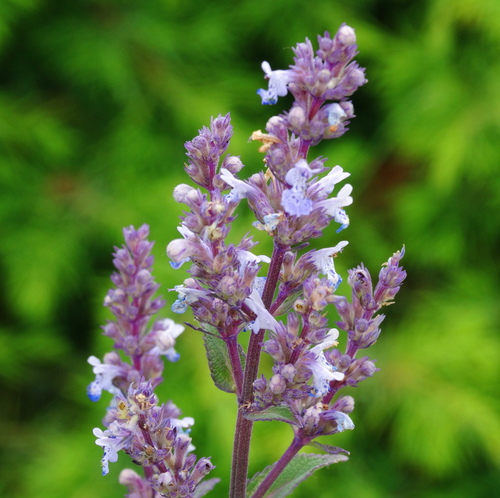
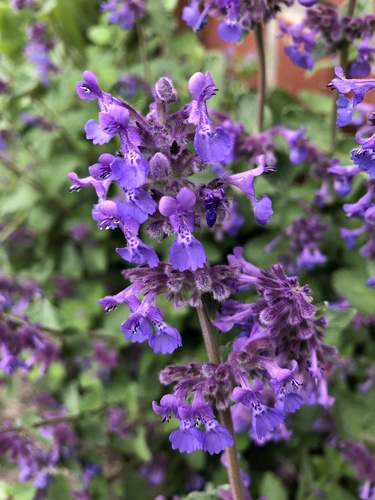
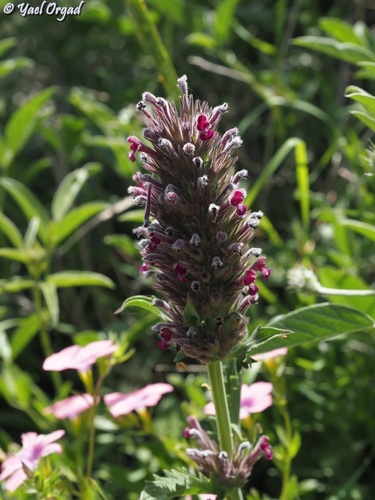
A slender herb. It grows 10-40 cm tall. The stems lie along the ground. They form roots near the base. The leaf stalks are 3-15 cm long. The leaf blade is oval and up to 3 cm long by 2 cm wide. There are teeth around the edge. The flowers are in oval spikes. These are 2.5 cm long by 2 cm wide. The fruit are small brown nutlets. They are oblong and hairy.
Edible Uses
The young shoots and leaves are harvested and cooked with meat.
Traditional Uses
The young shoots are eaten. They are cooked with meat.
This uses section is brief — help expand it
Medicinal Uses
Traditionally used as a culinary and medicinal herb in local preparations.
Distribution
It is a temperate to subtropical plant. It grows in China near riverbanks and wet areas. It grows in wetlands. It grows between 1,200-2,800 m altitude. In Sichuan and Yunnan.
Where It Grows
Asia, China, Indochina, Myanmar, SE Asia, Thailand,
Cultivation
It can be grown from stem cuttings.
Other Information
It is sold in local markets.
Synonyms
Also Known As
Ma de dan, Mi ge li guo, Pa leng
References (6)
- Cao, Y., et al, 2020, Ethnobotanical study on wild edible plants used by three trans-boundary ethnic groups in Jiangcheng County, Pu’er, Southwest China. Journal of Ethnobiology and Ethnomedicine (2020) 16:66
- Flora of China. Vol. 17, p 253 and Flora of China. www.eFloras.org
- Ghorbani, A., et al, 2012, Diversity of Medicinal and Food Plants as Non-timber Forest Products. Economic Botany XX (X) 2012, pp 1-14
- Ghorbani, A., et al, 2012, A comparison of the wild food plant use knowledge of ethnic minorities in Naban River Watershed Nature Reserve, Yunnan, SW China. Journal of Ethnobiology and Ethnomedicine; 8:17
- Japanese International Research Centre for Agricultural Science www.jircas.affrc.go.jp/project/value_addition/Vegetables
Show all 6 references Hide references
- Zhang, Y., et al, 2014, Diversity of wetland plants used traditionally in China: a literature review. Journal of Ethnobiology and Ethnomedicine. 10:72