Eucalyptus populnea
F. Muell
Bimble Box, Poplar Box
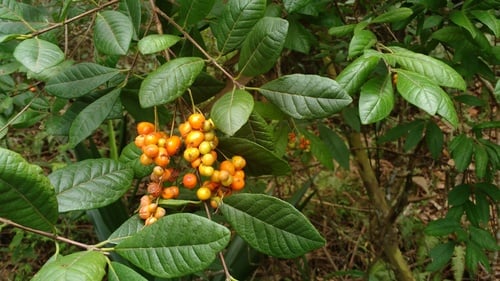
iNaturalist· cc-by-nc
(c) Dean Nicolle, some rights reserved (CC BY-NC), uploaded by Dean Nicolle
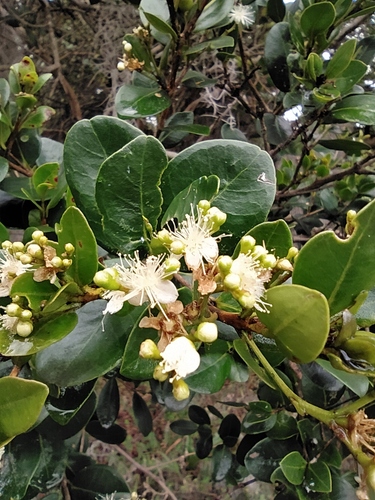
iNaturalist· cc-by-nc
(c) Dean Nicolle, some rights reserved (CC BY-NC), uploaded by Dean Nicolle
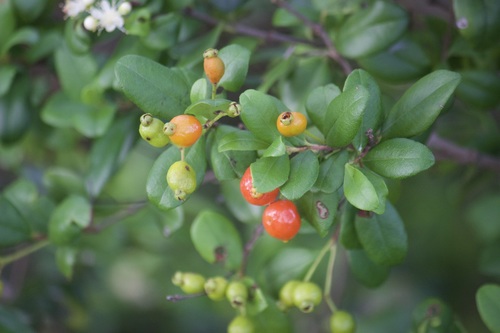
iNaturalist· cc-by-nc
(c) Dean Nicolle, some rights reserved (CC BY-NC), uploaded by Dean Nicolle
Summary
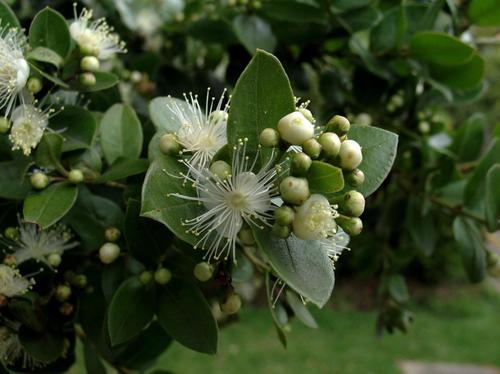
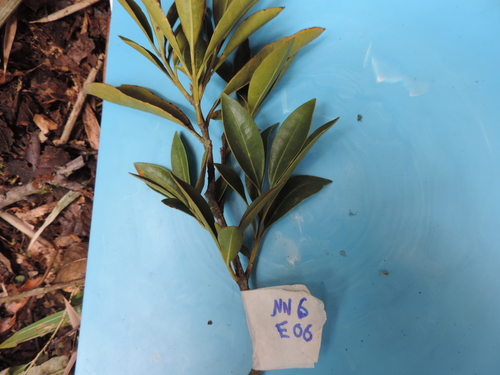
Source: WikipediaEucalyptus populnea, commonly known as poplar box, bimble box or bimbil box, is a species of small to medium-sized tree that is endemic to eastern Australia. It has rough, fibrous or flaky bark on the trunk and branches, egg-shaped, elliptical or more or less round leaves, flower buds arranged in groups of seven to fifteen or more, white flowers and conical, hemispherical or cup-shaped fruit.
Description
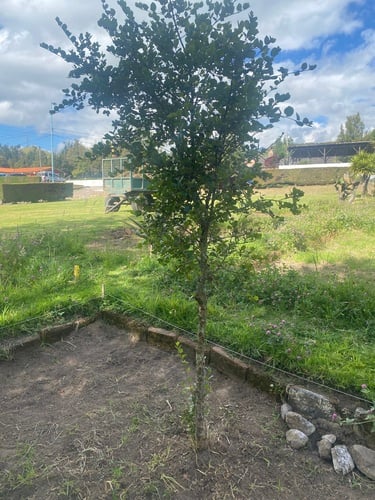
A medium to large tree. It grows 10-20 m high. It spreads 5-12 m wide. The bark is grey and flaky. It has a single trunk and a spreading crown. The leaves are dense and glossy. The adult leaves are egg-shaped or broadly sword shaped. They have a short point. The leaves are 5-10 cm long by 2.7-5 cm wide. The flowers are white or cream and occur in bundles or 7-15. They are 0.8 cm across. The fruit is a capsule 2-4 mm wide.
Edible Uses
The sap can be used for water.
Traditional Uses
For water.
This uses section is brief — help expand it
Distribution
It grows in warm temperate and semiarid regions. It needs well drained soil. It can grow in full sun or light shade. It can stand heavy frosts. It suits hardiness zones 9-11.
Where It Grows
Australia*,
Cultivation
Plants are grown from seed. Plants sucker easily. These can be transplanted or root cuttings used.
Notes
There are at least 500 Eucalyptus species mostly originally in Australia.
Synonyms
References (13)
- Bodkin, F., 1991, Encyclopedia Botanica. Cornstalk publishing, p 444
- Cronin, L., 1989, The Concise Australian Flora. Reed. p 189
- Cundall, P., (ed.), 2004, Gardening Australia: flora: the gardener's bible. ABC Books. p 575
- Elliot, W.R., & Jones, D.L., 1992, Encyclopedia of Australian Plants suitable for cultivation. Vol 4. Lothian. p 183
- Etherington, K., & Imwold, D., (Eds), 2001, Botanica's Trees & Shrubs. The illustrated A-Z of over 8500 trees and shrubs. Random House, Australia. p 306
Show all 13 references Hide references
- Hall, N. et al, 1972, The Use of Trees and Shrubs in the Dry Country of Australia, AGPS, Canberra. p 377
- Hibbert, M., 2002, The Aussie Plant Finder 2002, Florilegium. p 98
- Hunter, J.T., 2017, Is there a relationship between contemporary high Aboriginal plant resource locations and mapped vegetation communities? Cunninghamia 17:27-34. The Royal Botanic Garden Sydney. ISSN 2200 - 405X
- J. Proc. Linn. Soc., Bot. 3:93. 1859
- Lazarides, M. & Hince, B., 1993, Handbook of Economic Plants of Australia, CSIRO. p 106
- Lord, E.E., & Willis, J.H., 1999, Shrubs and Trees for Australian gardens. Lothian. p 31
- Molyneux, B. and Forrester, S., 1997, The Austraflora A-Z of Australian Plants. Reed. p 91
- Townsend, K., 1994, Across the Top. Gardening with Australian Plants in the tropics. Society for Growing Australian Plants, Townsville Branch Inc. p 200