Thlaspi perfoliatum
L.
Pennycress
iNaturalist· cc-by
(c) Sam Kieschnick, some rights reserved (CC BY)
iNaturalist· cc-by
(c) Sam Kieschnick, some rights reserved (CC BY)
iNaturalist· cc-by
(c) Sam Kieschnick, some rights reserved (CC BY)
Summary
Thlaspi perfoliatum is a compact annual herb growing to 0.3 meters (1ft). Hardy to UK zone 6, it flowers May to July with seeds ripening July to September. The hermaphroditic, self-fertile flowers are pollinated by bees and flies. It tolerates light sandy, medium loamy, and heavy clay soils with mildly acidic to mildly alkaline pH. It needs full sun and prefers moist soil.
Description
A cabbage family herb. It is an annual plant up to 30 cm tall. The leaves near the base are in a loose ring.
This description is brief — help expand it
Edible Uses
Young leaves can be eaten raw or cooked, though they have a bitter taste and aroma. They work well added to salads, cooked in soups, or used as a potherb, with a flavour resembling mustard and a hint of onion. The seed can be ground into a powder as a mustard substitute, or sprouted and added to salads.
Traditional Uses
The leaves are eaten as a salad. They are often boiled then fried. The seeds are used as a condiment.
This uses section is brief — help expand it
Medicinal Uses
None known
Distribution
It is a temperate plant. It grows on slopes, roadsides, waste grounds, forest margins between 400–2400 m altitude in China.
Where It Grows
Afghanistan, Africa, Central Asia, China, Europe, Iraq, Italy, Kazakhstan, Luxembourg, Middle East, North America, Pakistan, Russia, Tajikistan, Turkmenistan, Uzbekistan, North Africa, Sicily, Slovenia, SW Asia, Turkey, Türkiye, USA,
Cultivation
Succeeds in most soils. Dislikes shade. An over-wintering annual, the seed germinating in the autumn.
Propagation
Sow seed in situ in March or April.
Other Uses
The seed contains 20–30% of a semi-drying oil, which is used for lighting.
Synonyms
Also Known As
Cayir akca cicegi, Prerasli mošnjak, Quan ye xi ming, Talaspiu, Thoroughwort pennycress
References (12)
- Dogan, Y., et al, 2004, The Use of Wild Edible Plants in Western and Central Anatolia (Turkey). Economic Botany 58(4) pp. 684-690
- Duke, J.A., 1992, Handbook of Edible Weeds. CRC Press. p 194
- Elias, T.S. & Dykeman P.A., 1990, Edible Wild Plants. A North American Field guide. Sterling, New York p 82
- Ertug, F, Yenen Bitkiler. Resimli Türkiye Florası -I- Flora of Turkey - Ethnobotany supplement (As Microthlaspi perfoliatum)
- Galalaey, A. M. K., et al, 2021, Ethnobotanical study of some wild edible plants in Hujran Basin, Kurdistan Region of Iraq. ZANCO Journal of Pure and Applied Sciences. Salahaddin University-Erbil p 26
Show all 12 references Hide references
- Geraci, A., et al, 2018, The wild taxa utilized as vegetables in Sicily (Italy): a traditional component of the Mediterranean diet. Journal of Ethnobiology and Ethnomedicine (2018) 14:14
- http://www.botanic-gardens-ljubljana.com/en/plants
- Kiple, K.F. & Ornelas, K.C., (eds), 2000, The Cambridge World History of Food. CUP p 1832
- Pasta, S., et al, 2020, An Updated Checklist of the Sicilian Native Edible Plants: Preserving the Traditional Ecological Knowledge of Century-Old Agro-Pastoral Landscapes. Frontiers in Plant Science. Volume 11|Article 388 (As Microthlaspi perfoliatum)
- Plants for a Future database, The Field, Penpol, Lostwithiel, Cornwall, PL22 0NG, UK. http://www.scs.leeds.ac.uk/pfaf/
- Sp. pl. 2:646. 1753
- Zhou Taiyan, Lu Lianli, Yang Guang; Ihsan A. Al-Shehbaz, BRASSICACEAE (CRUCIFERAE), Flora of China.
More from Brassicaceae
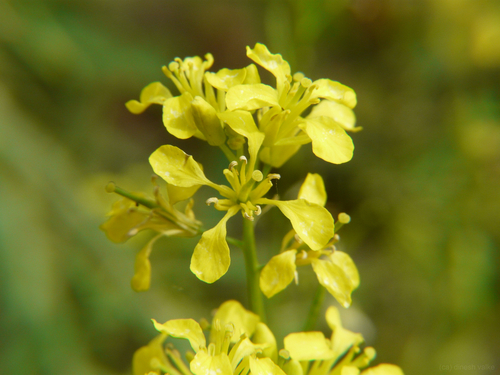
Brassica juncea var. sareptana
Brown mustard, Sarepta mustard
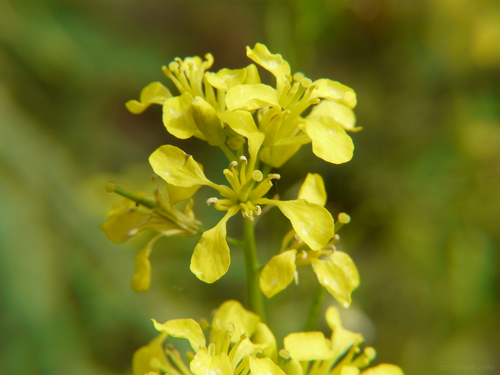
Brassica juncea var. strumata
Chopped mustard, Horned mustard, Large-petiole mustard
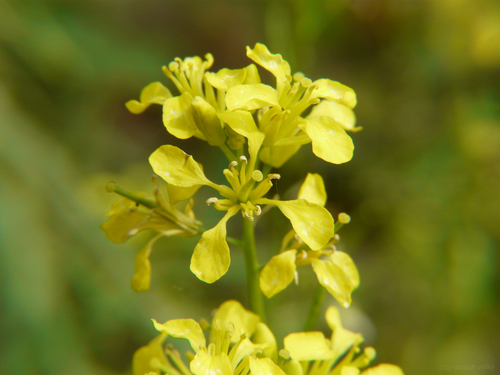
Brassica juncea var. tumida
Big-stem mustard, Swollen-stem mustard, Za-tsai, Sichuan preserved vegetable
Brassica juncea var. utilis
Chinese mustard
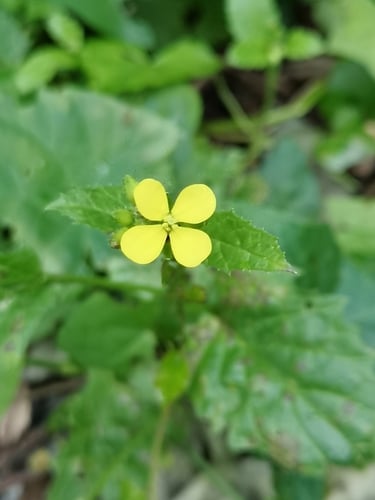
Brassica kaber
Wild Mustard, Charlock
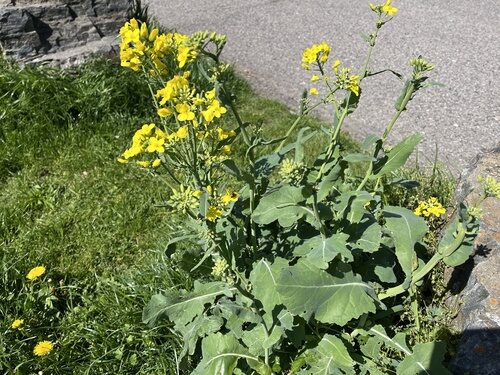
Brassica napus
Canola