Tetrapleura tetraptera
(Schumach. et Thonn.) Taub.
Angular pod, Aridan tree
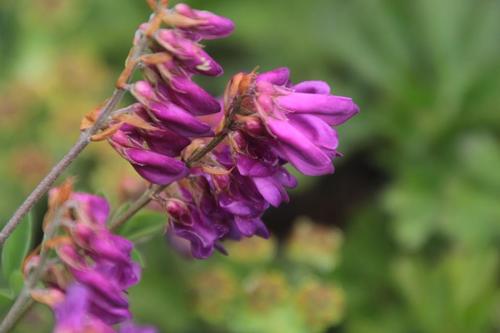
iNaturalist· cc-by-nc-sa
(c) Barry Stock, some rights reserved (CC BY-NC-SA)
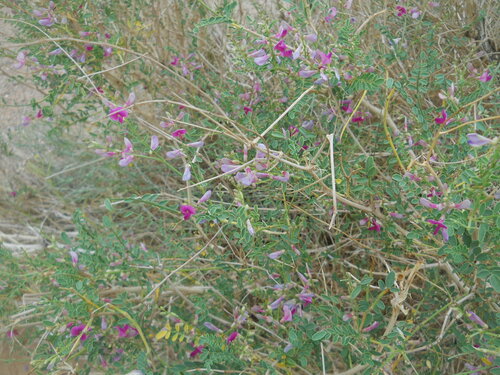
iNaturalist· cc-by-nc
(c) Carel Jongkind, some rights reserved (CC BY-NC), uploaded by Carel Jongkind
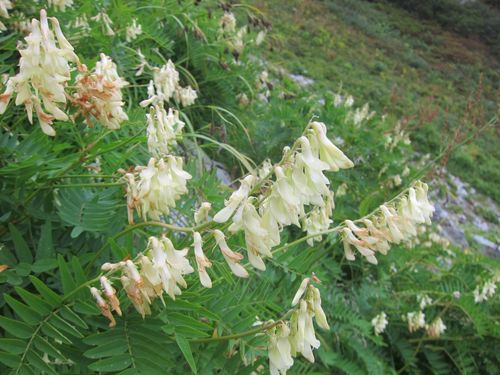
iNaturalist· cc-by-nc
(c) Carel Jongkind, some rights reserved (CC BY-NC), uploaded by Carel Jongkind
Summary
Source: WikipediaTetrapleura tetraptera, also known as prekese or aidan fruit, is a species of flowering plant in the family Fabaceae native to Western Africa and Central Africa. The plant is called prekese (or, more correctly, prɛkɛsɛ aka soup perfume) in the Akan language of Ghana. It is also called uhio (uhiokrihio) in the Igbo language of Nigeria. The tree has many uses. Its sweet fragrance is valued, and its fruit is used to spice dishes, such as Banga soup. It is mostly used to prepare palm nut soup and other types of soups called light soup because of its aroma.
Description
A deciduous tree. It grows 15-30 m tall. It has a straight trunk and a rounded crown. Sometimes the branches are layered and spreading. Large trees have small buttresses. The bark is thin and grey brown. It can be smooth or rough with shallow cracks. The leaves are twice divided. The leaf stalk is 8-23 cm long with 5-8 pairs of side branches with leaflets. Each of these stalks then has 6-12 leaflets one after another along opposite sides of it. These leaflets are oblong and 1-2 cm long. The tip of them is notched. They are softly hairy underneath. The flowers are on spikes beside the leaves. These are 4-14 cm long and one or two of them occur together. The flowers are small and yellow to pink to brown. The fruit is a woody pod with four wings. It smells of caramel. These pods are 12-23 cm long and can be straight or slightly curved. They are shiny and purple brown to black. The wings on each side have soft sugary pulp inside. This is edible. The seeds are in separate sections and rattle within the mature pod. The seeds are hard and dark brown. They are less than 1 m long.
Edible Uses
The soft sugary pulp within the pod wings is edible and traditionally ground and roasted for use in soups, sauces, and other foods. The pulp is also soaked in palm wine to flavour it, and the charred fruit is used to flavour drinking water.
Traditional Uses
The pulp in the wings of the pods is eaten after it is ground and roasted. It is sweet and used in soups, sauces and other foods. The pulp is soaked in palm wine to flavour it. The charred fruit is used to flavour drinking water.
Medicinal Uses
The plant is a commonly used and important medicinal herb in parts of Africa, being employed in treating a wide range of conditions. All parts of the plant are used, though the fruits are the most widely and commonly employed. The fruit is reported to have antiarthritic, antiinflammatory and antidiabetic properties. It is used to treat cardiovascular disorders, hypertension, convulsions and epilepsy, gastro-intestinal disorders, malaria and other fevers, diabetes, asthma and chest pain, low body immunity, flu and colds, reproductive disorders, cancer of the breast and uterus, skin disorders for newly born babies, wounds and burns, back pain and general body pains and weakness, dental disorders. The stem bark is used to treat cardiovascular disorders, gastro-intestinal disorders, malaria and other fevers, low body immunity, reproductive disorders, cancer of the breast and uterus, general body pains and weakness, dental disorders The leaves are used to treat convulsions and epilepsy, malaria and other fevers, reproductive disorders, general body pains and weakness. The root bark is used to treat gastro-intestinal disorders, malaria and other fevers. The seed is used to treat gastro-intestinal disorders, malaria and other fevers, snake bites. The plant is used in managing schistosomiasis, a chronic parasitic disease caused by blood flukes (trematode worms).
Known Hazards
The seedpod has been used as a fish poison.
Distribution
A tropical plant. It grows in lowland tropical rainforest. It suits humid locations. It can grow in arid places.
Where It Grows
Africa, Angola, Asia, Benin, Burkina Faso, Cambodia, Cameroon, Central Africa, Central African Republic, CAR, Chad, Congo DR, Congo R, Côte d'Ivoire, East Africa, Gabon, Gambia, Ghana, Guinea, Guinée, Guinea-Bissau, India, Indonesia, Ivory Coast, Kenya, Liberia, Mali, Mauritania, Niger, Nigeria, Sao Tome and Principe, SE Asia, Senegal, Sierra Leone, Sudan, Tanzania, Togo, Uganda, West Africa,
Cultivation
Plants can be grown from seed. Seeds need to be separated out from the fleshy pulp before planting. The seed should be soaked in cold water for 24 hours before planting. Seed can be stored in a sealed container in a cool place. Plants can be budded.
Propagation
Seed - sown in a nursery seedbed or individual containers, they usually take about 6 days to germinate. Pot them up into individual containers when they are about five weeks old. They can then be planted out about 3 weeks later..
Other Uses
Tannin is obtainable from the fruit pulp. The fruits and flowers are used as perfumes and in pomades prepared from palm oil. The heartwood is reddish to brown; the sapwood is white, The wood is fairly hard and heavy, of moderate durability. It is used for small furniture items, door and window frames, building poles, pestles, tool handles and carvings. The wood is used for fuel.
Other Information
It is sold in local markets.
Notes
Also as Mimosaceae.
Synonyms
Also Known As
Aidan, Aidon, Akpa, Angulu, Apwa, Arida, Aridan, Badiok, Bonome, Dawo, Djaga, Edeminan, Esehese, Eshuk, Essekseke, Essesse, Ezibil, Ighimiakia, Kisekenumpa, Kpokiriopo, Kpwa, Matchom, Ngon, Nkouarsa, Pohon munyegenye, Prekese, Quatre cote, Shokirisho, Uhokiriho, Ushakirisha, Zien
References (36)
- Assogbadjo, A. E. et al, 2013, Specific Richness and Cultural Importance of Wild Edible Trees in Benin. Acta Hort. 979, ISHS 2013
- Billong Fils, P. E., et al, 2020, Ethnobotanical survey of wild edible plants used by Baka people in southeastern Cameroon. Journal or Ethnobiology and Ethnomedicine. 16:64 p 9
- Bot. Centralbl. 47:395. 1891
- Bouba, A. A., et al, 2012, Proximate Composition, Mineral and Vitamin Content of Some Wild Plants Used as Spices in Cameroon. Food and Nutrition Sciences 3:423-432
- Burkill, H. M., 1985, The useful plants of west tropical Africa, Vol. 1. Kew.
Show all 36 references Hide references
- Chapman, J. D. & Chapman, H. M., 2001, The Forest Flora of Taraba and Andamawa States, Nigeria. WWF & University of Canterbury. p 184
- Dale, I. R. and Greenway, P. J., 1961, Kenya Trees and Shrubs. Nairobi. p 306
- Dalziel, J. M., 1937, The Useful plants of west tropical Africa. Crown Agents for the Colonies London.
- Davis, S.D., Heywood, V.H., & Hamilton, A.C. (eds), 1994, Centres of plant Diversity. WWF. Vol 1. p 172
- Dibong, S. D., et al, 2011, Inventory and Biodiversity of species edible wild fruits sold in the markets of Douala, Cameroon. International Journal of Applied Biology and Pharmaceutical Technology. 2(3).
- Facciola, S., 1998, Cornucopia 2: a Source Book of Edible Plants. Kampong Publications, p 153
- Fongnzossie Fedoung, E., et al, 2020, Wild edible plants and mushrooms of the Bamenda Highlands in Cameroon: ethnobotanical assessment and potentials for enhancing food security. Journal of Ethnobiology and Ethnomedicine 16:12
- Fongnzossie Fedoung, E., et al, 2014, Density and Natural Regeneration Potential of Selected Non-timber Forest Products Species in the Semi-deciduous Rainforest of Southeastern Cameroon. African Study Monographs, Suppl. 49:69-90.
- Gallois, S., et al, 2020, Methodological priorities in assessing wild edible plant knowledge and use – a case study among the Baka in Cameroon.
- Hoare A. L., 2007, The Use of Non-timber Forest Products in the Congo Basin. Constraints and Opportunities. Rainforest Foundation. p 16
- ILDIS Legumes of the World http:www:ildis.org/Legume/Web
- Ingram, V. & Schure, J. 2010, Review of Non Timber Forest Products (NTFPs) in Central Africa, Cameroon. Center for International Forestry Research (CIFR). p 34
- Jardin, C., 1970, List of Foods Used In Africa, FAO Nutrition Information Document Series No 2.p 30, 106, 165
- Katende, A.B., Birnie, A & Tengnas B., 1995, Useful Trees and Shrubs for Uganda. Identification, Propagation and Management for Agricultural and Pastoral Communities. Technical handbook No 10. Regional Soil Conservation Unit, Nairobi, Kenya. p 628
- Kuhnlein, H. V., et al, 2009, Indigenous Peoples' food systems. FAO Rome p 261
- Martin, F.W. & Ruberte, R.M., 1979, Edible Leaves of the Tropics. Antillian College Press, Mayaguez, Puerto Rico. p 201
- Meregini, O. A., 2005, Some endangered plants producing edible fruits and seeds in Southeastern Nigeria. Fruits, Vol. 60 pp 211-220
- Nkeoua, G. & Boundzanga, G. C., 1999, Donnees sur les produits forestieres non ligneux en Republique du Congo. FAO. p 38
- Oteng-Amoako, A. A. (Ed.), 2006, 100 Tropical African Timber Trees from Ghana. Forestry Research Institute of Ghana. p 242
- Peters, C. R., O'Brien, E. M., and Drummond, R.B., 1992, Edible Wild plants of Sub-saharan Africa. Kew. p 130
- Royal Botanic Gardens, Kew (1999). Survey of Economic Plants for Arid and Semi-Arid Lands (SEPASAL) database. Published on the Internet; http://www.rbgkew.org.uk/ceb/sepasal/internet [Accessed 28th April 2011]
- Sneyd, L. Q., 2013. Wild Food, Prices, Diets and Development: Sustainability and Food Security in Urban Cameroon. Sustainability 2013, 5, 4728-4759
- Sukarya, D. G., (Ed.) 2013, 3,500 Plant Species of the Botanic Gardens of Indonesia. LIPI p 550
- Tanaka,
- Terashima, H., et al, 1992, Ethnobotany of the Lega in the Tropical Rainforest of Eastern Zaire (Congo): Part Two, Zone de Walikale, African Study Monographs, Suppl. 19:1-60
- Vivien, J. & Faure, J.J., 1985, Abres des forets dense d'Afrique Centrale. Agence de Cooperation Culturelle et Technique. Paris. p 302
- Vivien, J., & Faure, J.J., 1996, Fruitiers Sauvages d'Afrique. Especes du Cameroun. CTA p 208
- Vouleng, I. K., et al, 2012, Antibacterial and antibiotic-potentiation activities of the methanol extract of some Cameroonian spices against Gram-negative multi-drug resistant phenotypes. BMC Research Notes, 5:299
- World Checklist of Useful Plant Species 2020. Royal Botanic Gardens, Kew
- www.worldagroforestrycentre.org/treedb/
- Zapfack, L., et al, 2001, Ethnobotanical Survey of the Takamanda Forest Reserve. Consultancy Report PROFA, Cameroon. p 23