Bussea massaiensis
(Taubert) Harms
wikimedia· cc-by-sa
Stephen Lea (via Wikimedia Commons)
Description
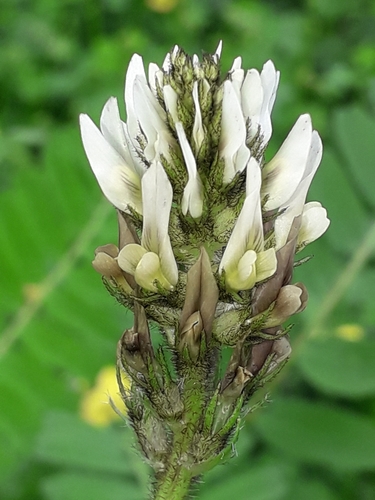
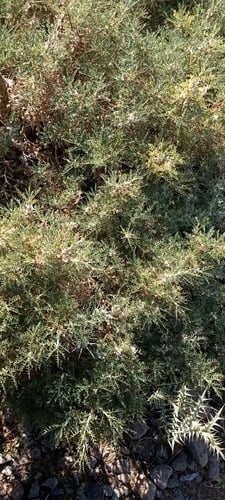
A shrub or small tree. It grows 14 m high. The bark is smooth and grey. The crown is spreading. The young stems have soft brown hairs. The leaves have dense brown hairs. There are 2-5 pairs of leaflet stalks and 5-10 pairs of leaflets. The lower surface is hairy. The flowers are in dense clusters. They are near the ends of branches. The fruit are pods and 7-12 cm long by 1.2-2.2 cm wide. They are broadest towards the end. There are 1-3 seeds. They are about 2 cm long by 1 cm wide.
Edible Uses
The seeds are collected, roasted with a little salt added, and eaten like peanuts. The seeds are also roasted, pounded, and used to make soup with vegetables or meat.
Traditional Uses
The seeds are collected and roasted and a little salt added and eaten like peanuts. The seeds are also roasted and pounded and used in making a soup with vegetable of meat.
Distribution
A tropical plant. In Tanzania it grows in deciduous bushland and woodland between 1,100-1,400 m above sea level.
Where It Grows
Africa, East Africa, Tanzania, Zambia,
Cultivation
Trees can be grown from seed. To get it to grow in new areas, some of the mycorrhiza from the soil around the roots of the old plant need to be used to inoculate the new plant.
Other Uses
The wood is hard and termite resistant. It is used for building poles, pestles, tool handles and carvings. The wood of species in this genus is hard, heavy, tough and strong. It is difficult to work and is only suitable for rough, unfinished work.
Production
Seeds are collected from May to July. Seeds can be stored for 2 years.
Other Information
Seeds are sold in local markets.
Notes
There are 7 Bussea species. Also as Caesalpinaceae.
Synonyms
Also Known As
Mbatu, Mbefu, Mbetu, Mfetru, Mubefu
References (11)
- FAO. 1983, Food and fruit-bearing forest species 1: Examples from Eastern Africa. FAO Food and Forestry Paper 44/1 p 23
- Flora Zambesiaca. http://apps.kew.org/efloras
- Fowler, D. G., 2007, Zambian Plants: Their Vernacular Names and Uses. Kew. p 30
- ILDIS Legumes of the World http:www;ildis.org/Legume/Web
- Jardin, C., 1970, List of Foods Used In Africa, FAO Nutrition Information Document Series No 2.p 24
Show all 11 references Hide references
- Menninger, E.A., 1977, Edible Nuts of the World. Horticultural Books. Florida p 90
- Newman, 1970,
- Peters, C. R., O'Brien, E. M., and Drummond, R.B., 1992, Edible Wild plants of Sub-saharan Africa. Kew. p 121
- Ruffo, C. K., Birnie, A. & Tengnas, B., 2002, Edible Wild Plants of Tanzania. RELMA p 174
- Schatz, G.E., 2001, Generic Tree Flora of Madagascar. Royal Botanical Gardens, Kew and Missouri Botanical Garden. p 182 (Genus)
- World Checklist of Useful Plant Species 2020. Royal Botanic Gardens, Kew