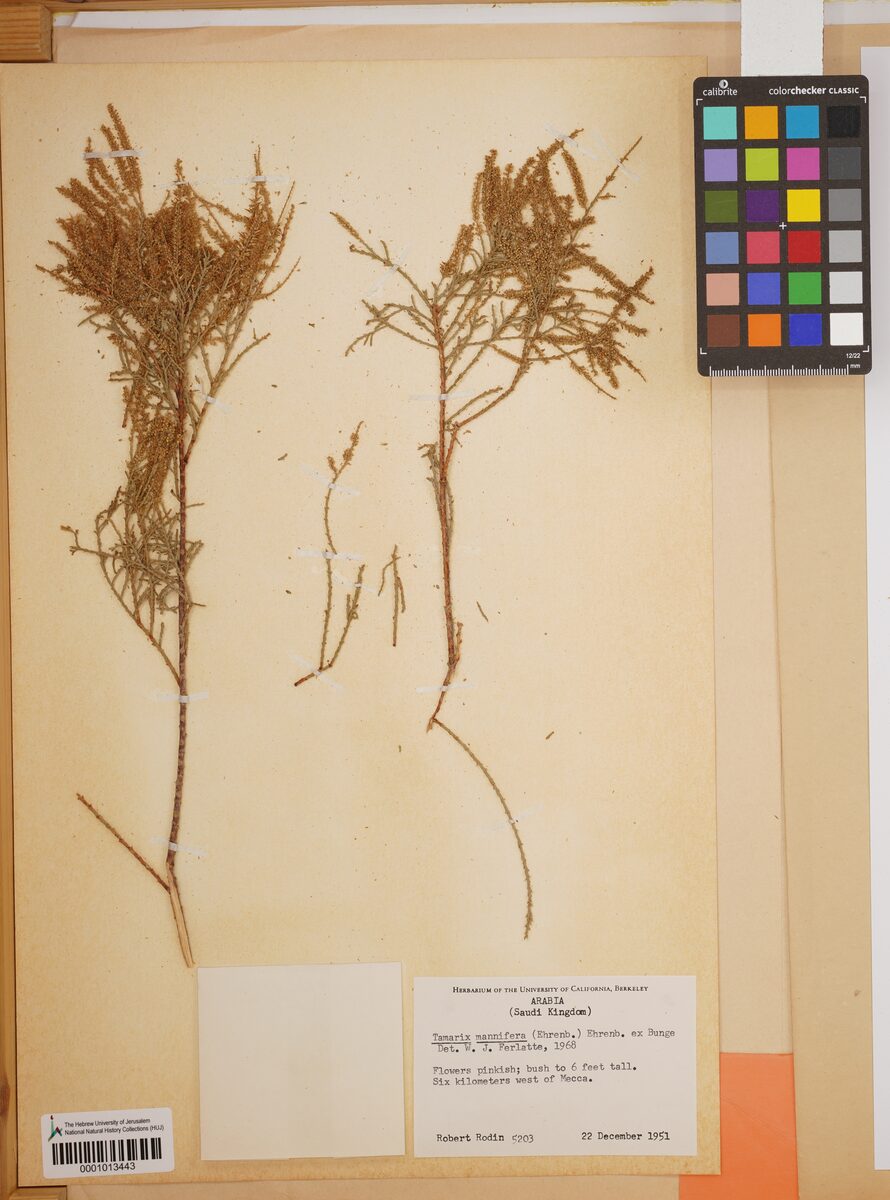
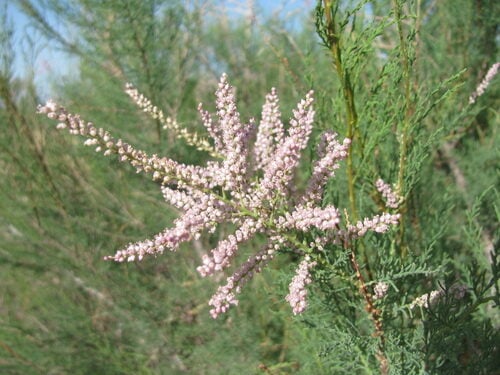
Tamarix senegalensis
DC.
iNaturalist· cc-by-nc-sa
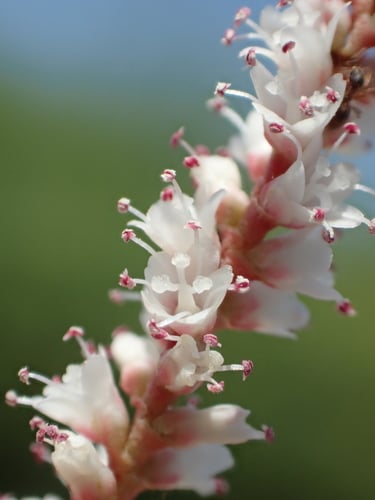
(c) MBG, some rights reserved (CC BY-NC-SA)
iNaturalist· cc-by-nc
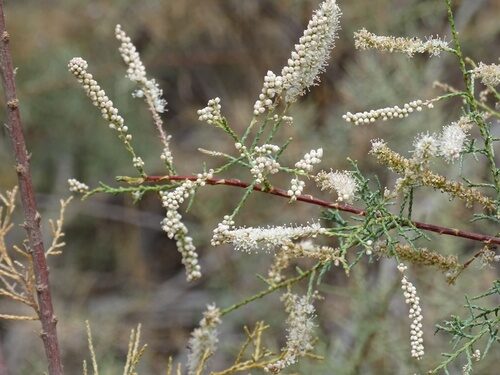
(c) Zydrunas, some rights reserved (CC BY-NC)
iNaturalist· cc-by-nc
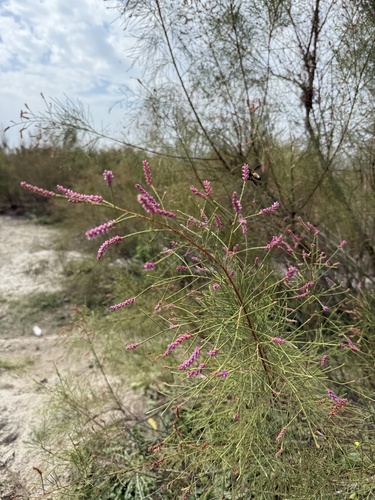
(c) robert_thibault, some rights reserved (CC BY-NC)
Summary
Source: WikipediaTamarix senegalensis is a species of flowering plants of the Tamaricaceae family. It is a tree or twiggy shrub, that grows in saline soil, sandy desert and sea-shore.
Description
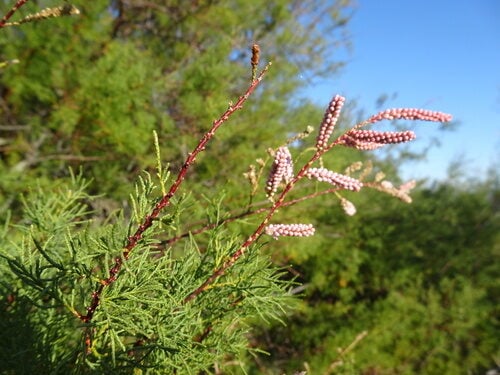
A shrub. It grows 2-3 m high. It has many branches and they hang down. They are pale green. The leaves are alternate and reduced to scales. They are almost triangle shaped and 1-2 mm long. The flowers are very small and white or pink. They are in groups 20 cm long at the ends of branches. The fruit is a small cone shaped capsule.
Edible Uses
A manna is said to exude from the plant. Thie following is a report for the closely related Tamarix gallica:- The sap exudes from punctures in the stems made by small insects; it collects along the branches in small beads which crystallize and are sweet, aromatic and pleasant to taste. The droplets melt away in the heat of the sun and so are usually collected before sunrise.
Medicinal Uses
The macerated fruit is a good remedy for colds. Young shoots with leaves on are used to treat conjunctivitis.
Distribution
It is a tropical plant. It grows in sandy soils of high salinity. It grows in coastal regions. It grows in the Sahel.
Where It Grows
Africa, Algeria, Cape Verde, Central Africa, Chad, Gambia, Mauritania, Niger, North Africa, Sahel, Senegal, West Africa,
Cultivation
A plant of arid and semi-arid areas in the tropics and subtropics. Requires a sunny position. Succeeds in very dry, sandy soils so long as there is ground water no more than 3 metres deep. Plants can grow on soils of high salinity. Judging by the plant's habitat, it should be very tolerant of maritime winds. Established plants are very drought tolerant.
Propagation
Seed - Cuttings.
Other Uses
The twigs are used as chewsticks to maintain the health of the teeth and gums. The wood is used for building traditional huts. The wood is used for fuel.
Notes
There are about 50 Tamarix species.
References (3)
- Jardin, C., 1970, List of Foods Used In Africa, FAO Nutrition Information Document Series No 2.p 23
- Maydell, H. von, 1990, Trees and shrubs of the Sahel: their characteristics and uses. Margraf. p 389
- World Checklist of Useful Plant Species 2020. Royal Botanic Gardens, Kew