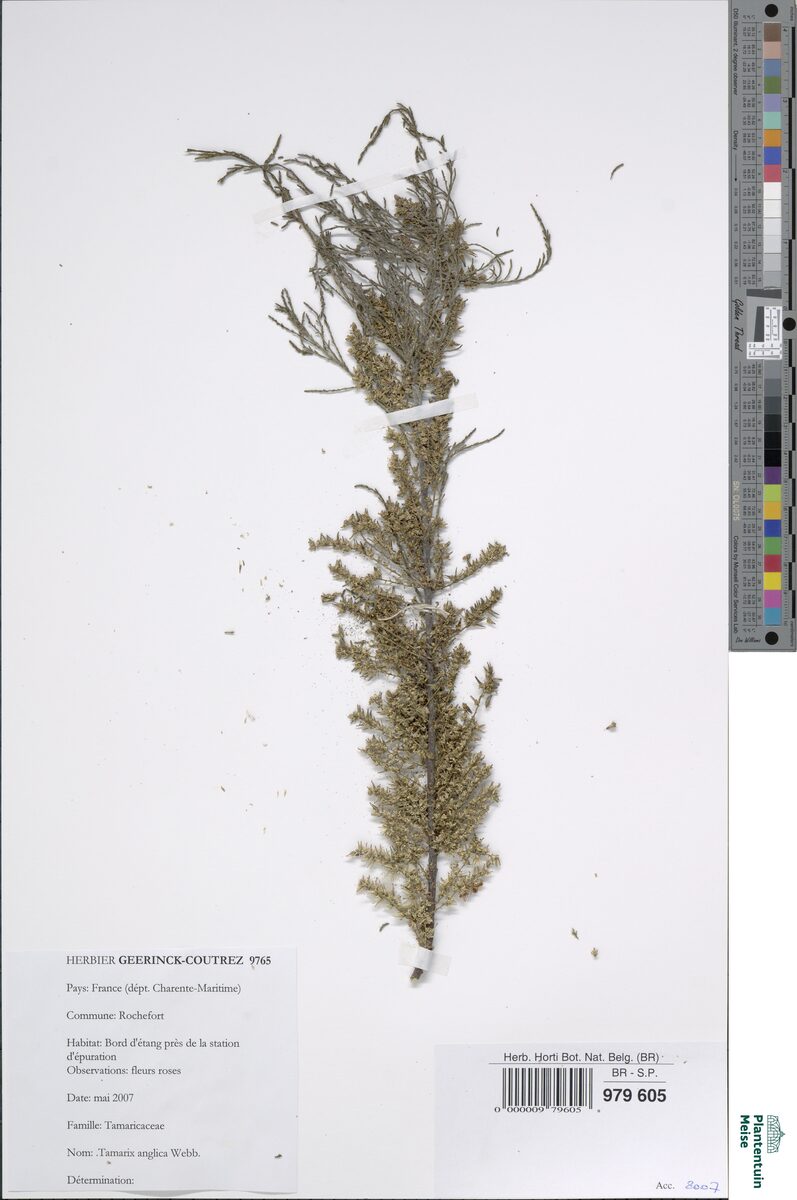
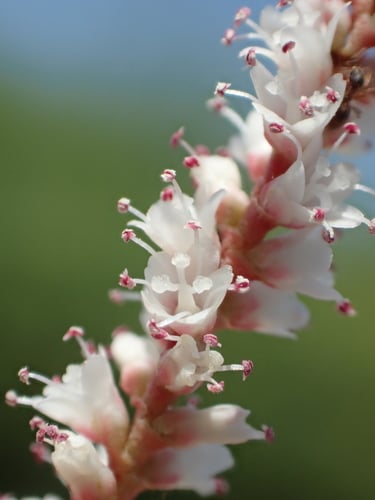
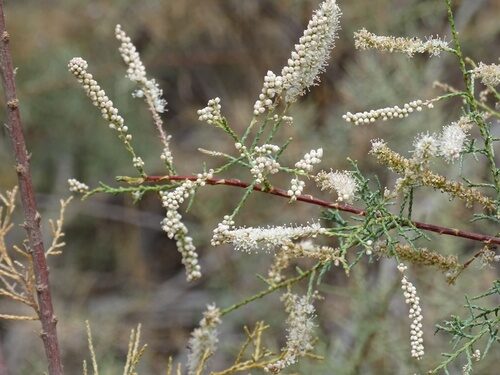
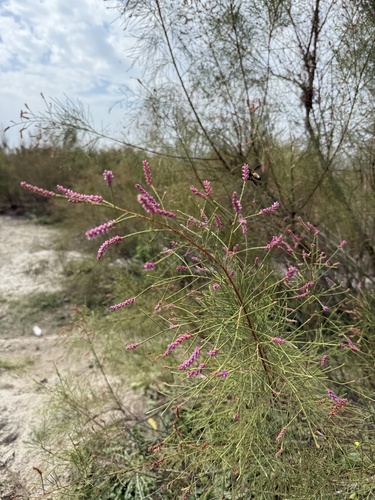
Tamarix mannifera
(Ehrenb.) Bunge
Manna
gbif· cc-by-nc
The Hebrew University of Jerusalem
gbif· cc-by-nc
The Hebrew University of Jerusalem
gbif· cc-by-nc
The Hebrew University of Jerusalem
Description
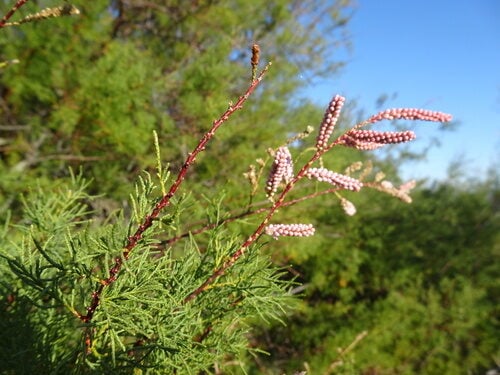
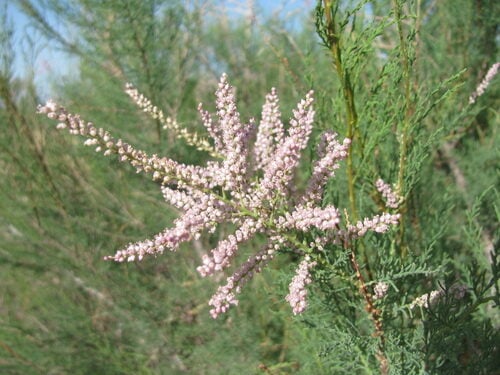
An erect perennial shrub in the Tamaricaceae family adapted to Mediterranean climates, dry and salty soils, and arid conditions.
This description is brief — help expand it
Edible Uses
The sugary exudate (manna) produced by insect secretion on the plant is eaten.
Traditional Uses
The sugary exudate is eaten.
This uses section is brief — help expand it
Distribution
It is a Mediterranean climate plant. It grows in dry and salty soils. It can grow in arid places.
Where It Grows
Afghanistan, Africa, Arabia, Egypt, Iran, Israel, Jordan, Mediterranean, Middle East, North Africa, Oman, Saudi Arabia, Sudan, Yemen,
Notes
The manna from Coccus manniparus is eaten by Bedouins and is considered the manna which fed the children of Israel. There are about 55 Tamarix species.
Also Known As
Gaz, Tarfa
References (6)
- Barwick, M., 2004, Tropical and Subtropical Trees. A Worldwide Encyclopedic Guide. Thames and Hudson p 403
- Heywood, V.H., Brummitt, R.K., Culham, A., and Seberg, O., 2007, Flowering Plant Families of the World. Royal Botanical Gardens, Kew. p 315
- Macmillan, H.F. (Revised Barlow, H.S., et al) 1991, Tropical Planting and Gardening. Sixth edition. Malayan Nature Society. Kuala Lumpur. p 341
- Palgrave, K.C., 1996, Trees of Southern Africa. Struik Publishers. p 617
- Royal Botanic Gardens, Kew (1999). Survey of Economic Plants for Arid and Semi-Arid Lands (SEPASAL) database. Published on the Internet; http://www.rbgkew.org.uk/ceb/sepasal/internet [Accessed 11th June 2011]
Show all 6 references Hide references
- Tent. gen. Tamar. 63. 1852