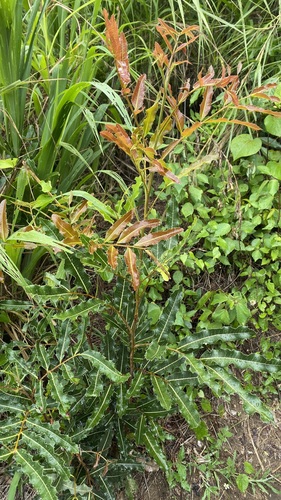
Talisia esculenta
(A. St. Hil.) Radlk.
Pitomba, Esculent talisia
iNaturalist· cc-by-nc-sa
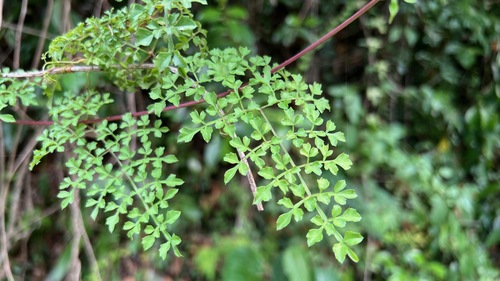
(c) Basílio Maciel, some rights reserved (CC BY-NC-SA), uploaded by Basílio Maciel
iNaturalist· cc-by-nc
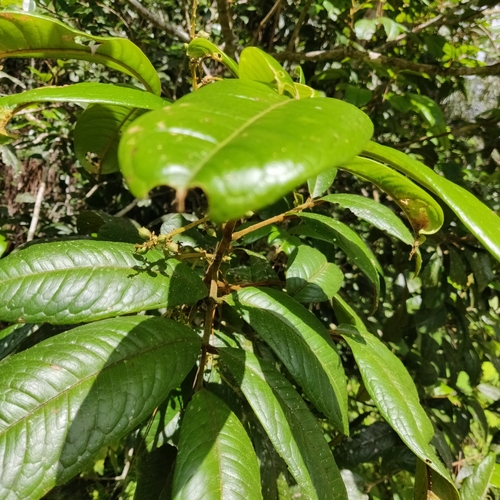
(c) Guilherme A. Fischer, some rights reserved (CC BY-NC)
iNaturalist· cc-by-nc
(c) Guilherme A. Fischer, some rights reserved (CC BY-NC)
Summary
Source: WikipediaTalisia esculenta is a medium-sized tree native to the Amazon Basin, and is found in Brazil, Colombia, Peru, Paraguay and Bolivia. The tree and fruit are called pitomba in English, Portuguese and Spanish, olho-de-boi, pitomba-rana and pitomba-de-macaco in Portuguese, pitoulier comestible in French, cotopalo in Spanish and karajá bola in Guarani. Pitomba is also used as the name for Eugenia luschnathiana.
Description
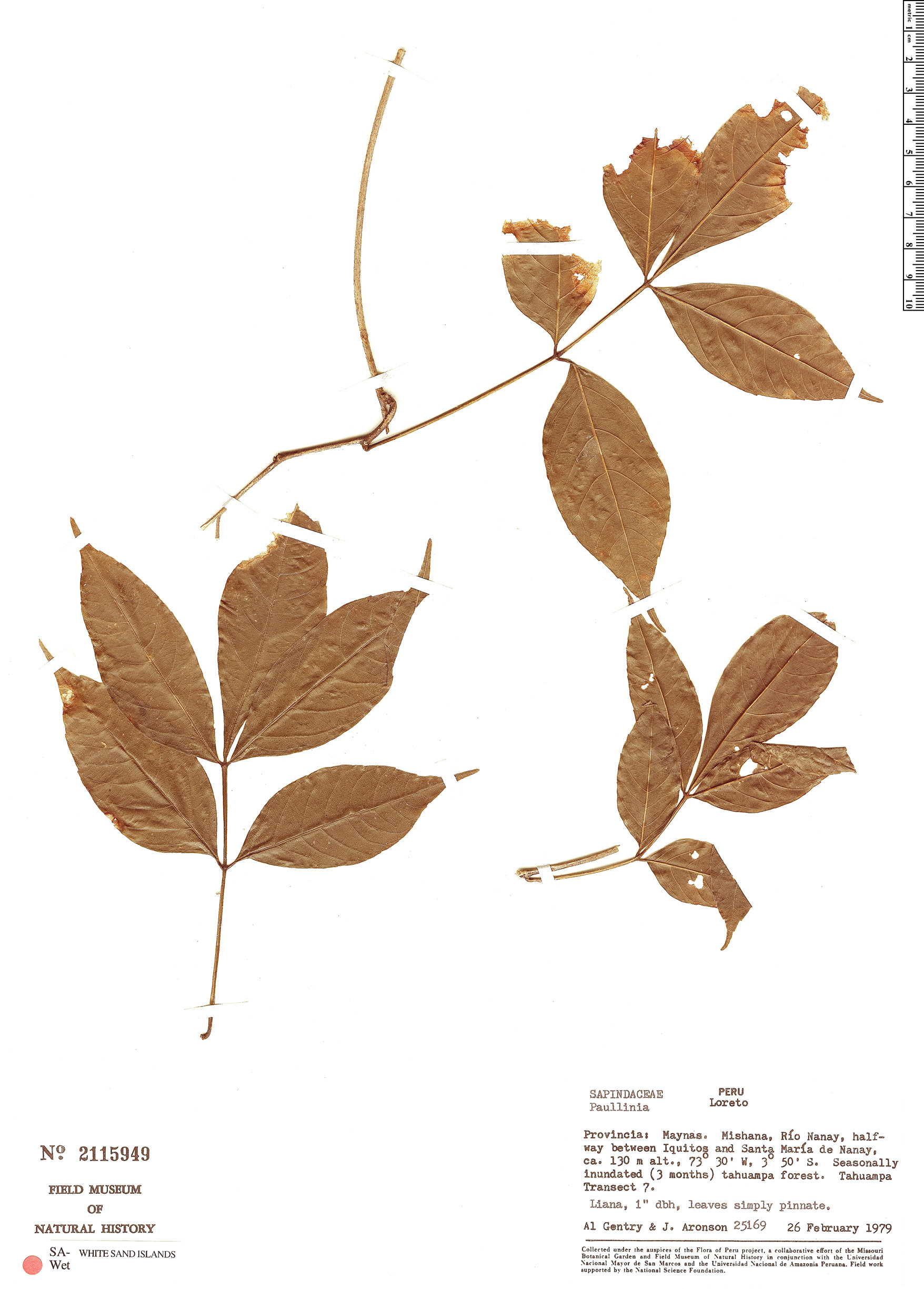
A tree. It grows 4-12 m high. The trunk is 25-30 cm across. The leaves are alternate. The leaves are compound with leaflets along the stalk. There are 4-5 pairs of leaflets. The leaves are 8-10 cm long by 2.5-3 cm wide. The flower clusters are 20-35 cm long. The flowers are white. They have a scent. Flowers have both sexes. Fruit occur in groups of 15-20, The fruit is almost round or oval and 3 cm long by 2.5 cm wide. They are yellow with white flesh. There is 1 seed per fruit.
Edible Uses
The fruit is eaten raw. It is a brown-yellow fruit, about 3cm long and 2.5cm in diameter, containing one or two large seeds covered in a thin, translucent pulp with a sweet and sour flavour. The fruit is very tasty and is borne in clusters of 10–20.
Traditional Uses
The ripe fruit are eaten fresh.
This uses section is brief — help expand it
Medicinal Uses
The roots are used as an antidote. A decoction is taken internally and applied topically to treat bites and stings from poisonous animals. Combined with the fruit of annatto (Bixa orellana) and the peel of assai fruit (Euterpe spp.), it is used to treat jaundice.
Known Hazards
The fruit is eaten fresh and used to make juice. The sap is used as a fish poison.
Distribution
It is a tropical plant. It suits the hot, wet tropical lowlands. In Bolivia it grows up to 700 m altitude. It grows in dryland forests in western Amazon in Brazil.
Where It Grows
Amazon, Australia, Bolivia, Brazil*, Colombia, Paraguay, Peru, South America,
Cultivation
Plants are grown from seed. Fresh seed should be used. The ripe fruit containing seeds can be planted. Seeds germinate in 15-30 days. Seedlings can be transplanted into the field in 6-7 months.
Propagation
The whole fruit can be sown as soon as it is ripe; if it must be stored briefly, the seed should be extracted from the pulp first. Sow in individual containers and keep in light shade, ensuring the compost does not dry out. Most seeds germinate within 15–30 days. Growth is moderate, with plants taking 6–7 months to reach a size suitable for planting into their permanent position.
Other Uses
The heartwood is a light yellowish-brown, not clearly demarcated from the sapwood. The texture is medium and the grain is interlocked, with a slight lustre and no distinctive taste or aroma. The wood is very heavy and hard, somewhat durable — particularly when kept dry — with some resistance to insect attack but low resistance to rot. It is used for interior building work such as ceilings, floorboards, and door frames, as well as for boxes and general carpentry.
Production
Trees reach 2.5 m after 2 years. Fruit are produced seasonally. Fruit mature in 120 days.
Other Information
Fruit are sold in markets. It is a cultivated fruit tree. The fruit are enjoyed.
Nutrition
| Part | Moisture | kJ | kcal | Protein | Vit A | Vit C | Iron | Zinc |
|---|---|---|---|---|---|---|---|---|
| Fruit | 83.2 | 258 | 61 | 1.2 | — | — | 0.6 | 0.8 |
Synonyms
Also Known As
Angustura, Caraya-bola, Caraya-vola, Kupai, O-noconoma, Olho-de-boi, Pitomba-da-mata, Pitomba-de-macaco, Pitombeira, Piton
References (20)
- Altschul, S.V.R., 1973, Drugs and Foods from Little-known Plants. Notes in Harvard University Herbaria. Harvard Univ. Press. Massachusetts. no. 2592
- Bortolotto, I. M., et al, 2015, Knowledge and use of wild edible plants in rural communities along Paraguay River, Pantanal, Brazil. Journal or Ethnobiology and Ethnomedicine. 11:46
- Bortolotto, I. M., et al, 2018, Lista preliminar das plantas alimenticias nativas de Mato Grosso do Sul, Brasil. Iheringia, Serie Botanica, Porto Alegre, 73 (supl.):101-116
- Fagg, C. W. et al, 2015, Useful Brazilian plants listed in the manuscripts and publications of the Scottish medic and naturalist George Gardner (1812–1849). Journal of Ethnopharmacology 161 (2015) 18–29
- Grandtner, M. M. & Chevrette, J., 2013, Dictionary of Trees, Volume 2: South America: Nomenclature, Taxonomy and Ecology. Academic Press p 654
Show all 20 references Hide references
- Hermandez Bermejo, J.E., and Leon, J. (Eds.), 1994, Neglected Crops. 1492 from a different perspective. FAO Plant Production and Protection Series No 26. FAO, Rome. p17
- INFOODS:FAO/INFOODS Databases
- Kermath, B. M., et al, 2014, Food Plants in the Americas: A survey of the domesticated, cultivated and wild plants used for Human food in North, Central and South America and the Caribbean. On line draft. p 853
- Lorenzi, H., 2002, Brazilian Trees. A Guide to the Identification and Cultivation of Brazilian Native Trees. Vol. 01 Nova Odessa, SP, Instituto Plantarum p 338
- Lorenzi, H., Bacher, L., Lacerda, M. & Sartori, S., 2006, Brazilian Fruits & Cultivated Exotics. Sao Paulo, Instituto Plantarum de Estuados da Flora Ltda. p 294
- Martin, F. W., et al, 1987, Perennial Edible Fruits of the Tropics. USDA Handbook 642 p 58
- Nascimento, V. T. D., et al, 2013, Knowledge and Use of Wild Food Plants in Areas of Dry Seasonal Forests in Brazil. Ecology of Food and Nutrition, 52:317–343
- NYBG herbarium "edible"
- Paz, F. S., et al, 2021, Edible Fruit Plant Species in the Amazon Forest Rely Mostly on Bees and Beetles as Pollinators. Journal of Economic Entomology, XX(XX), 2021, 1–13
- Sitzungsber. Math.-Phys. Cl. Koenigl. Bayer. Akad. Wiss. Muunchen 8:345. 1878
- Tomchinsky, B., et al, 2021, Food Composition Data: Edible Plants from the Amazon. in M. C. M. Jacob, U. P. Albuquerque (eds.), Local Food Plants of Brazil, Ethnobiology, Springer p 276
- Vasquez, Roberto Ch. & Coimbra, German S., 1996, Frutas Silvestres Comestibles de Santa Cruz. p 206
- Villachica, H., (Ed.), 1996, Frutales Y hortalizas promisorios de la Amazonia. FAO, Lima. p 235
- Wiersema, J. H. & Leon, B., 2013, World Economic Plants. A Standard Reference CRC Press. 2nd Ed. p 674
- World Checklist of Useful Plant Species 2020. Royal Botanic Gardens, Kew