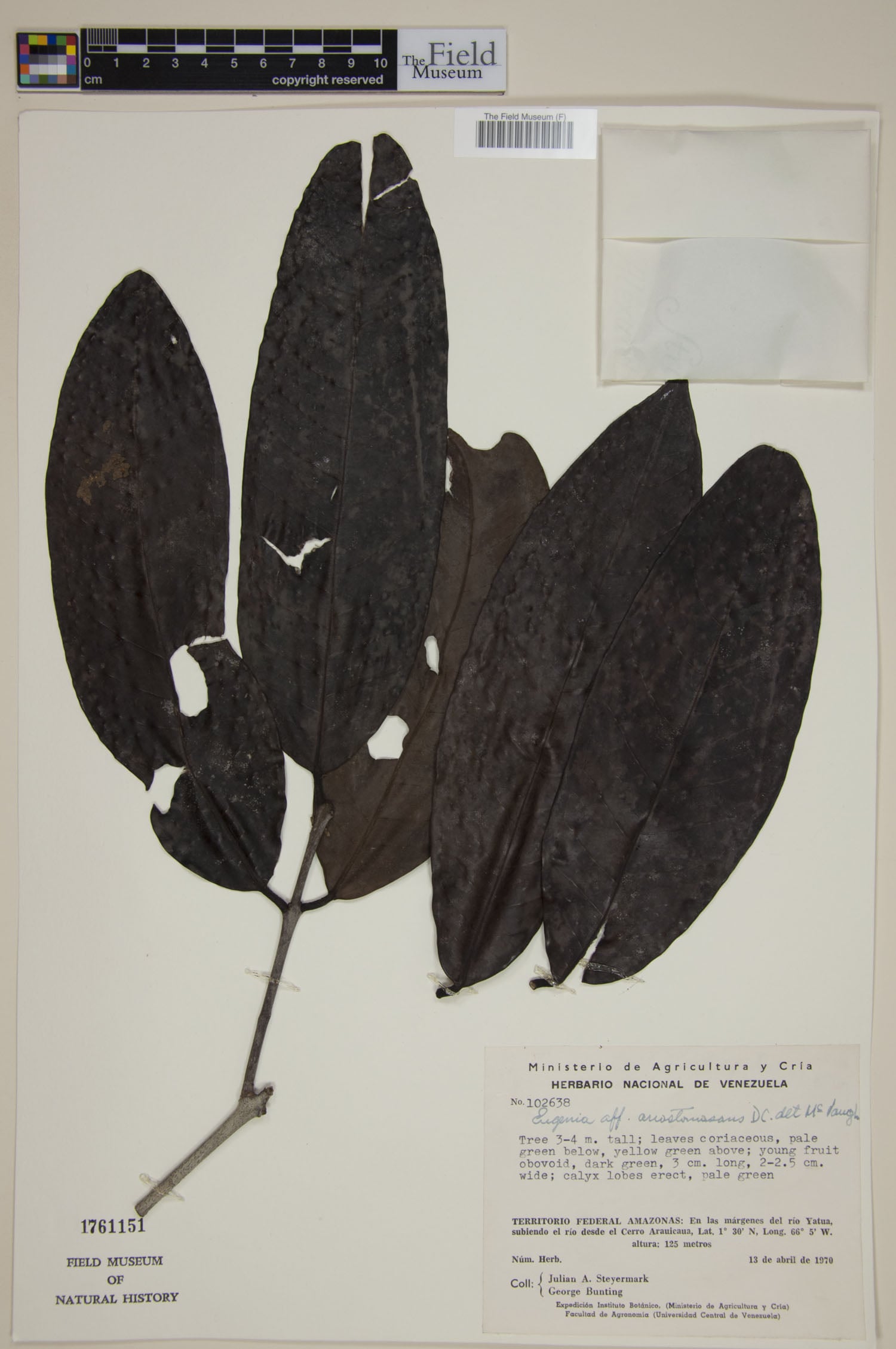
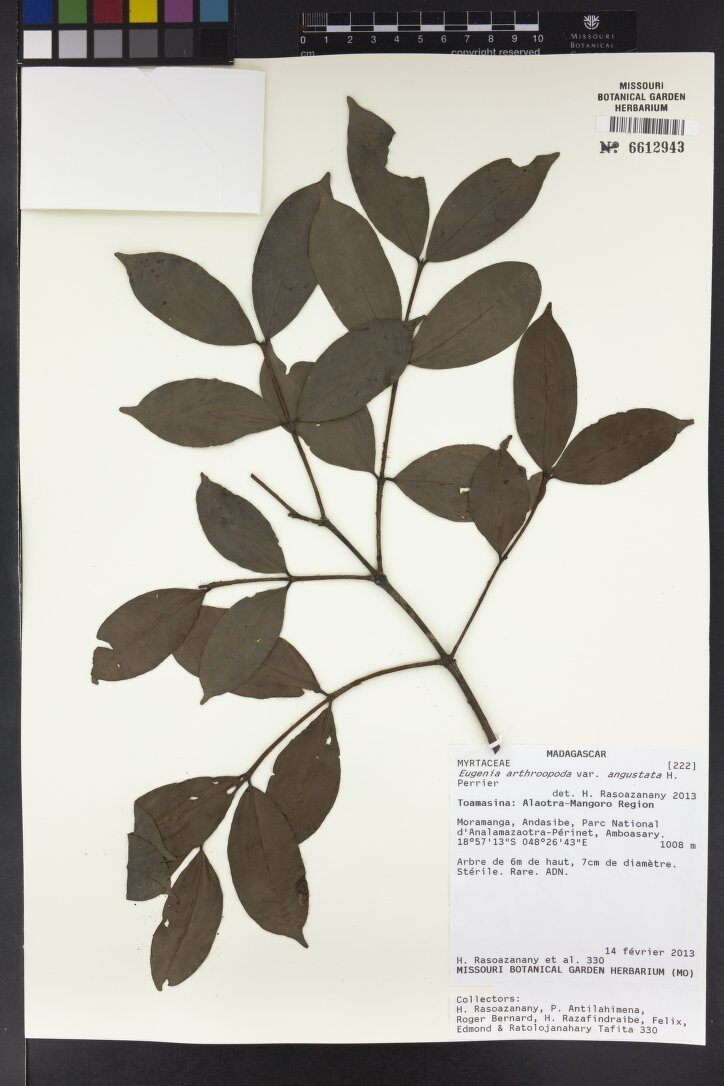
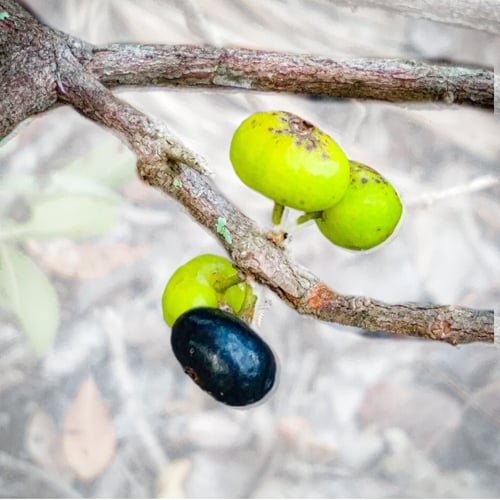
Syzygium pseudofastigiatum
B. Hyland
Claudie satinash
Wikipedia· cc-by-sa
Wikimedia Commons - Syzygium_pseudofastigiatum_seedling.jpg
wikimedia· cc-by
Forest & Kim Starr (via Wikimedia Commons)
wikimedia· cc0
Cygnis insignis (via Wikimedia Commons)
Summary
Source: WikipediaSyzygium pseudofastigiatum, known as the Claudie satinash is a rare rainforest tree of tropical Queensland, Australia. It can grow to 35 metres tall.
Description
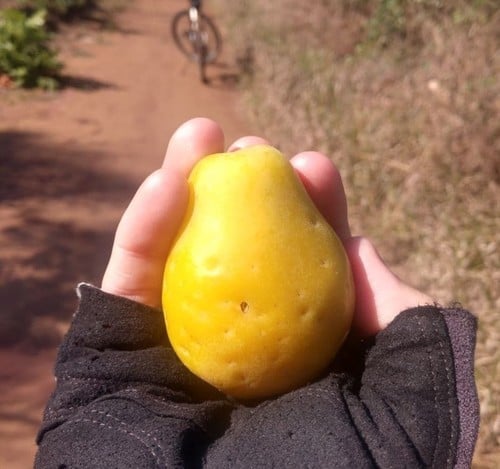
A tree. It grows up to 35 m tall. The leaves are simple and 7-15 cm long. They are smooth and do not have hairs. The fruit are 3.5 cm long by 2 cm wide. They hang either singly or in bunches. They mostly occur near the ends of branches. There is one seed inside. The seed is up to 2 cm long. The flesh is edible.
Edible Uses
Fruit - raw. The white, depressed globular or depressed obovoid fruits are about 20mm long and 25 - 35mm wide; the succulent flesh surrounding a solitary seed about 15 - 20mm in diameter.
Distribution
It is a tropical plant. It occurs in lowland rainforest in north east Queensland in Australia. It grows from sea level to 450 m altitude. It is damaged by frost. In the Cairns Botanical Gardens.
Where It Grows
Australia*,
Cultivation
Plants are intolerant of frosts.
Propagation
Seed - best sown as soon as it is ripe.
Other Uses
The wood is a useful structural timber. We do not have any more specific information for the wood of this species, but the various species of Syzygium tend to have somewhat similar timber. The general description of syzygium timber is as follows:- The heartwood is a golden brown, greyish brown or brown, with pink or purplish glints; it is not clearly demarcated from the 1 - 4cm wide band of sapwood. The texture is fine; the grain slightly interlocked, sometimes wavy or irregular; there are resin deposits. The wood is heavy; moderately hard; somewhat durable, being moderately resistant to fungi and termites, but susceptible to dry wood borers. It seasons slowly, with a high risk of checking and distortion; once dry it is moderately stable in service. It works well with ordinary tools, nailing and screwing are good so long as the wood is pre-bored; gluing is correct. The wood is used for musical instruments, tool handles, furniture components, ship building, heavy carpentry, flooring, joinery etc.
Production
It fruits in late summer to autumn.
References (5)
- Cooper W & Cooper W T, 1994, Fruits of the Rain Forest. RD Press p 276
- Cooper, W. and Cooper, W., 2004, Fruits of the Australian Tropical Rainforest. Nokomis Editions, Victoria, Australia. p 366
- Queensland Forest Service, 1991, Trees and Shrubs. Department of Primary Industries. p 117
- Radke, P & A, Sankowsky, G & N., 1993, Growing Australian Tropical Plants. Frith & Frith, Australia. p 63
- Townsend, K., 1994, Across the Top. Gardening with Australian Plants in the tropics. Society for Growing Australian Plants, Townsville Branch Inc. p 349