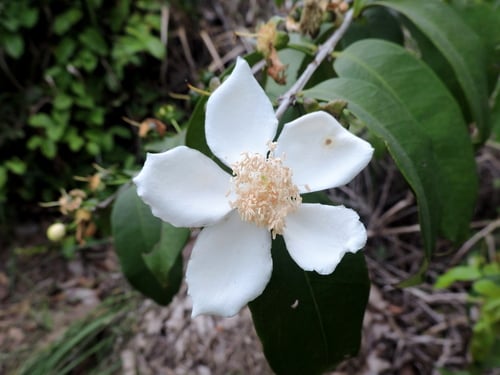
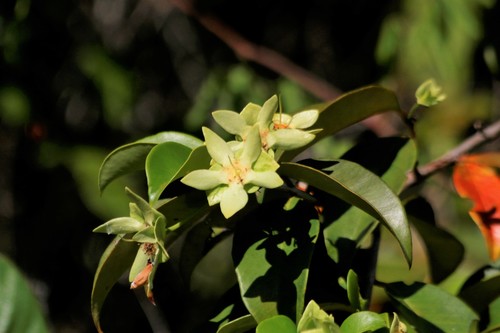
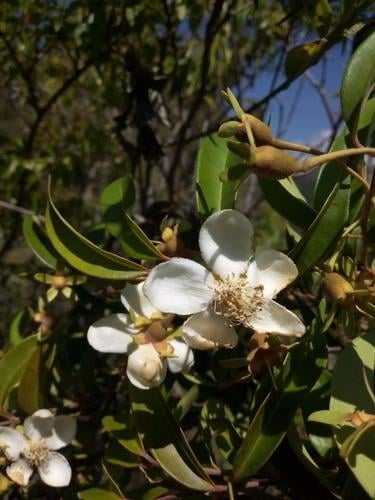
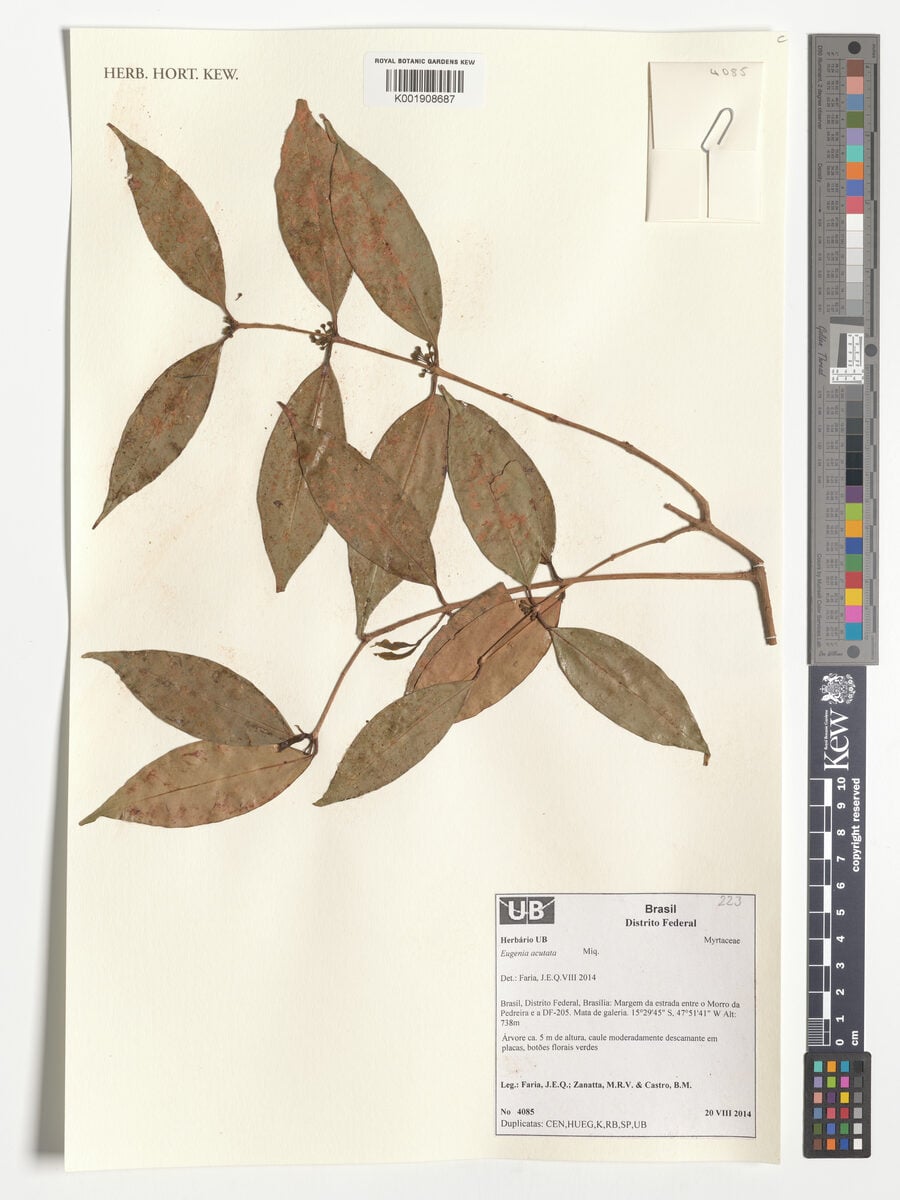
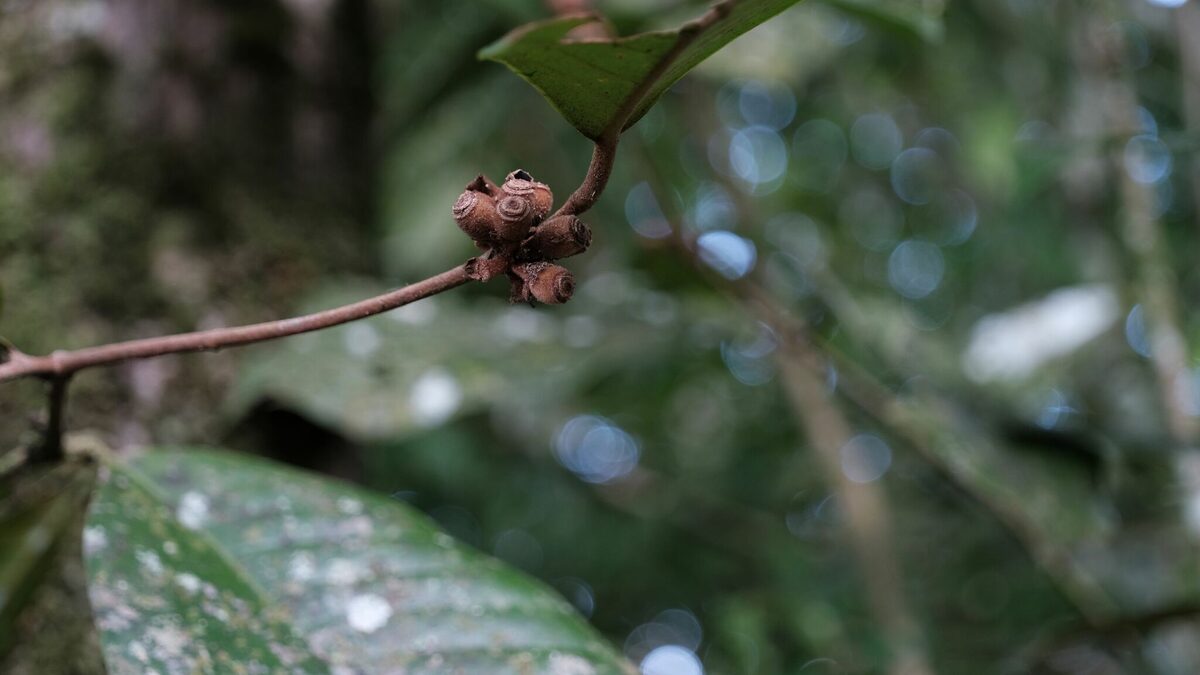
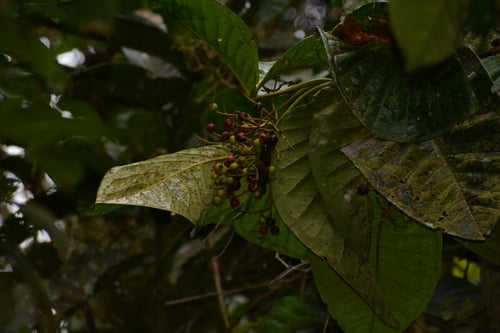
Syzygium polycephalum
(Miq.) Merr. & Perry
Gowok myrtle tree
iNaturalist· cc-by-nc
(c) Nur Herjayanti, some rights reserved (CC BY-NC), uploaded by Nur Herjayanti
wikimedia· cc-by-sa
Wikimedia Commons - Si Gam
wikimedia· cc0
Wikimedia Commons - Koorders, S. H.; Valeton, Theodoric
Description
A tree. It grows 8-20 m tall. The trunk can be 50 cm across. The leaves are oblong and 17-25 cm long by 6-7 cm wide. They have short stalks and are heart shaped at the base. The flowers are in panicles 5-13 cm long with many flowers. The fruit is a flattened round berry. It is 2-3 cm across. The fruit grow in clusters. They are dark purple and shiny.
Edible Uses
The young shoots and leaves are eaten raw with rice. The ripe fruit are eaten raw or processed into jelly.
Traditional Uses
The young shoots and leaves are eaten raw with rice. The ripe fruit are eaten raw. They are also used for jelly.
This uses section is brief — help expand it
Distribution
A tropical plant. It grows in secondary forest between 200-1,800 m above sea level.
Where It Grows
Asia, Australia, Indonesia, SE Asia,
Cultivation
Plants can be grown by seeds or grafting. They are spaced 14 m apart.
Propagation
Seed - best sown as soon as it is ripe.
Other Uses
The wood is used for house-construction. We do not have any more specific information for the wood of this species, but the various species of Syzygium tend to have somewhat similar timber. The general description of syzygium timber is as follows:- The heartwood is a golden brown, greyish brown or brown, with pink or purplish glints; it is not clearly demarcated from the 1 - 4cm wide band of sapwood. The texture is fine; the grain slightly interlocked, sometimes wavy or irregular; there are resin deposits. The wood is heavy; moderately hard; somewhat durable, being moderately resistant to fungi and termites, but susceptible to dry wood borers. It seasons slowly, with a high risk of checking and distortion; once dry it is moderately stable in service. It works well with ordinary tools, nailing and screwing are good so long as the wood is pre-bored; gluing is correct. The wood is used for musical instruments, tool handles, furniture components, ship building, heavy carpentry, flooring, joinery etc.
Other Information
It is cultivated as a fruit tree.
Synonyms
Also Known As
Dompjong, Gowok, Kaliasem, Kupa, Pohon jambu gowok
References (9)
- Ariyanti, E. E., et al, 2012, Distribution of Syzygium spp. (Klampok) in some areas of Bromo Tengger Semeru National Park, East Java. Proc. Soc Indon Biodiv. Intl Conf. Vol 1 pp 135-142 July 2012
- Arora, R. K., 2014, Diversity in Underutilized Plant Species - An Asia-Pacific Perspective. Bioversity International. p 70 (As Eugenia polycephala)
- Facciola, S., 1998, Cornucopia 2: a Source Book of Edible Plants. Kampong Publications, p 161
- Martin, F.W. & Ruberte, R.M., 1979, Edible Leaves of the Tropics. Antillian College Press, Mayaguez, Puerto Rico. p 207
- Ochse, J. J. et al, 1931, Vegetables of the Dutch East Indies. Asher reprint. p 538 (As Eugenia polycephale)
Show all 9 references Hide references
- PROSEA No. 2
- Terra, G.J.A., 1973, Tropical Vegetables. Communication 54e Royal Tropical Institute, Amsterdam, p 46
- Tropical Fruit world sign
- Uphof,