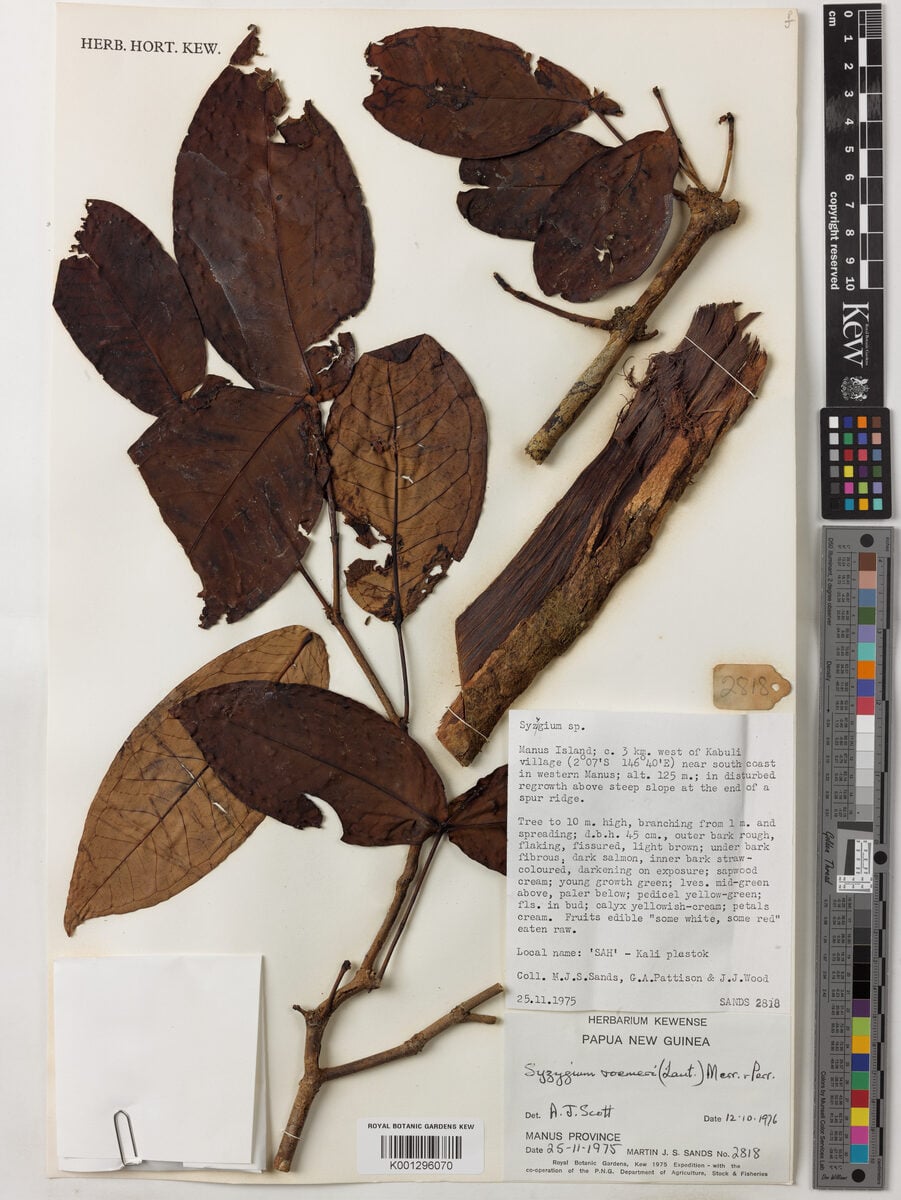
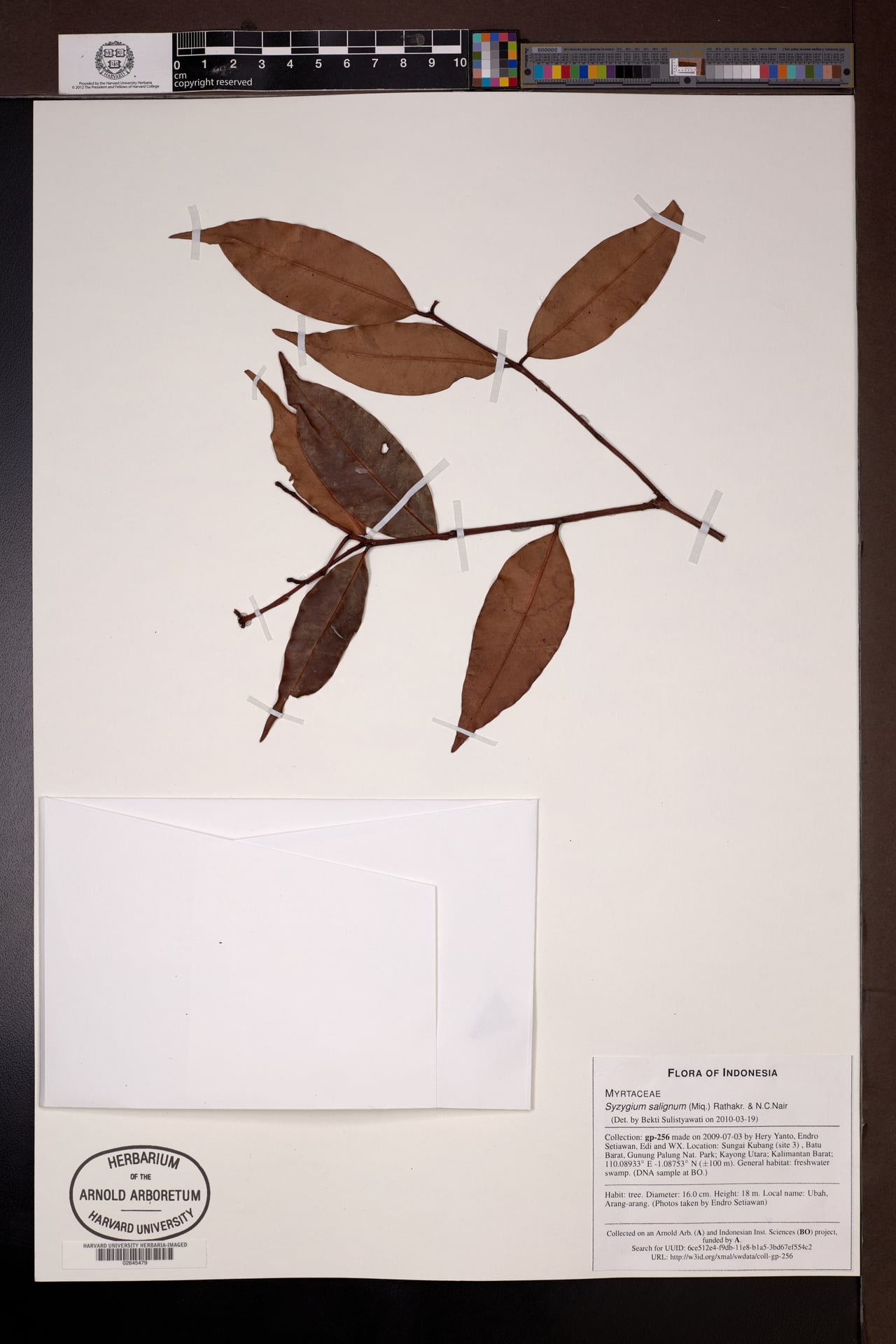
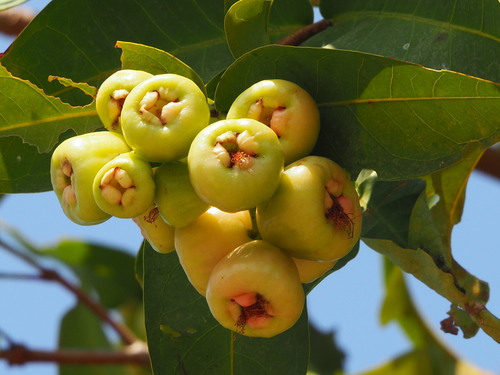
Syzygium polycephaloides
(C. B. Rob.) Merr.
Maigang tree, Java plum tree
iNaturalist· cc-by-nc
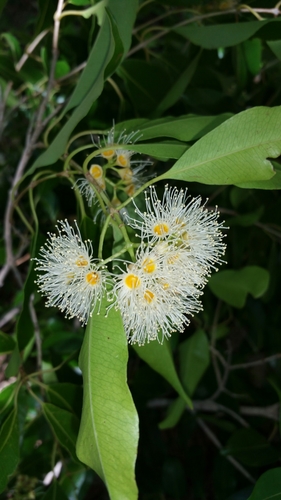
(c) Liselle Santos, some rights reserved (CC BY-NC), uploaded by Liselle Santos
iNaturalist· cc-by-nc
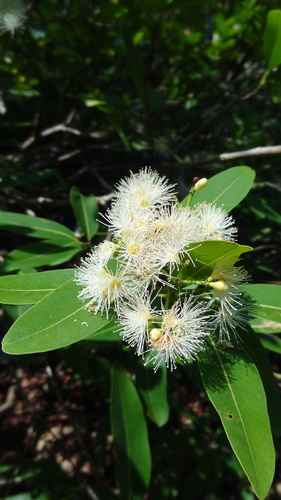
(c) oliswell, some rights reserved (CC BY-NC)
wikimedia· cc-by-sa
Wikimedia Commons - JDipterocarpus
Summary
Source: WikipediaSyzygium polycephaloides, commonly known as lipote, is a species of tree native to the Philippines, southeastern Sulawesi, and the Lesser Sunda Islands. It bears edible red to purple berries that can be eaten fresh but are usually turned into jams or wine in the Philippines. The tree grows to a height of around 15 m (49 ft). The leaves are oblong in shape and are around 50 cm (20 in) long and 15 cm (5.9 in) wide. It bears fruit between May and June. In the Philippines, Syzygium polycephaloides is also known as lipot, igot, balig-ang, maigang, or malig-ang, among other common names. These names are shared with Syzygium curranii, a closely related species endemic to the Philippines with similar edible berries.
Description
A small stout tree. It grows 15 m tall. The trunk is 90 cm across. The leaves are opposite, smooth and pointed at the tip. They are somewhat heart shaped at the base. They are 15 cm long by 5 cm wide. The young or small branches are distinctly four angled or swollen at the nodes. The flowers are white and occur in clusters on the trunk and branches. The fruit are irregularly round. They are fleshy and red to purple with a fleshy skin. They are 1 cm across.
Edible Uses
Fruits - raw or cooked. An acid flavour. They can be made into excellent tart jelly. The red to purple fruit is a subglobose berry, 1 cm in diameter.
Traditional Uses
The flesh of the fruit is eaten raw. They can be used for jelly.
This uses section is brief — help expand it
Distribution
A tropical plant. They occur from Laguna, Quezon and Samar in the Philippines in primary forest at medium altitudes.
Where It Grows
Asia, Indonesia, Pacific, Philippines, SE Asia,
Cultivation
Plants can be grown from seeds.
Propagation
Seed - best sown as soon as it is ripe.
Other Information
It is a cultivated fruit tree.
Synonyms
Also Known As
Baligang, Lipote, Maigang
References (7)
- Brown, W.H., 1920, Wild Food Plants of the Philippines. Bureau of Forestry Bulletin No. 21 Manila. p 136
- Call, C. A., et al, 2004, Participatory Rural Appraisal in the Upland Ecosystem of Mt Malindang, Misamis Occidental, Philippines. Biodiversity Research Programme for Development in Mindanao. p 53
- Coronel, R.E., 1982, Fruit Collections in the Philippines. IBPGR Newsletter p 8
- Monsalud, M.R., Tongacan, A.L., Lopez, F.R., & Lagrimas, M.Q., 1966, Edible Wild Plants in Philippine Forests. Philippine Journal of Science. p 506
- PROSEA No. 2
Show all 7 references Hide references
- Sukarya, D. G., (Ed.) 2013, 3,500 Plant Species of the Botanic Gardens of Indonesia. LIPI p 535
- World Checklist of Useful Plant Species 2020. Royal Botanic Gardens, Kew