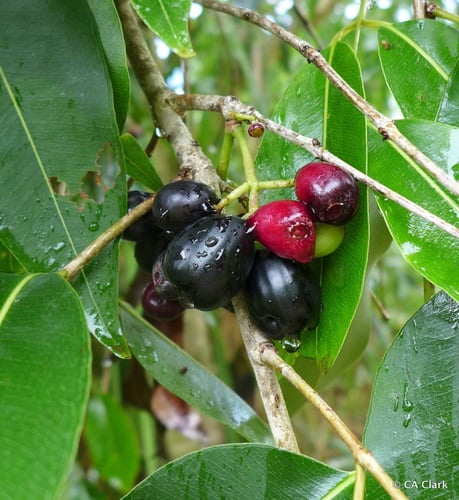
Syzygium endophloium
B. Hyland
Mountain Satinash, Onion satinash
gbif· cc-by
GBIF
gbif· cc-by
Herbrecs
gbif· cc-by
Herbrecs
Description
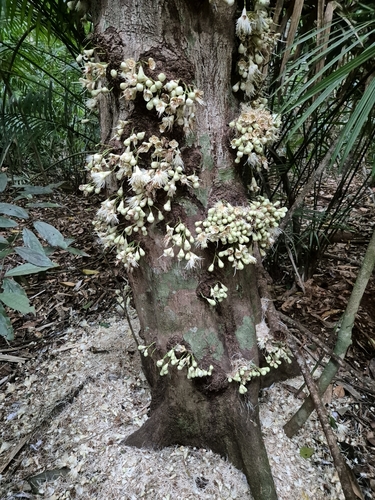
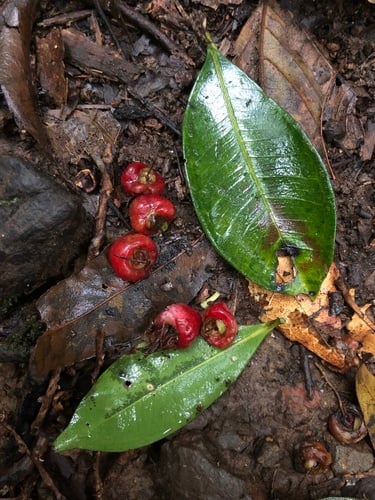
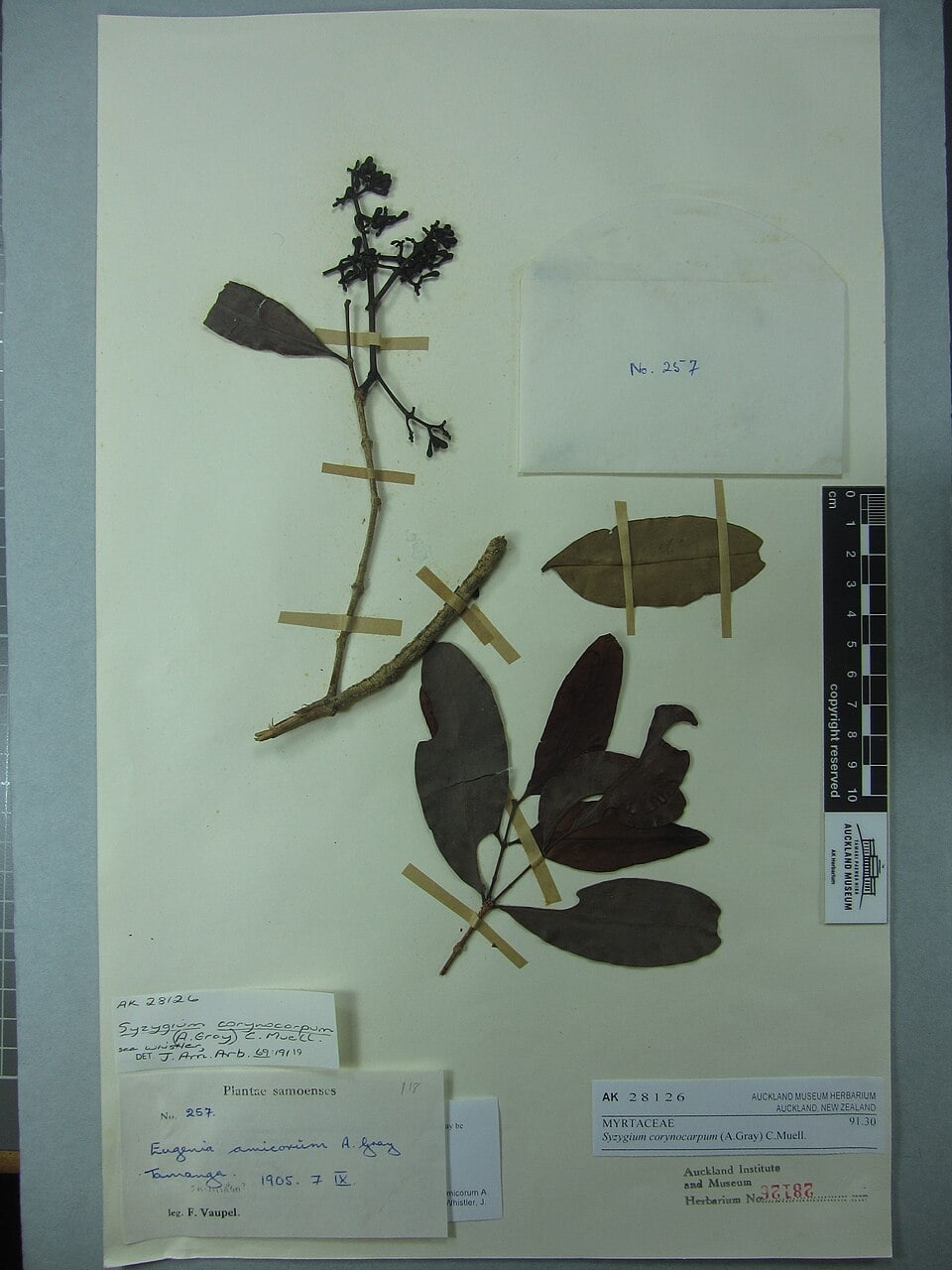
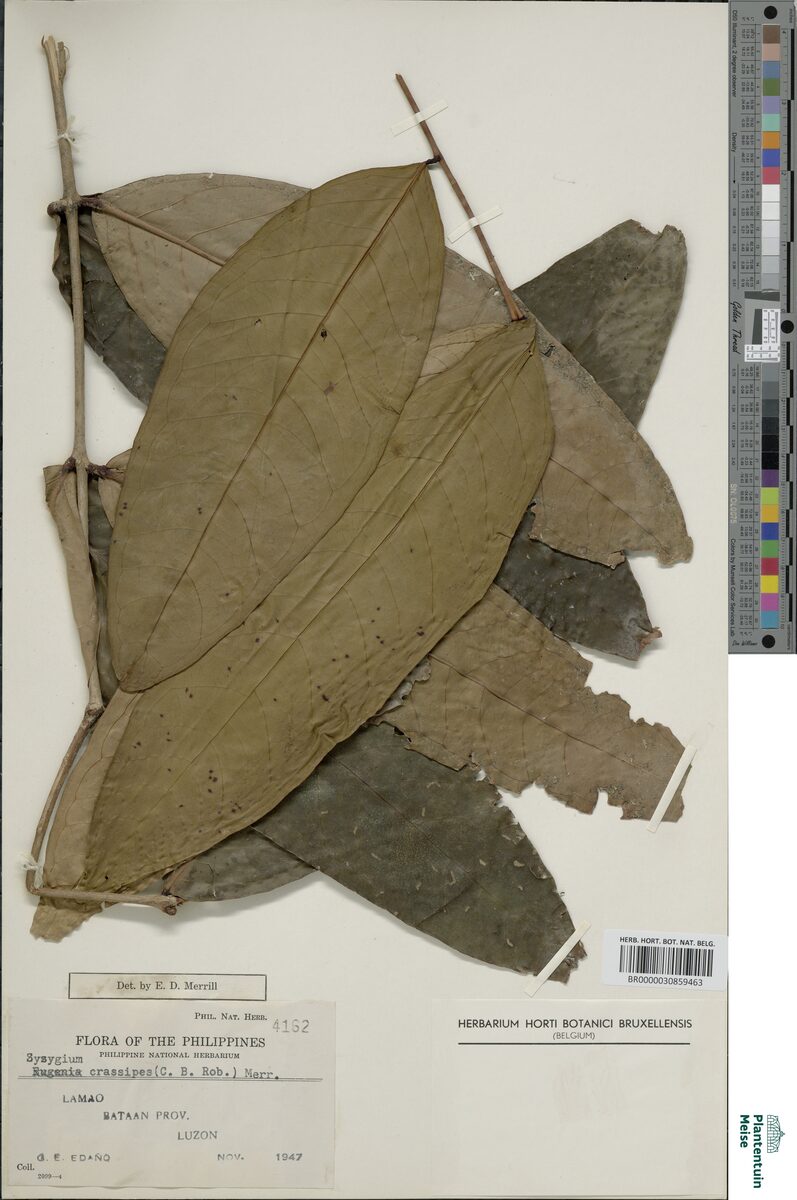
A tree up to 40 m tall. The leaves are simple and 4-9 cm long. They are smooth and with many oil dots visible. The leaf is elongated with a pointed tip. The fruit are 1-1.2 cm long by 1-1.6 cm wide. They hang in bunches either in the angles where leaves join or at the ends of branches. As the fruit ripen they become dark purple. The crushed fruit smells slightly of eucalyptus. The fruit has a crown on the end with a stalk in its centre. The fruit has one seed inside. The seed is 0.7-0.8 cm wide by 0.8-1.1 cm long. The fruit is edible
Edible Uses
The fruit is edible.
Distribution
It is a tropical plant. It occurs in the lowland and highland rainforest in northeast Queensland in Australia. It grows between 520-1400 m altitude.
Where It Grows
Australia*, SE Asia, Singapore,
Cultivation
Plants are grown from fresh seed.
Production
Fruit are ripe in December to February.
Also Known As
Bark-in-wood Satinash
References (5)
- Cooper W & Cooper W T, 1994, Fruits of the Rain Forest. RD Press p 270
- Cooper, W. and Cooper, W., 2004, Fruits of the Australian Tropical Rainforest. Nokomis Editions, Victoria, Australia. p 361
- Jackes, B.R., 2001, Plants of the Tropics. Rainforest to Heath. An Identification Guide. James Cook University. p 69
- Queensland Forest Service, 1991, Trees and Shrubs. Department of Primary Industries. p 116
- Townsend, K., 1994, Across the Top. Gardening with Australian Plants in the tropics. Society for Growing Australian Plants, Townsville Branch Inc. p 345