Symplocos tinctoria
(L.) L'Hér.
Sweet leaf, Horse sugar
iNaturalist· cc-by-nc
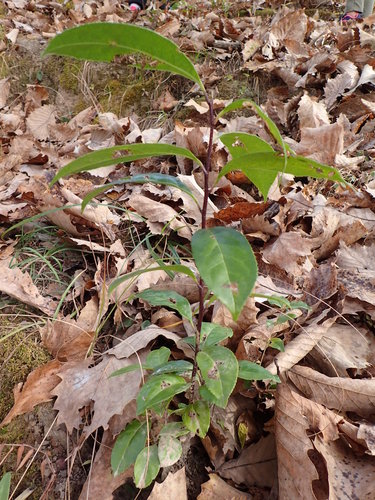
(c) j_appleget, some rights reserved (CC BY-NC), uploaded by j_appleget
iNaturalist· cc-by-nc
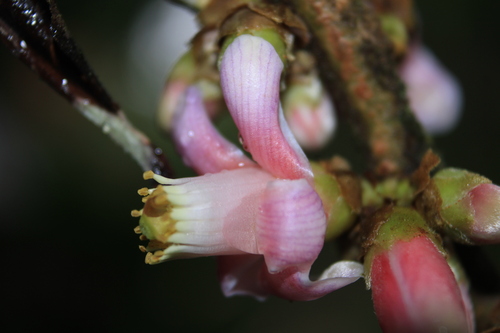
(c) Amy Hill, some rights reserved (CC BY-NC)
iNaturalist· cc-by-nc
(c) Amy Hill, some rights reserved (CC BY-NC)
Summary
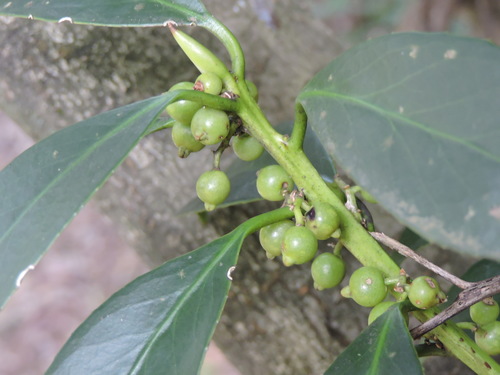
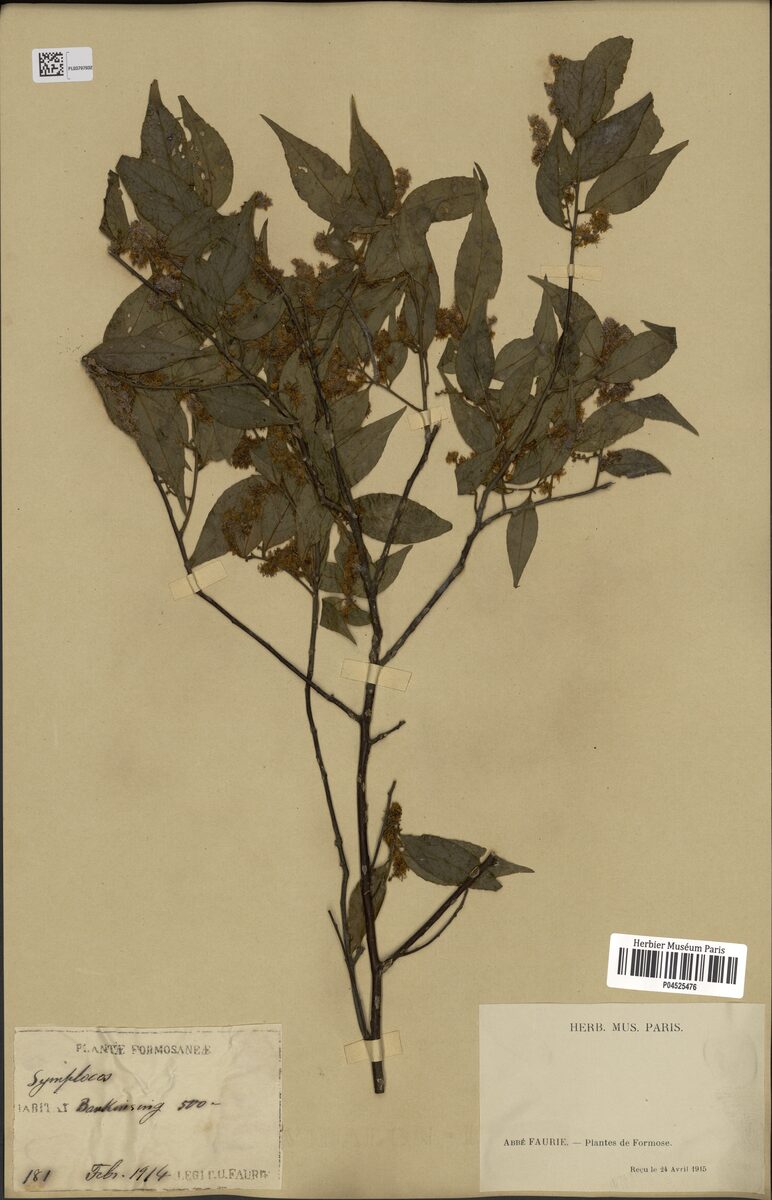
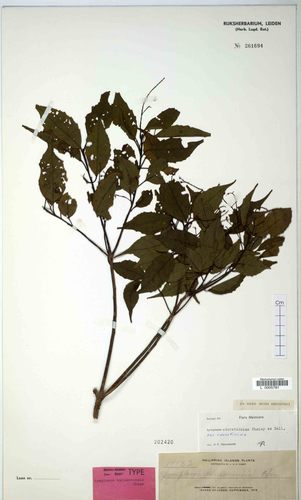
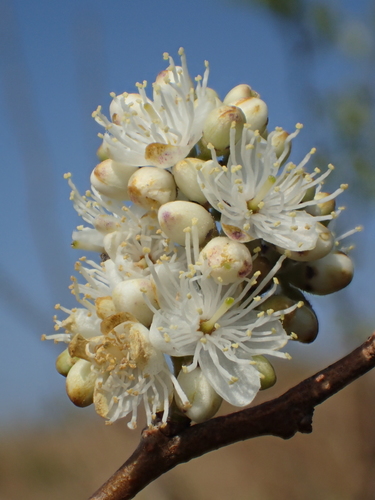
Source: WikipediaSymplocos tinctoria (the common sweetleaf, horse-sugar, or yellowwood) is a deciduous or evergreen shrub or tree. It is recognized by pith of twigs chambered; by foliage not notably aromatic when bruised, leaves finely hairy beneath. Shrubs or trees to 17 m tall by 36 cm diameter at breast height. The largest first-year twigs are under 3 mm across, terminal buds with acute tip, scales ciliate. Leaves are 7–15 cm long, margin entire or occasionally some teeth on the apical half, with a sweet taste that may be faint in old leaves. It is conspicuous when in flower; flowers opening before new leaves develop, fragrant, in clusters from axils of previous year's leaves or from just above the leaf scars if the leaves have fallen; the petals are creamy yellow to yellow, with one pistil. Fruits nearly cylindrical to ellipsoid drupes 8–12 mm long, with thin pulp and a hard stone containing one seed; the tip usually retaining parts of the sepals. Foliage is relished by browsing wildlife. A yellow dye may be obtained from bark and leaves. It flowers March to May.
Description
Evergreen shrub reaching 8 m with flowers in May and seeds ripening in September. Hermaphroditic but self-incompatible. Accommodates light sandy to heavy clay soils with good drainage and prefers moist soil. Tolerates mildly acid to neutral pH. Can grow in semi-shade or full sun but does not tolerate heavy shade.
Edible Uses
The leaves are eaten raw. Thick and downy, they have a pleasant sweet smell and taste, and are chewed for their sweetly pleasant, slightly acid flavour, which is refreshing and helps ease thirst.
Traditional Uses
The leaves are chewed for their sweet acid flavour.
This uses section is brief — help expand it
Medicinal Uses
The roots are bitter and aromatic and have been used as a tonic. A decoction of scraped roots has been used in the treatment of fevers.
Distribution
It grows in warm temperate climates.
Where It Grows
Canada, North America, USA,
Propagation
Sow seed in a cold frame as soon as it is ripe. Stored seed requires stratification and is best sown in a cold frame in late winter; germination can take up to 12 months. Prick out seedlings into individual pots when large enough to handle and grow on in the cold frame through their first winter. Plant out in late spring or early summer. Cuttings of half-ripe wood, 7–10cm with a heel, can be taken in July or August and placed in individual pots in a cold frame; roots form in about 4 weeks with a good success rate.
Other Uses
A yellow dye is obtained from the leaves, bark, and fruits. While no specific information is available for this species, many plants in the Symplocos genus contain alum and can be used as mordants in dyeing. The wood is soft, weak, light, and close-grained, easily worked, and weighs 33lb per cubic foot; it is used for turnery.
Notes
There are over 250 Symplocos species.
Synonyms
References (5)
- Facciola, S., 1998, Cornucopia 2: a Source Book of Edible Plants. Kampong Publications, p 240
- Grandtner, M. M., 2008, World Dictionary of Trees. Wood and Forest Science Department. Laval University, Quebec, Qc Canada. (Internet database http://www.wdt.qc.ca)
- Heywood, V.H., Brummitt, R.K., Culham, A., and Seberg, O., 2007, Flowering Plant Families of the World. Royal Botanical Gardens, Kew. p 314
- Kermath, B. M., et al, 2014, Food Plants in the Americas: A survey of the domesticated, cultivated and wild plants used for Human food in North, Central and South America and the Caribbean. On line draft. p 845
- Plants for a Future database, The Field, Penpol, Lostwithiel, Cornwall, PL22 0NG, UK. http://www.scs.leeds.ac.uk/pfaf/