Sterculia balanghas
Linn.
Kavalam
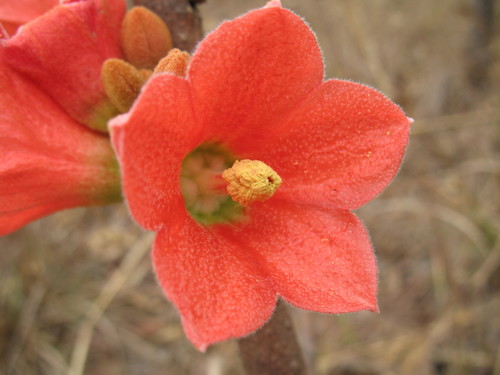
iNaturalist· cc-by-nc
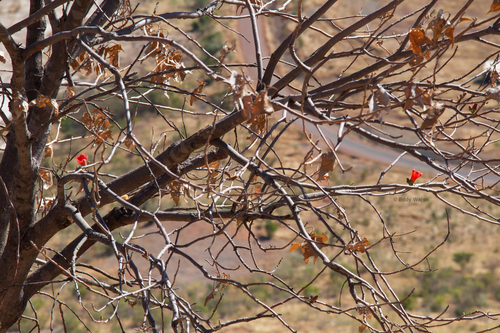
(c) Teena Fernando Palappa, some rights reserved (CC BY-NC)
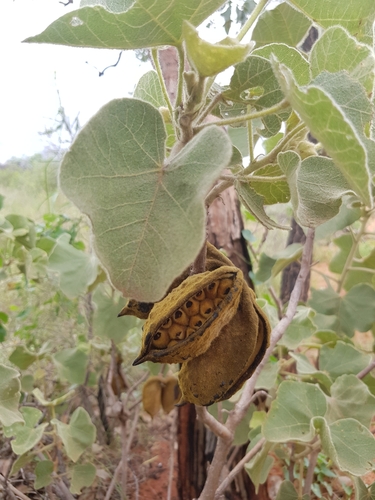
iNaturalist· cc-by-nc
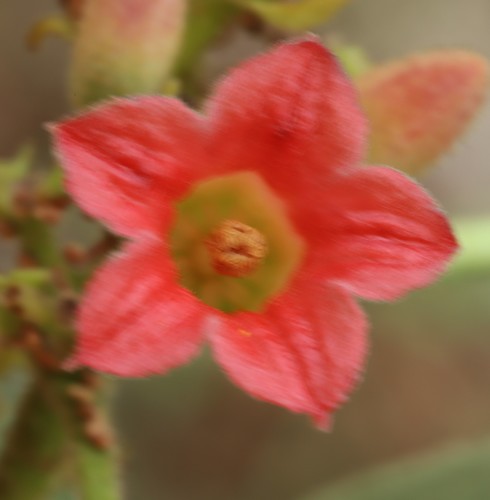
(c) Amila Rajapaksha, some rights reserved (CC BY-NC)
iNaturalist· cc-by-nc
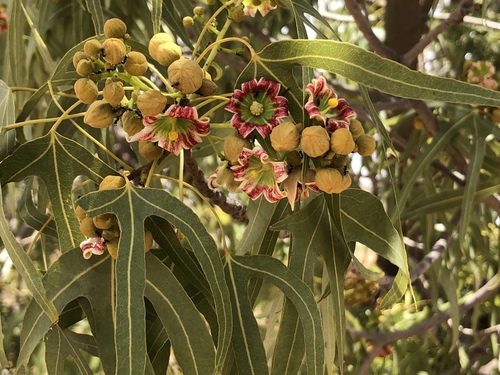
(c) Amila Rajapaksha, some rights reserved (CC BY-NC)
Summary
Source: WikipediaSterculia balanghas is a species of plant in the family Malvaceae. It is native to India and Sri Lanka. Leaves are simple, alternate; swollen at base and tipped; lamina elliptic, obovate, oblong, elliptic-ovate or oblong-ovate; base subcordate or round; apex acuminate; with entire margin. Flowers may be unisexual or polygamous are yellow or greenish-purple in color. Inflorescence show terminal or axillary panicles. Orange to red colored fruit is oblong and seeds are black in color. The plant is known as "nawa - නාවා" by Sinhalese people in Sri Lanka. It is widely used as an ornamental tree and as a fence tree in Sri Lanka.
Description
A deciduous tree. It grows 15 m tall. The bark is light brown. The leaves are 12-22 cm long by 7-12 cm wide. They are in rings. The young leaves have golden brown star shaped hairs. The leaf stalks are 4 cm long and swollen at the ends. The flowers are 1.5 cm wide. They are pink or green. They hang in slender clusters. The fruit are 5-9 cm long by 2-4 cm wide. They are pale yellow but turn orange.
Edible Uses
Seeds - cooked. When roasted, the seeds are nearly as palatable as chestnuts (Castanea spp.). The seeds are up to 22mm long.
Traditional Uses
The seeds are roasted and eaten.
This uses section is brief — help expand it
Distribution
A tropical plant. It grows in tropical Asia. In Thailand it grows between 10-1,600 m above sea level.
Where It Grows
Asia, Cambodia, Himalayas, India, Indochina, Indonesia, Malaysia, Myanmar, Nepal, Philippines, SE Asia, Sri Lanka, Thailand,
Cultivation
Plants are grown from seeds.
Propagation
A physical dormancy caused by the hard seed coat of the mature seeds of many species in this genus can be overcome by scarifying the seed. This is carried out by cutting away or abrading some of the seed coat to allow the ingress of water, though great care must be taken not to damage the embryo. The aril surrounding the seed should also be removed - this is easiest when it has been softened through soaking in water. The seeds germinate optimally at temperatures between 20 - 30°c. They can be sown in a nursery seedbed or in containers. A germination rate of about 95%, occurring within about 2 weeks can be expected if the seed has been properly treated.
Other Uses
Fibre is obtained from the bark. It is used in Sri Lanka to build cottages. The seed capsules are burnt for the preparation of a dyestuff known as 'kussumbha'. The wood is soft and open-grained. It does not appear to be used. The plant is sometimes grown as a hedge.
Production
In Thailand it flowers January to March and fruits February to June.
Notes
Also put in the family Sterculiaceae.
Synonyms
Also Known As
Chaa saam kaeo, Mak lin ang, Nawa, Po khanun
References (6)
- Ambasta, S.P. (Ed.), 2000, The Useful Plants of India. CSIR India. p 600
- Gardner, S., et al, 2000, A Field Guide to Forest Trees of Northern Thailand, Kobfai Publishing Project. p 80
- Hedrick, U.P., 1919, (Ed.), Sturtevant's edible plants of the world. p 634
- Menninger, E.A., 1977, Edible Nuts of the World. Horticultural Books. Florida p 43
- Singh, H.B., Arora R.K.,1978, Wild edible Plants of India. Indian Council of Agricultural Research, New Delhi. p 85
Show all 6 references Hide references
- Wickens, G.E., 1995, Edible Nuts. FAO Non-wood forest products. FAO, Rome. p155