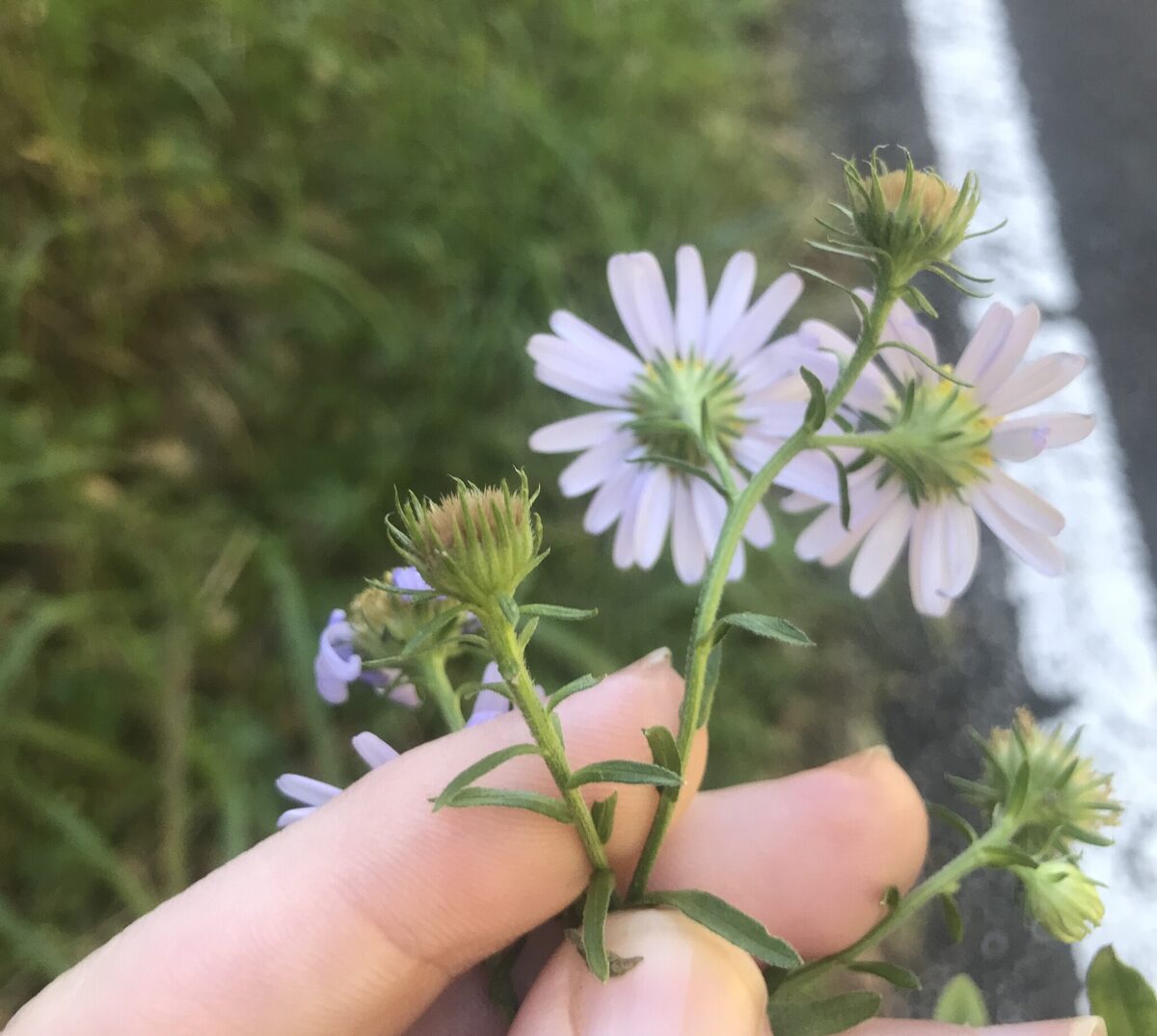
Spilanthes acmella
(L.) L.
Paracress
iNaturalist· cc0
no rights reserved, uploaded by Ajit Ampalakkad
iNaturalist· cc-by-nc
(c) asmita pandey, some rights reserved (CC BY-NC)
Description
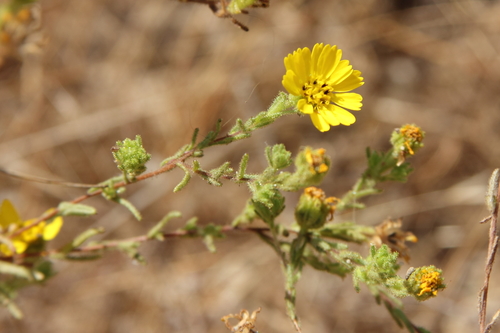
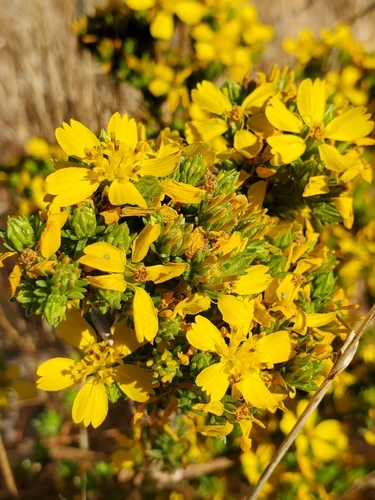
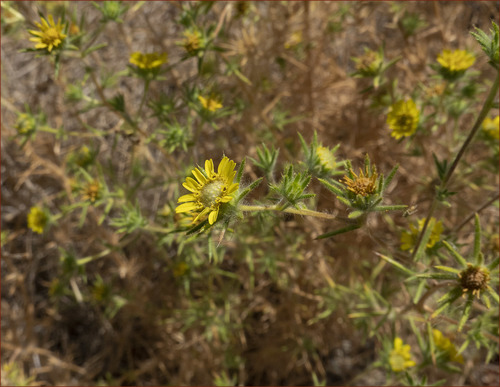
An erect annual herb. It grows 40 cm high. The leaves are opposite. They are simple and hairy. The flowers are yellow. They occur in dense single heads in the axils of leaves or at the ends of branches.
Edible Uses
The young leaves are eaten raw, used in soups, and served as a pot-herb to spice salads. The flowers are also edible.
Traditional Uses
The less bitter kind is used as a pot-herb. It is used to spice salads. The young leaves are also eaten raw. They are also used for soups.
This uses section is brief — help expand it
Medicinal Uses
The less bitter form is traditionally used as a pot-herb.
Distribution
A tropical plant. It grows throughout the tropics and in the subtropics. It grows along roadsides and in scrub. In Vietnam it grows from sea level to 1,500 m above sea level.
Where It Grows
Africa, Amazon, Asia, Australia, Brazil, Central Africa, Cuba, East Africa, Ethiopia, Gabon, India, Indochina, Indonesia, Japan, Laos, Madagascar, Malaysia, Myanmar, Nepal, North America, Northeastern India, SE Asia, South America, Thailand, Vietnam, West Africa, West Indies,
Cultivation
Plants can be grown from seed.
Other Information
It is a commercially cultivated vegetable. Leaves are sold in local markets.
Notes
NB There is some confusion over the synonyms. Spilanthes acmella (L.) Murray in Ochse is a synonym of Blainvillea acemella (L.) Philipson.
Nutrition
| Part | Moisture | kJ | kcal | Protein | Vit A | Vit C | Iron | Zinc |
|---|---|---|---|---|---|---|---|---|
| Leaves | 89 | — | 32 | 1.9 | 39 | — | 4 | — |
Synonyms
Also Known As
Akarkarha, Akkalkara, Alphabet plant, Ankasa, Ansateh, Ansa tlang, Australian cress, Cabrito, Chin-lengbi, Cuc ao hoa vang, Ear-stud flower, Gatang, Gletang, Hemmugulu, Hoko so, Jotang, Kerabu, Klungbua, Kuppa manjel, Legetan, Manjal karisalai, Maratimogga, Maratiteega, Namlang, Pakat-hua-waen, Pakrad, Paktumhu, Phak khad hun, Phak khraat, Pipulka, Pirazha, Pokarmul, Pokok getang, Raipuru, Samberma, Sarunen, Saruni sapi, Toothache plant, Vanamugali
References (34)
- Ambasta, S.P. (Ed.), 2000, The Useful Plants of India. CSIR India. p 593
- Burkill, I.H., 1966, A Dictionary of the Economic Products of the Malay Peninsula. Ministry of Agriculture and Cooperatives, Kuala Lumpur, Malaysia. Vol 2 (I-Z) p 2102
- Facciola, S., 1998, Cornucopia 2: a Source Book of Edible Plants. Kampong Publications, p 42
- Food Composition Tables for use in Africa FAO http://www.fao.org/infoods/directory No. 807 (As Spilanthes oleracea)
- Food Composition Tables for use in East Asia FAO http://www.fao.org/infoods/directory No. 746
Show all 34 references Hide references
- Gangte, H. E., et al, 2013, Wild Edible Plants used by the Zou Tribe in Manipur, India. International Journal of Scientific and Research Publications, Volume 3, Issue 5
- Grivetti, L. E., 1980, Agricultural development: present and potential role of edible wild plants. Part 2: Sub-Saharan Africa, Report to the Department of State Agency for International Development. p 27
- Guite, C., 2016, Study of wild edible plants associated with the Paite Tribe of Manipur, India. International Journal of Current Research. Vol. 8, Issue 11, pp. 40927-40932
- Hedrick, U.P., 1919, (Ed.), Sturtevant's edible plants of the world. p 630
- Hibbert, M., 2002, The Aussie Plant Finder 2002, Florilegium. p 293
- Jacquat, C., 1990, Plants from the Markets of Thailand. D.K. Book House p 91
- Jain et al, 2011, Dietary Use and Conservation Concern of Edible Wetland Plants at Indo-Burma Hotspot: A Case Study from Northeast India. Journal of Ethnobiology and Ethnomedicine 7:29 p 8
- Katz, E., et al, 2012, No greens in the forest? Note on the limited consumption of greens in the Amazon. Acta Soc Bot Pol 81(4):283–293
- Kays, S. J., and Dias, J. C. S., 1995, Common Names of Commercially Cultivated Vegetables of the World in 15 languages. Economic Botany, Vol. 49, No. 2, pp. 115-152
- Lalfakzuala, R., 2007, Ethnobotanical usages of plants in western Mizoram. Indian Journal of Traditional Knowledge. Vol 6(3) pp 480-493
- Lim, T. K., Edible Medicinal and Non-Medicinal Plants Volume 7 Flowers
- Martin, F.W. & Ruberte, R.M., 1979, Edible Leaves of the Tropics. Antillian College Press, Mayaguez, Puerto Rico. p 186
- McMakin, P.D., 2000, Flowering Plants of Thailand. A Field Guide. White Lotus. p 90
- Medhi, P. & Borthakur, S. K., 2012, Phytoresources from North Cachur Hills of Assam -3: Edible plants sold at Hflong market. Indian Journal or Natural Products and Resources. 3(1) pp 84-109 (Spilanthes acmella var. oleracea)
- Medhi, P. & Borthakur, S. K., 2013, Wild edible plants sold by the Zeme Nagas at the makeshift market of Mahur, Dima Hasao district of Assam. Pleione 7(1): 84 - 93. 2013 (Spilanthes acmella var. oleracea)
- Miguel, E., et al, 1989, A checklist of the cultivated plants of Cuba. Kulturpflanze 37. 1989, 211-357 (As Spilanthes oleracea)
- Molla, A., Ethiopian Plant Names. http://www.ethiopic.com/aplants.htm
- Oomen, H.A.P.C., & Grubben, G.J.H., 1978, Tropical Leaf Vegetables in Human Nutrition, Communication 69, Department of Agricultural research, RTI Amsterdam, p 85, 86
- Raponda-Walker, A & Sillans, R., 1961, Les Plantes Utiles du Gabon. Editions Paul Lechevalier, Paris. p 131
- Rodriguez-Amaya, D. B., 1999, Carotenoides y Prepracion de Alimentos. University Estadual de Campinas, Brasil, Ph.D. thesis. p 25
- Seal, T., et al, 2013,Evaluation of Proximate and Mineral Composition of Wild Edible Leaves, traditionally used by the Local People of Meghalaya State in India. Asian Journal of Plant Sciences 12(4): 171-175
- Sivakumar, A. & Murugesan, M., 2005, Ethnobotanical Studies of the wild edible plants used by the tribals of the Anaimalai Hills, the Western Ghats. Ancient Science of Life. XXV(2) Oct-Dec.
- Srichaiwong, P., et al, 2014, A Study of the Biodiversity of Natural Food Production to Support Community Upstream of Chi Basin, Thailand. Asian Social Science 10 (2):
- Syst. veg. ed. 13:610. 1774 - Linnaeus is author of the new names in Syst. veg. ed. 13\; Murray was simply editor, fide TL-2 3:110, 670. 1981
- Tanaka, Y. & Van Ke, N., 2007, Edible Wild Plants of Vietnam: The bountiful garden. Orchid books. p 53
- Terra, G.J.A., 1973, Tropical Vegetables. Communication 54e Royal Tropical Institute, Amsterdam, p 76
- Tsering, J., et al, 2017, Ethnobotanical appraisal on wild edible plants used by the Monpa community of Arunchal Pradesh. Indian Journal of Traditional Knowledge. Vol 16(4), October 2017, pp 626-637
- van Wyk, B., 2005, Food Plants of the World. An illustrated guide. Timber press. p 353
- Wild edible plants of Himachal Pradesh