Argemone mexicana
L.
Mexican Poppy
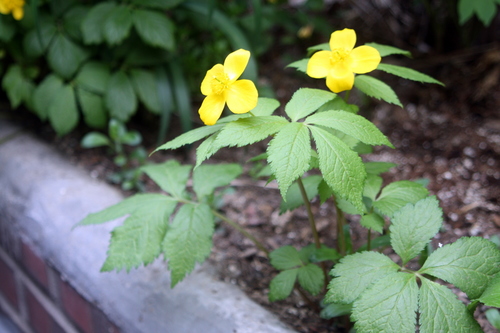
iNaturalist· cc-by-nc
(c) pradeep, some rights reserved (CC BY-NC)
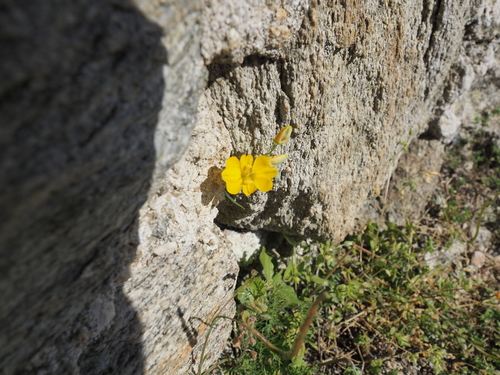
iNaturalist· cc-by-nc
(c) achyutone, some rights reserved (CC BY-NC)
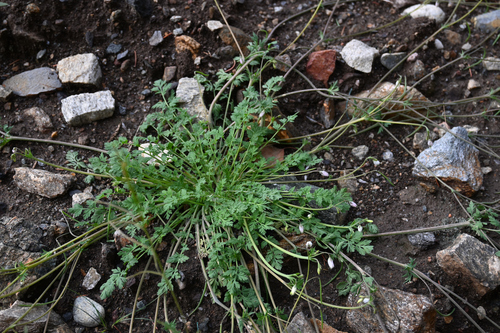
iNaturalist· cc-by-nc
(c) Roddy CJ Ward, some rights reserved (CC BY-NC), uploaded by Roddy CJ Ward
Summary
Source: WikipediaArgemone mexicana, also known by the common names Mexican poppy, Mexican prickly poppy, flowering thistle, cardo, and cardosanto, is a species of poppy found in Mexico and now widely naturalized in many parts of the world. An extremely hardy pioneer plant, it is tolerant of drought and poor soil, often being the only cover on new road cuttings or verges. It has bright yellow latex. It is poisonous to grazing animals, and it is rarely eaten, but it has been used medicinally by many peoples, including those in its native area, as well as the indigenous peoples of the western United States, parts of Mexico, and many parts of India. In India, during the colorful festival Holika Dahan, adults and children worship by offering flowers, and this species is in its maximum flowering phase during March when the Holi festival is celebrated. It is also referred to as "Kanteli Ka Phul" and "Satyanashi" in India.
Description
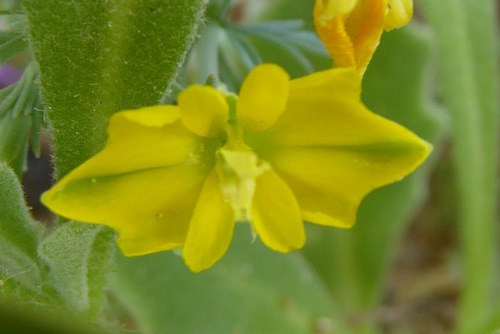
A spreading clump forming annual herb. It grows up to 1 m high and spreads to 30-40 cm across. The leaves do not have leaf stalks. The leaves have a green and white pattern. The leaves have deep irregular teeth along the edge. The flower has a very short stalk. It is at the end of the plant. It is yellow and has 6 petals. The fruit is a capsule and is prickly. This contains round, pitted, brown seeds which are sticky.
Edible Uses
Edible Parts: Leaves Oil Edible Uses: Oil Leaves No further details are given but caution is advised, see the notes on toxicity at the top of the page.
Traditional Uses
CAUTION: The seeds are poisonous. Their oil is not edible. The plant contains some alkaloids and can have high levels of nitrate. The seeds are ground and used in preparation of vegetables. The leaves are cooked and eaten as a vegetable. The stem is eaten as a vegetable.
Medicinal Uses
Alterative Analgesic Antispasmodic Antitussive Demulcent Emetic Expectorant Hallucinogenic Purgative Sedative Skin Warts The whole plant is analgesic, antispasmodic, possibly hallucinogenic and sedative. It contains alkaloids similar to those in the opium poppy (P. somniferum) and so can be used as a mild pain-killer. The fresh yellow, milky, acrid sap contains protein-dissolving substances and has been used in the treatment of warts, cold sores, cutaneous affections, skin diseases, itches etc. It has also been used to treat cataracts and has been taken internally in the treatment of dropsy and jaundice. The root is alterative and has been used in the treatment of chronic skin diseases. The flowers are expectorant and have been used in the treatment of coughs and other chest complaints. The seed is demulcent, emetic, expectorant and laxative. An infusion, in small quantities, is used as a sedative for children, but caution is advised since the oil in the seed is strongly purgative. The seed has also been used as an antidote to snake poisoning. The pounded seeds, mixed with mustard oil, are applied externally to treat itchy skin. The oil from the seed is demulcent and purgative. It has been used externally in the treatment of skin problems. Caution is advised in the use of this oil, prolonged ingestion produces toxic effects resembling those occurring in epidemic dropsy.
Known Hazards
The seeds resemble the seeds of Brassica nigra (mustard). As a result, mustard can be adulterated by argemone seeds, rendering it poisonous. Several significant instances of katkar poisoning have been reported in India, Fiji, South Africa and other countries. The last major outbreak in India occurred in 1998. 1% adulteration of mustard oil by argemone oil has been shown to cause clinical disease. In India, Argemone oil is mixed with sunflower oil and sesame oil to increase the quantity, but this adulteration causes health disorders and renowned brands display "no argemone oil" to qualify purity. Katkar oil poisoning causes epidemic dropsy, with symptoms including extreme swelling, particularly of the legs. All parts of plants are poisonous. Ingestion of them can cause perianal itching, pneumonia myocarditis and congestive cardiac failure, ascites, sarcoid-like skin changes, alopecia, hepatomegaly
Distribution
A tropical to warm temperate plant. In Nepal it grows to about 1400 m altitude. It grows in semi arid regions. It can grow in areas with moderate moisture or which are seasonally dry. It can grow on poor, well-drained soils. It needs full sun. It can grow in arid places. It suits hardiness zones 8-12. Tasmania Herbarium.
Where It Grows
Africa, Asia, Australia, Argentina, Austria, Bahamas, Balkans, Benin, Bolivia, Botswana, Brazil, Bulgaria, Burkina Faso, Central America, China, Colombia, Cuba, Dominican Republic, East Africa, Ecuador, El Salvador, Eswatini, Ethiopia, Europe, Fiji, France, Germany, Guatemala, Guiana, Guianas, Guinea, Guinée, Guinea-Bissau, Haiti, Himalayas, India, Indochina, Indonesia, Jamaica, Madagascar, Malawi, Malaysia, Martinique, Mediterranean, Mexico*, Middle East, Mozambique, Myanmar, Nepal, Nigeria, North America, Northeastern India, Oman, Pacific, Pakistan, Paraguay, Peru, Philippines, Portugal, Puerto Rico, Sao Tome and Principe, Saudi Arabia, SE Asia, Senegal, Slovenia, Socotra, South Africa, Southern Africa, South America, Spain, St Helena, St. Vincent and Grenadines, Sudan, Suriname, Swaziland, Switzerland, Tanzania, Tasmania, Trinidad & Tobago, Uruguay, USA, Venezuela, Vietnam, West Africa, West Indies, Yemen, Zambia, Zimbabwe,
Cultivation
Easily grown in a light soil in a sunny position. Does best in a poor well-drained soil. This species is not hardy in the colder areas of the country, it tolerates temperatures down to between -5 and -10°c. Usually grown as a hardy annual in Britain. It resents being transplanted and should be sown in situ.
Propagation
Seed - sow April in situ. The seed usually germinates in 3 - 4 weeks at 15°c.
Other Uses
Essential Oil A semi-drying oil is obtained from the seed, used for lighting, soap etc. A medicinal fixed oil (essential oil?) is obtained from the seed. Biodiesel production may be possible from the seed oil using crystalline manganese carbonate. Special Uses Scented Plants
Production
Plants fruit throughout most of the year.
Other Information
It is sold in local markets. It is cultivated.
Notes
There are 32 Argemone species. The one in Tasmania may be Argemone ochroleuca.
Synonyms
Also Known As
Betakoa, Bharband, Bilayat, Bramhadandi, Bucoli, Chicalote, Dandaro, Datturi, Devil’s Fig, Fantsimboay, Golden Thistle of Peru, Kande, Kanta kusuma, Kardai, Kudiyoetti, Mehiški bodeči mak, Mlumajalaga, Ponnummattam, Prickly poppy, Pua kala, Seyal kanta, Shialkata, Sialkata, Siyalkanta, Tambala, Thorn Poppy, Tilinha-felendje, Udisamari
References (48)
- Addis, G., Asfaw, Z & Woldu, Z., 2013, Ethnobotany of Wild and Semi-wild Edible Plants of Konso Ethnic Community, South Ethiopia. Ethnobotany Research and Applications. 11:121-141
- Al-Sodany, Y. M., et al, 2013, Medicinal Plants in Saudi Arabia: I. Sarrwat Mountains at Taif, KSA. Academic Journal of Plant Sciences 6 (4): 134-145
- Ambasta S.P. (Ed.), 2000, The Useful Plants of India. CSIR India. p 51
- Ara, R. I. T., 2015, Leafy Vegetables in Bangladesh. Photon eBooks. p 84
- Bodkin, F., 1991, Encyclopedia Botanica. Cornstalk publishing, p 99
Show all 48 references Hide references
- Brickell, C. (Ed.), 1999, The Royal Horticultural Society A-Z Encyclopedia of Garden Plants. Convent Garden Books. p 134
- Burkill, I.H., 1966, A Dictionary of the Economic Products of the Malay Peninsula. Ministry of Agriculture and Cooperatives, Kuala Lumpur, Malaysia. Vol 1 (A-H) p 239
- Chowdery, T., et al, 2014, Wild edible plants of Uttar Dinajpur District, West Bengal. Life Science Leaflets. 47:pp 20-36 http://lifesciencesleaflets.ning.com
- Chowdhury, A. & Das, A. P., 2014, Conservation through sustainable utilization of wetland leafy vegetables of Terai and Duars, West Bengal, India. International Journal of Advanced Life Sciences (IJALS), 7(4) p 653
- Chowdhury, M. & Mukherjee, R., 2012, Wild Edible Plants Consumed by Local Communities of Maldah of West Bengal, India. Indian J.Sci.Res.3(2) : 163-170
- Cundall, P., (ed.), 2004, Gardening Australia: flora: the gardener's bible. ABC Books. p 182
- Curtis, W.M., 1956, The Students Flora of Tasmania Vol 1 p 27
- Fagg, C. W. et al, 2015, Useful Brazilian plants listed in the manuscripts and publications of the Scottish medic and naturalist George Gardner (1812–1849). Journal of Ethnopharmacology 161 (2015) 18–29
- Flora of Pakistan. www.eFloras.org
- Fowler, D. G., 2007, Zambian Plants: Their Vernacular Names and Uses. Kew. p 52
- Grivetti, L. E., 1980, Agricultural development: present and potential role of edible wild plants. Part 2: Sub-Saharan Africa, Report to the Department of State Agency for International Development. p 70
- Grubben, G. J. H. and Denton, O. A. (eds), 2004, Plant Resources of Tropical Africa 2. Vegetables. PROTA, Wageningen, Netherlands. p 559
- Heywood, V.H., Brummitt, R.K., Culham, A., and Seberg, O. 2007, Flowering Plant Families of the World. Royal Botanical Gardens, Kew. p 241
- Jackes, B.R., 2001, Plants of the Tropics. Rainforest to Heath. An Identification Guide. James Cook University. p 72
- Jardin, C., 1970, List of Foods Used In Africa, FAO Nutrition Information Document Series No 2.p 56
- Lamp, C & Collet F., 1989, Field Guide to Weeds in Australia. Inkata Press. p 27
- Llamas, K.A., 2003, Tropical Flowering Plants. Timber Press. p 308
- Loughmiller, C & L., 1985, Texas Wildflowers. A Field Guide. University of Texas, Austin. p 185
- Lulekal, E., et al, 2011, Wild edible plants in Ethiopia: a review on their potential to combat food insecurity. Afrika Focus - Vol. 24, No 2. pp 71-121
- Manandhar, N.P., 2002, Plants and People of Nepal. Timber Press. Portland, Oregon. p 94
- Martin, F.W. & Ruberte, R.M., 1979, Edible Leaves of the Tropics. Antillian College Press, Mayaguez, Puerto Rico. p 80, 211
- Misra S. & Misra M., 2016, Ethnobotanical and Nutritional Evaluation of Some Edible Fruit Plants of Southern Odisha, India. International Journal of Advances in Agricultural Science and Technology, Vol.3 Issue.1, March- 2016, pg. 1-30
- Misra, S., 2020, Survey of edible plants for human consumption in south Odisha, India. Journal of Emerging Technologies and Innovative Research (JETIR) Vol. 7, Issue 12 p 278
- Morley, B. & Everard, B., 1970, Wild Flowers of the World. Ebury press. Plate 154
- Mot So Rau Dai an Duoc O Vietnam. Wild edible Vegetables. Ha Noi 1994, p 260
- Patil, M. V. & Patil, D. A., 2000, Some More Wild Edible Plants of Nasik District (Maharashtra). Ancient Science of Life Vol. X1X (3&4): 102-104
- Pham-Hoang Ho, 1999, An Illustrated Flora of Vietnam. Nha Xuat Ban Tre. p 342
- Plants for a Future database, The Field, Penpol, Lostwithiel, Cornwall, PL22 0NG, UK. http://www.scs.leeds.ac.uk/pfaf/
- Pickering, H., & Roe, E., 2009, Wild Flowers of the Victoria Falls Area. Helen Pickering, London. p 90
- Plants of Haiti Smithsonian Institute http://botany.si.edu/antilles/West Indies
- Royal Botanic Gardens, Kew (1999). Survey of Economic Plants for Arid and Semi-Arid Lands (SEPASAL) database. Published on the Internet; http://www.rbgkew.org.uk/ceb/sepasal/internet [Accessed 5th May 2011]
- Salako, V. K. et al, 2013, Home gardens: an assessment of their biodiversity and potential contribution to conservation of threatened species and crop wild relatives in Benin. Genet Resour Crop Evol
- Sarma, H., et al, 2010, Updated Estimates of Wild Edible and Threatened Plants of Assam: A Meta-analysis. International Journal of Botany 6(4): 414-423
- Smith, A.C., 1981, Flora Vitiensis Nova, Lawaii, Kuai, Hawaii, Volume 2 p 154
- Smith, N., Mori, S.A., et al, 2004, Flowering Plants of the Neotropics. Princeton. p 285
- Sp. pl. 1:508. 1753
- Swaziland's Flora Database http://www.sntc.org.sz/flora
- Torre, de la, L., et al, 2008, Enciclopedia de las Plantas Útiles del Ecuador. Herbario QCA. Pontificia Universidad Católica del Ecuador. p 483
- Wild edible plants of Himachal Pradesh
- Williamson, J., 2005, Useful Plants of Malawi. 3rd. Edition. Mdadzi Book Trust. p 30
- Wilson, A.J.G., (Ed.), 1994, Flora of Australia Volume 49, Oceanic Islands1, Australian Government Publishing Service, Canberra. p 56
- Wilson, S., 1997, Some Plants are Poisonous. Reed. p 18
- World Checklist of Useful Plant Species 2020. Royal Botanic Gardens, Kew