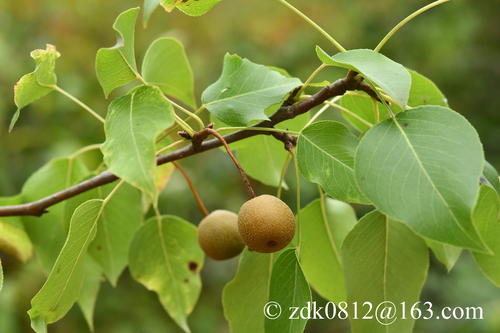
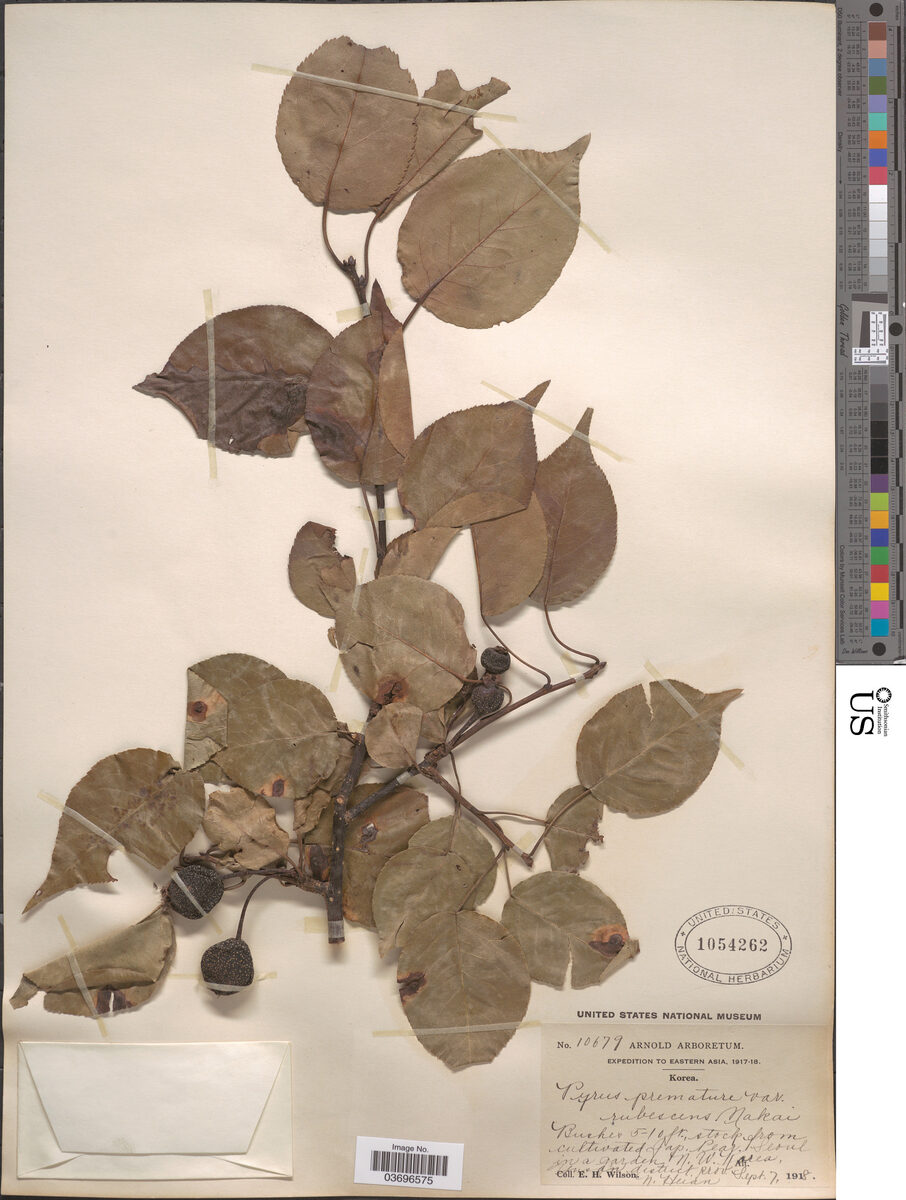
Sorbus vestita
(Wall. ex G. Don) Loddiges
Himalayan whitebeam
gbif· cc-by-nc
chenmantang
gbif· cc-by-nc
chenmantang
gbif· cc-by-nc
chenmantang
Summary
Source: WikipediaA deciduous tree reaching 10 meters tall with a spreading habit. Flowers appear in May and are insect-pollinated. Hardy to UK zone 7. Grows well in light sandy, medium loamy, or heavy clay soils with good drainage. Tolerates mildly acidic, neutral, and mildly alkaline pH levels. Prefers moist soil and can grow in semi-shade or full sun. Withstands strong winds but not coastal exposure.
Description
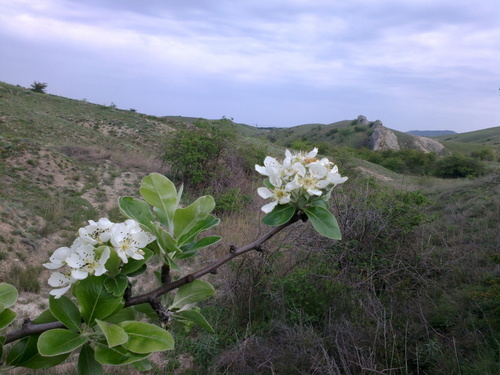
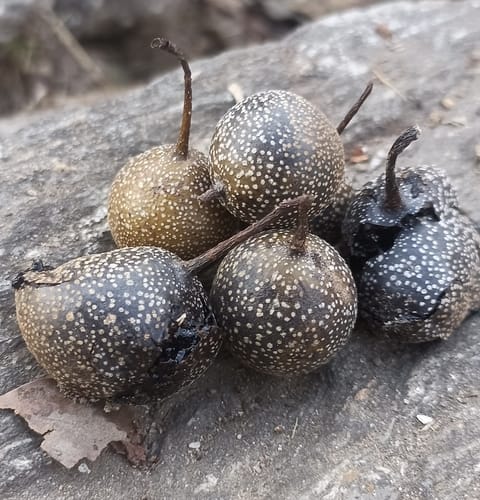
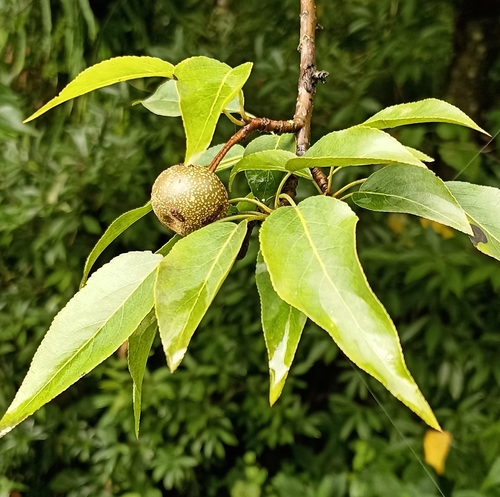
A deciduous tree. It grows 15 m tall. It is a broad cone shape. The bark is pale grey and peels in thick flakes. The leaves are narrowly oval and 20 cm long by 15 cm wide. There can be small lobes. There are sharp teeth along the edge. They have white hairs when young but become glossy green above and have dense white hairs underneath. There are up to 11 pairs of veins. The flowers are 2 cm across and white. They have 5 petals. The occur in flattened clusters 10 cm across. The fruit are round or pear shaped and 2 cm across. They are green and speckled with brown.
Edible Uses
The fruit can be eaten raw or cooked and grows up to 2cm across.
Traditional Uses
The ripe fruit are eaten.
This uses section is brief — help expand it
Medicinal Uses
None known
Distribution
It is a temperate plant. It is native to the Himalayas. It grows in mountain forest. It suits hardiness zones 7-9.
Where It Grows
Asia, Australia, Himalayas, India, Nepal,
Propagation
Seed is best sown as soon as it is ripe in a cold frame, though sufficient quantities can be sown in an outdoor seedbed. Stored seed germinates better with 2 weeks of warm followed by 14–16 weeks of cold stratification, so sow as early in the year as possible. Prick out seedlings into individual pots when large enough to handle. Top-growth is very slow in the first year or two as the plant focuses on root development. Keep seedlings in pots in a cold frame through their first winter, then plant out into permanent positions in late spring.
Other Uses
None known
Notes
There are about 75 Sorbus species.
Synonyms
Also Known As
Mauli, Nephel
References (7)
- Cat. pl. ed. 16:66. 1836
- Coombes, A.J., 2000, Trees. Dorling Kindersley Handbooks. p 282
- Cundall, P., (ed.), 2004, Gardening Australia: flora: the gardener's bible. ABC Books. p 1358
- Plants for a Future database, The Field, Penpol, Lostwithiel, Cornwall, PL22 0NG, UK. http://www.scs.leeds.ac.uk/pfaf/
- Rawat, G.S., & Pangtey, Y.P.S., 1987, A Contribution to the Ethnobotany of Alpine Regions of Kumaon. J. Econ. Tax. Bot. Vol. 11 No. 1 pp 139-147
Show all 7 references Hide references
- Singh, H.B., Arora R.K.,1978, Wild edible Plants of India. Indian Council of Agricultural Research, New Delhi. p 72
- www.Efloras.org Annotated checklist of the Flowering Plants of Nepal.