Solanum stenotomum
Juz. & Bukasov
Floury potato
wikimedia· cc-by-sa
Wikimedia Commons - Adámozphoto
wikimedia· cc-by-sa
Wikimedia Commons
wikimedia· cc0
Wikimedia Commons - George Chernilevsky
Summary
Source: WikipediaA frost-tender perennial with hermaphroditic flowers. Grows in light sandy, medium loamy, and heavy clay soils across mildly acid to basic pH ranges. Tolerates semi-shade and prefers consistently moist soil conditions.
Description
A frost-tender perennial with hermaphroditic flowers. Grows in light sandy, medium loamy, and heavy clay soils across mildly acid to basic pH ranges. Tolerates semi-shade and prefers consistently moist soil conditions.
Edible Uses
The tuber is cooked — traditionally boiled and then frozen before eating. It has a good nutty flavour, is rich in starch, and contains unusually high amounts of protein and vitamin C.
Medicinal Uses
Valued as a source of vitamin C.
Known Hazards
Raw potatoes contain toxic glycoalkaloids, of which the most prevalent are solanine and chaconine. Solanine is found in other plants in the same family, Solanaceae, which includes such plants as deadly nightshade (Atropa belladonna), henbane (Hyoscyamus niger) and tobacco (Nicotiana spp.), as well as food plants like tomato. These compounds, which protect the potato plant from its predators, are especially concentrated in the aerial parts of the plant. The tubers are low in these toxins, unless they are exposed to light, which makes them go green. Exposure to light, physical damage, and age increase glycoalkaloid content within the tuber. Different potato varieties contain different levels of glycoalkaloids. The 'Lenape' variety, released in 1967, was withdrawn in 1970 as it contained high levels of glycoalkaloids. Since then, breeders of new varieties test for this, sometimes discarding an otherwise promising cultivar. Breeders try to keep glycoalkaloid levels below 200 mg/kg (0.0032 oz/lb). However, when these commercial varieties turn green, their solanine concentrations can go well above this limit, with higher levels in the potato's skin.
Distribution
A tropical plant. It will grow at higher altitudes and has longer tuber dormancy and storage.
Where It Grows
Andes, Bolivia, Peru, South America,
Cultivation
Succeeds in most soils. Dislikes wet or heavy clay soils. Prefers a slightly acid soil, the tubers are subject to scab on limy soils or those deficient in humus. Yields best on a fertile soil rich in organic matter. This plant is one of the S. American species of potatoes. It is not frost hardy but can probably be grown in much the same way as potatoes are grown by planting out the tubers in spring and harvesting in the autumn. It is occasionally cultivated in the Andes, some strains are fairly frost-resistant. Plants might have strict daylength requirements and may yield poorly in temperate zones because they need short-days in order to induce tuber-formation. A diploid species producing fertile seed, it is considered to be the most ancient of the cultivated potatoes. Tubers require a dormant period before they will resprout and can be stored for 3 - 4 months.
Propagation
Sow seed in early spring in a warm greenhouse. Prick out seedlings into a fairly rich compost as soon as they are large enough to handle and grow them on quickly. Plant out after the last expected frosts. Alternatively, propagate by division. Harvest tubers in autumn after frost has cut back the top-growth. Store in a cool, frost-free place over winter and replant in April.
Other Uses
No known other uses.
Other Information
It is a common tuber in the high altitude Andes.
Notes
There are about 1400 Solanum species.
Synonyms
Also Known As
Pitiquina
References (6)
- Grun, P., 1990, The Evolution of Cultivated Potatoes. Economic Botany, Vol. 44, No. 3, Supplement: New Perspectives on the Origin and Evolution of New World Domesticated Plants pp. 39-55
- Kermath, B. M., et al, 2014, Food Plants in the Americas: A survey of the domesticated, cultivated and wild plants used for Human food in North, Central and South America and the Caribbean. On line draft. p 825
- Plants for a Future database, The Field, Penpol, Lostwithiel, Cornwall, PL22 0NG, UK. http://www.scs.leeds.ac.uk/pfaf/
- Samuels, J., 2015, Biodiversity of Food Species of the Solanaceae Family: A Preliminary Taxonomic Inventory of Subfamily Solanoideae. Resources 2015, 4. 277-322
- USDA, ARS, National Genetic Resources Program. Germplasm Resources Information Network - (GRIN). [Online Database] National Germplasm Resources Laboratory, Beltsville, Maryland. Available: www.ars-grin.gov/cgi-bin/npgs/html/econ.pl (10 April 2000)
Show all 6 references Hide references
- Velasquez-Milla, D., et al, 2011, Ecological and socio-cultural factors influencing in situ conservation of crop diversity by traditional Andean households in Peru. Journal of Ethnobiology and Ethnomedicine 7:40
More from Solanaceae
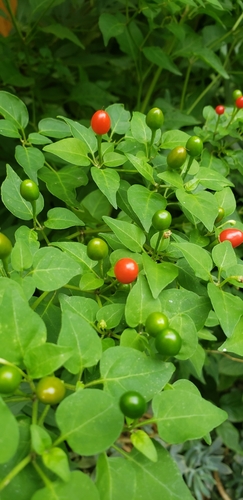
Capsicum annuum cv. longum
Paprika, Larang-haba
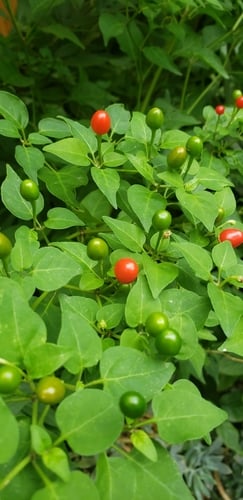
Capsicum annuum var. abbreviatum
Wrinkled peppers
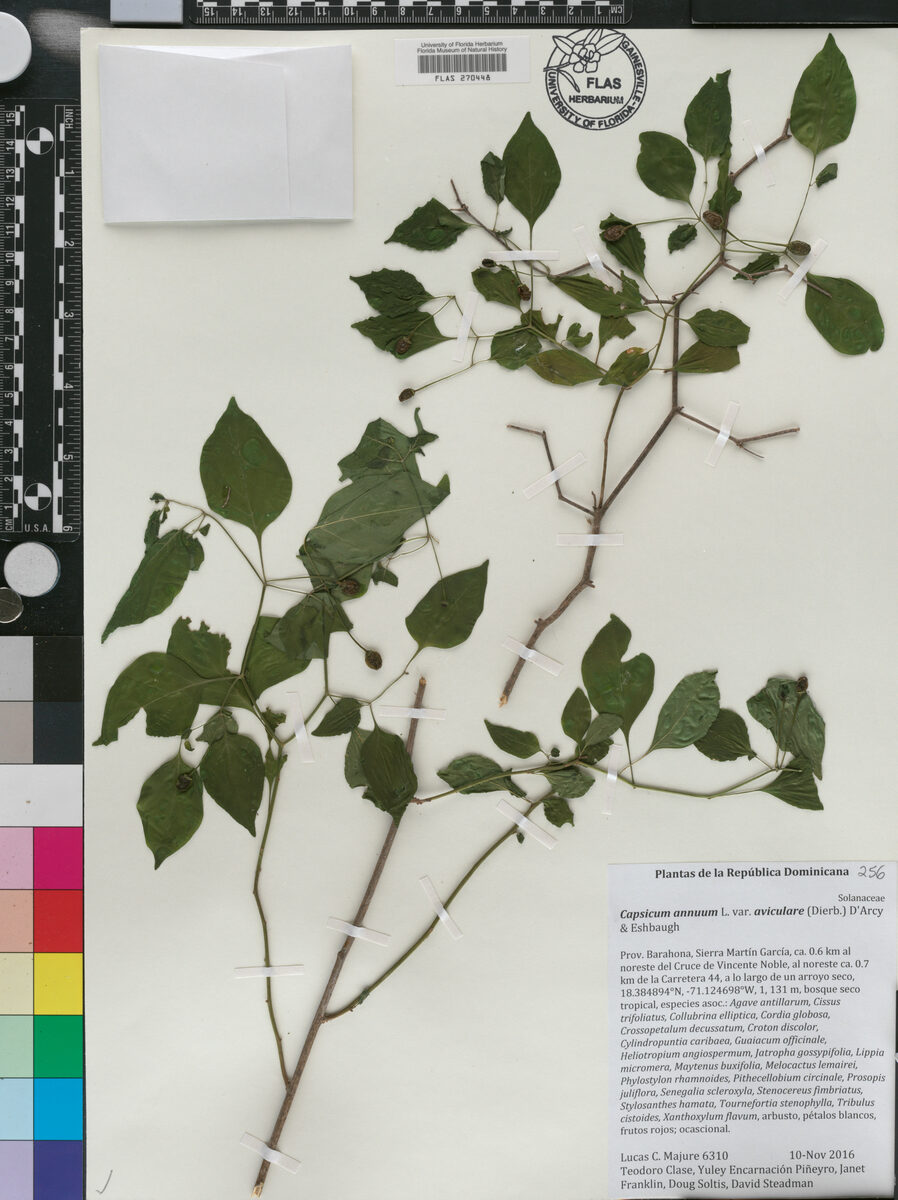
Capsicum annuum var. aviculare - (Dierb.) D'Arcy & Eschbaugh
Cayenne Pepper
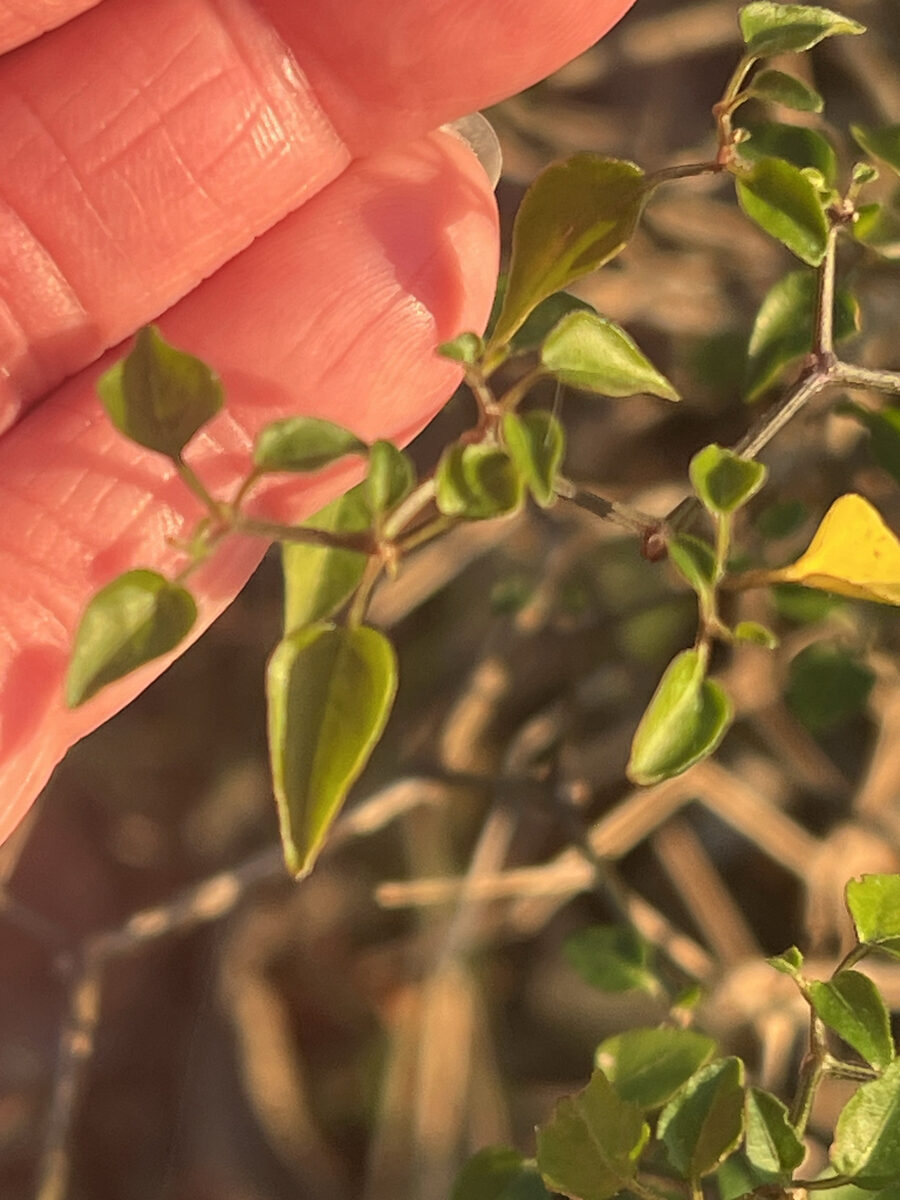
Capsicum annuum var. cerasiforme
Cherry peppers
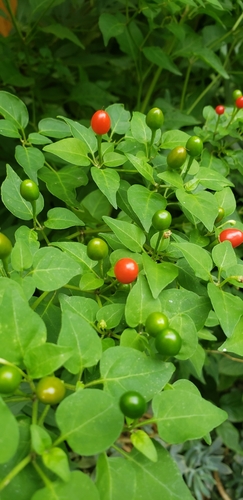
Capsicum annuum var. conoides
Cone peppers, Tabasco
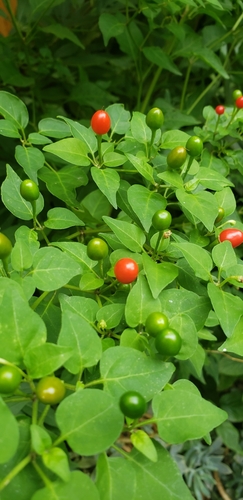
Capsicum annuum var. fasciculatum
Cluster pepper, Red cone pepper