Solanum elaeagnifolium
Cav.
Silver-leaf nightshade
iNaturalist· cc-by-nc
(c) Platon Kleanthidis, some rights reserved (CC BY-NC), uploaded by Platon Kleanthidis
iNaturalist· cc0
no rights reserved
iNaturalist· cc0
no rights reserved
Summary
Source: WikipediaSolanum elaeagnifolium, the silverleaf nightshade or silver-leaved nightshade, is a species of plant in the nightshade family native to North and South America. It is common in parts of southwestern USA, and sometimes weed of western North America. Other common names include prairie berry, silverleaf nettle, white horsenettle or silver nightshade. In South Africa it is known as silver-leaf bitter-apple or satansbos ("Satan's bush" in Afrikaans). More ambiguous names include "bull-nettle", "horsenettle" and the Spanish "trompillo". Solanum elaeagnifolium was described by A. J. Cavanilles. The plant described under the same name by W. Herbert and C. L. Willdenow based on E.G. von Steudel is Solanum aethiopicum.
Description
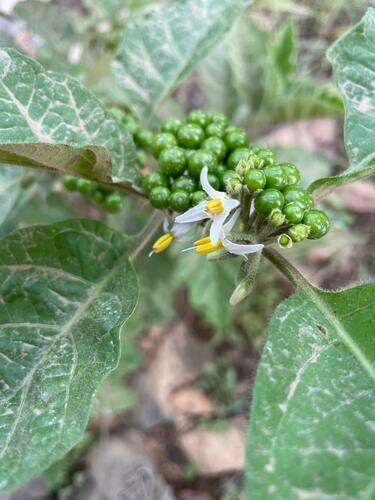
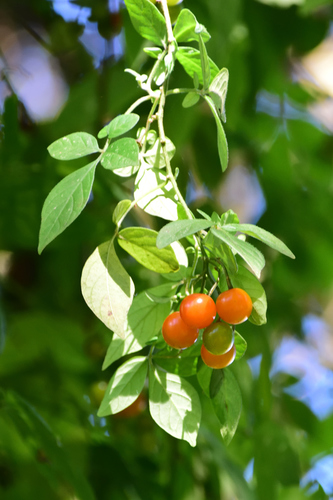
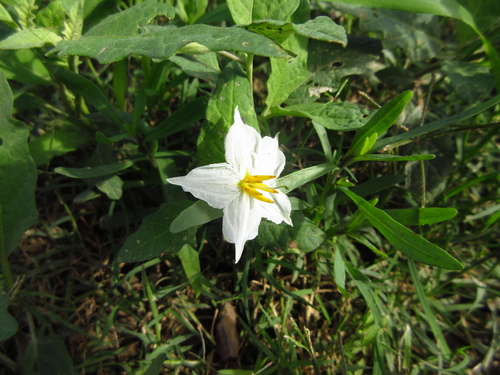
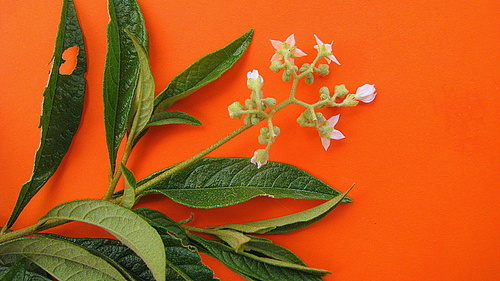
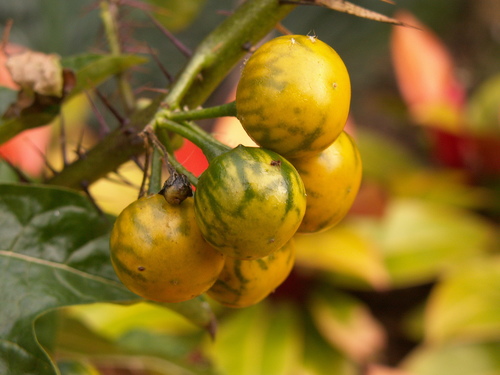
A herb. It keeps growing from year to year. It is covered with a greyish white down. The stems can be 1 m high. They may have a few slender prickles. The leaves are oblong or sword shaped. They are 5-10 cm long. The edges are wavy. The whitish down is thicker under the leaf. The flowers are large and violet or blue. They are 2 cm across. The flowers have 5 petal like lobes that are joined at the tip of each lobe. The first flowers are at the ends then later flowers in the axils of leaves. The stamens are yellow. The fruit are like small tomatoes. They are 1 cm across.
Edible Uses
The crushed fruit is traditionally used to curdle cheese; seeds are also edible.
Traditional Uses
The crushed fruit is used to curdle cheese. CAUTION: The fruit are claimed to be poisonous.
This uses section is brief — help expand it
Known Hazards
The whole plant is toxic to both humans and livestock, even dried. Ingestion of silverleaf nightshade has been implicated as a cause of ivermectin toxicosis in horses given the recommended dosage of the drug. Metabolites from the plant are speculated to disrupt the blood–brain barrier, allowing ivermectin to enter and disrupt neurotransmitter function in the brain and spinal cord. Its thin spines can cause weed dermatitis. The Pima Native Americans used the berries as a vegetable rennet, and the Kiowa used the seeds together with brain tissue to tan leather.
Distribution
It is a tropical plant. It grows in tropical America. In Pakistan it grows up to 1,800 m altitude. In Argentina it grows between 200-3,300 m above sea level. It can grow in arid places.
Where It Grows
Africa, Argentina, Asia, Australia, Central America, Egypt, India, Mediterranean, Mexico, Middle East, Namibia, North Africa, North America, Pakistan, Paraguay, Puerto Rico, South Africa, Southern Africa, South America*, USA, West Indies, Yemen,
Notes
There are about 1400 Solanum species. It contains solasidine used in medicine.
Also Known As
Arana gato, Tomato weed, Trompillo, White horse nettle
References (17)
- Ambasta, S.P. (Ed.), 2000, The Useful Plants of India. CSIR India. p 579
- Beckstrom-Sternberg, Stephen M., and James A. Duke. "The Foodplant Database." http://probe.nalusda.gov:8300/cgi-bin/browse/foodplantdb.(ACEDB version 4.0 - data version July 1994)
- Blamey, M and Grey-Wilson, C., 2005, Wild flowers of the Mediterranean. A & C Black London. p 405
- Dashorst, G.R.M., and Jessop, J.P., 1998, Plants of the Adelaide Plains & Hills. Botanic Gardens of Adelaide and State Herbarium. p 128
- Flora of Pakistan. www.eFloras.org
Show all 17 references Hide references
- Hedrick, U.P., 1919, (Ed.), Sturtevant's edible plants of the world. p 614
- Hussey, B.M.J., Keighery, G.J., Cousens, R.D., Dodd, J., Lloyd, S.G., 1997, Western Weeds. A guide to the weeds of Western Australia. Plant Protection Society of Western Australia. p 222
- Icon. 3(1):22, t. 243. 1795
- Kermath, B. M., et al, 2014, Food Plants in the Americas: A survey of the domesticated, cultivated and wild plants used for Human food in North, Central and South America and the Caribbean. On line draft. p 817
- Lamp, C & Collet F., 1989, Field Guide to Weeds in Australia. Inkata Press. p 275
- Lazarides, M. & Hince, B., 1993, Handbook of Economic Plants of Australia, CSIRO. p 222
- Loughmiller, C & L., 1985, Texas Wildflowers. A Field Guide. University of Texas, Austin. p 226
- MacMahon, J.A., 1990, Deserts. Audubon Society Nature Guides. Knopf. p 372 Plate 73
- Moerman, D. F., 2010, Native American Ethnobotany. Timber Press. p 535
- Paczkowska, G . & Chapman, A.R., 2000, The Western Australian Flora. A Descriptive Calatogue. Western Australian Herbarium. p 537
- Reis, S. V. and Lipp, F. L., 1982, New Plant Sources for Drugs and Foods from the New York Botanical Garden herbarium. Harvard. p 270
- Royal Botanic Gardens, Kew (1999). Survey of Economic Plants for Arid and Semi-Arid Lands (SEPASAL) database. Published on the Internet; http://www.rbgkew.org.uk/ceb/sepasal/internet [Accessed 11th June 2011]