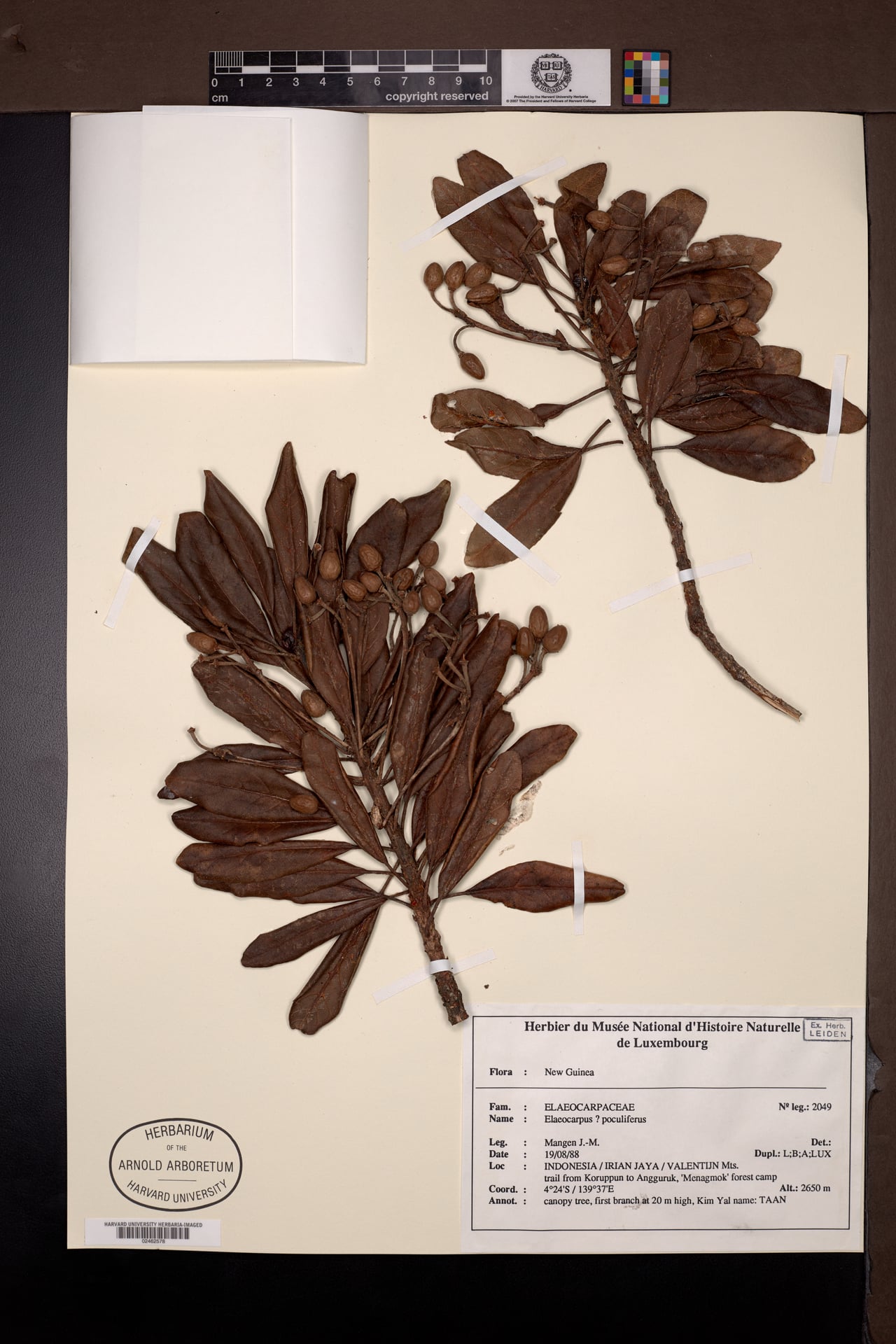
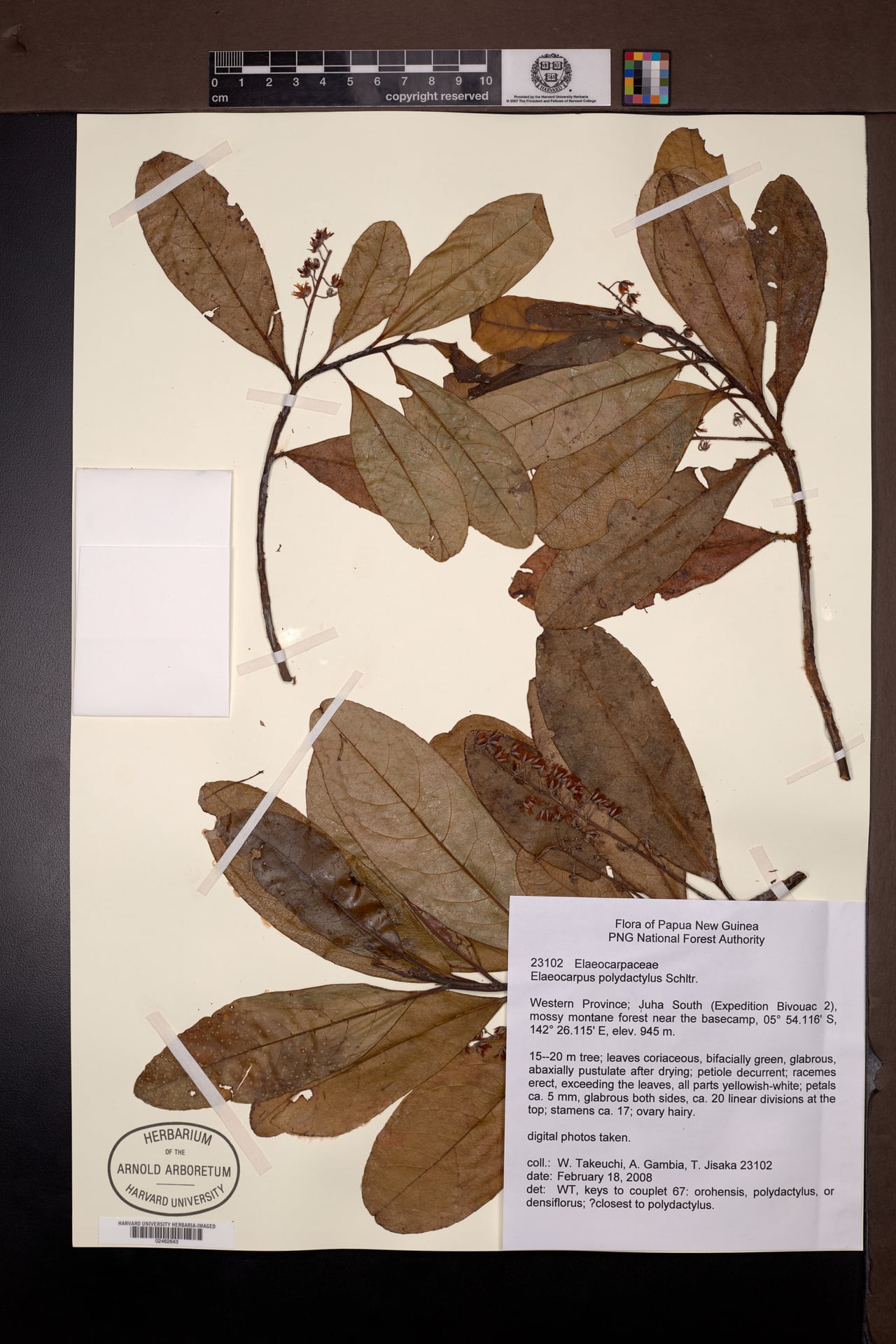
Sloanea tieghemii
(F. Muell) A.C. Sm.
gbif· cc0
President and Fellows of Harvard College
gbif· cc0
President and Fellows of Harvard College
gbif· cc0
President and Fellows of Harvard College
Description
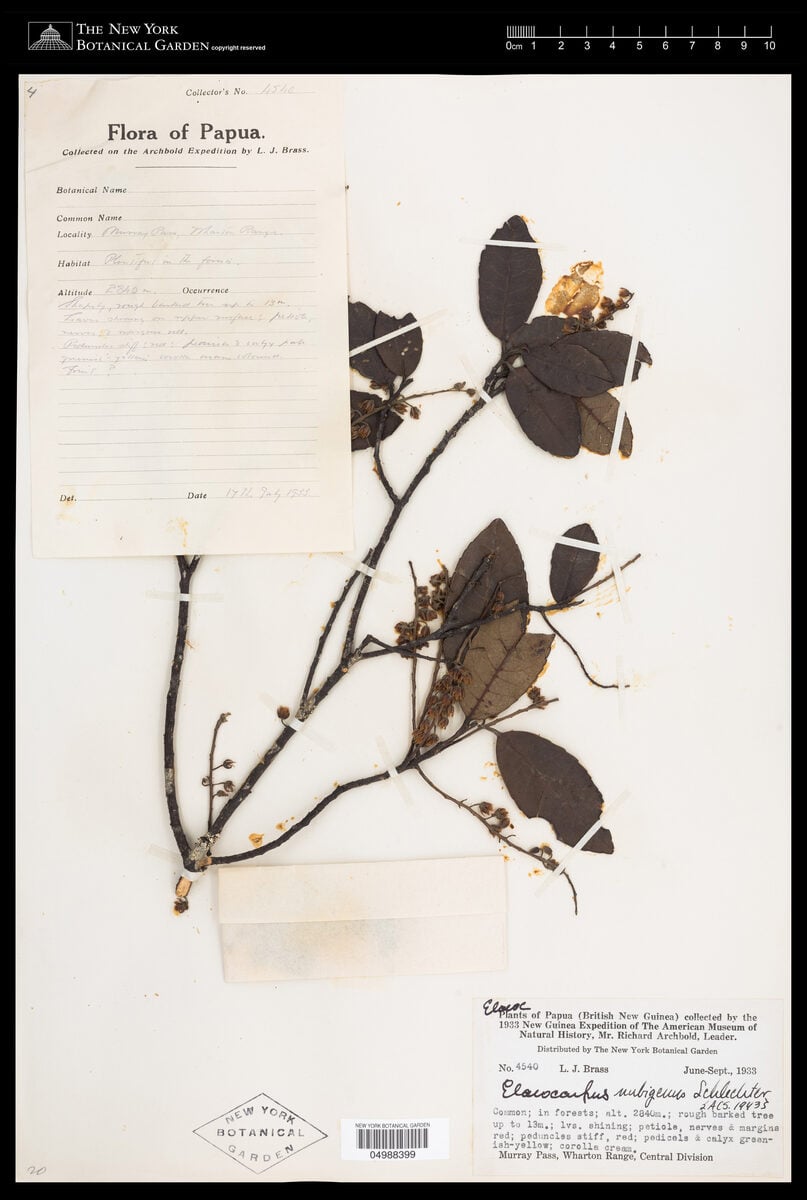
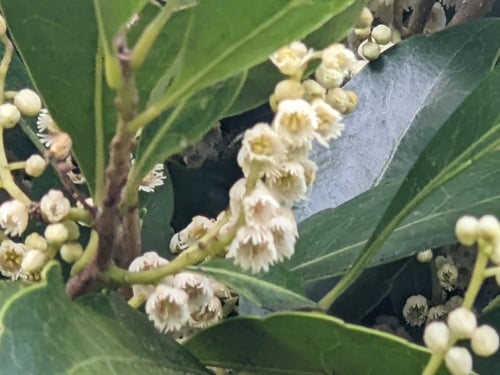
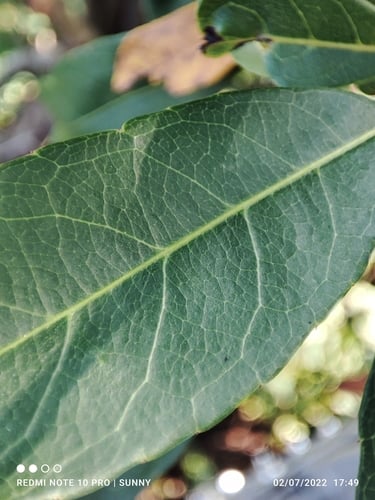
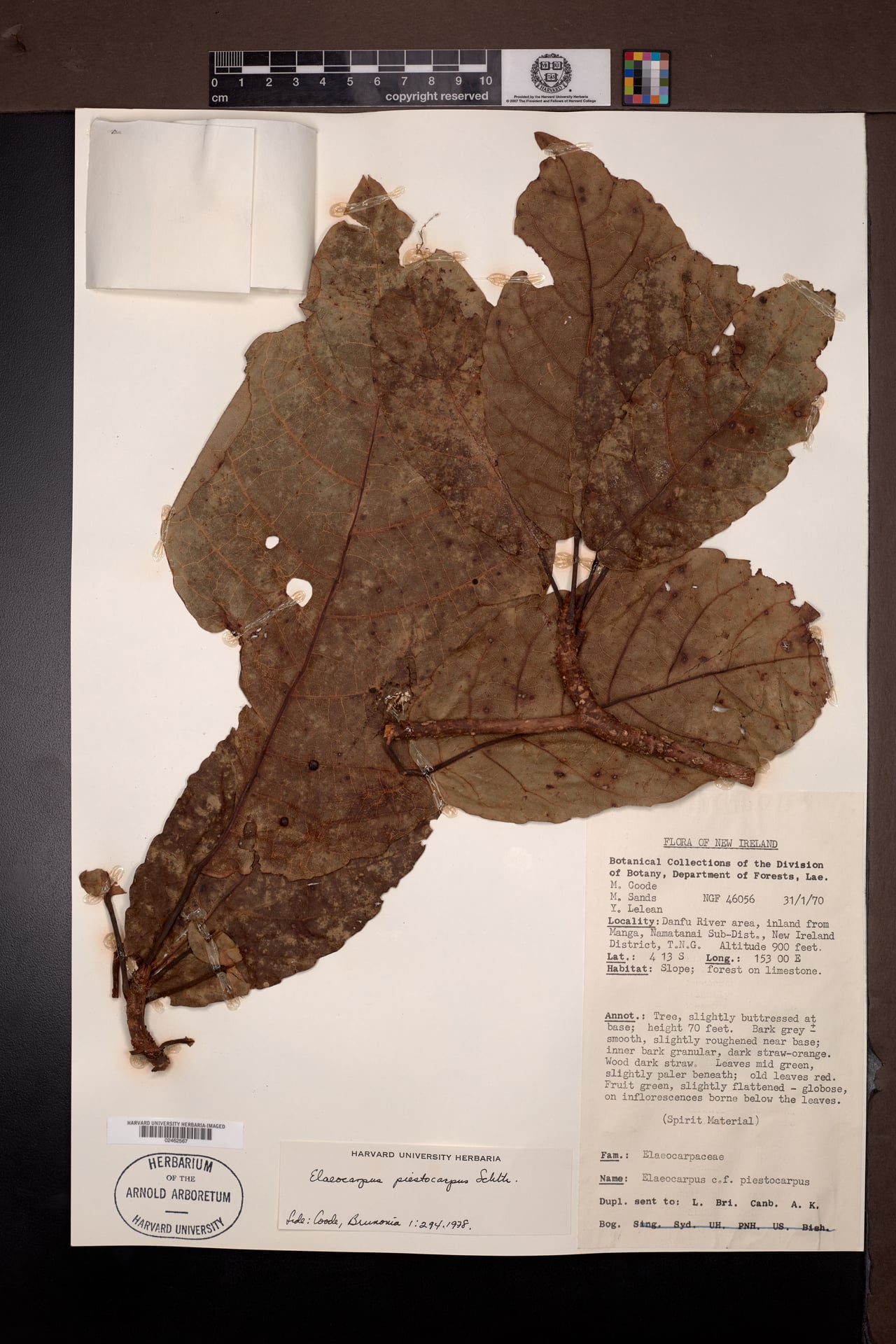
A small shrub or a large tree. It can be 2-30 m high. Larger trees have buttresses. It has alternate leaves which are almost opposite. The leaves are 3-5 cm x 2-3 cm and not consistently hairy. The edge of the leaves is fairly smooth. The leaf stalk is 0.5-2 cm long and is usually thickened at each end. The flowers are small but showy.
Edible Uses
The kernels of the nuts are eaten after cooking.
Traditional Uses
The kernels of the nuts are eaten after cooking.
This uses section is brief — help expand it
Distribution
A tropical plant. They grow from 2200 to 2800 m altitude. It often grows naturally in old gardens and regrowth sites.
Where It Grows
Pacific, Papua New Guinea, PNG,
Cultivation
They mostly grow wild from seed. They can be grown from ripe wood cuttings.
Other Information
Scattered trees occur in highland areas of Papua New Guinea.
Notes
There are 100-120 Sloanea species.
Synonyms
References (8)
- Altschul, S.V.R., 1973, Drugs and Foods from Little-known Plants. Notes in Harvard University Herbaria. Harvard Univ. Press. Massachusetts. no. 2702
- Bourke, M., 1995, Edible Indigenous Nuts in Papua New Guinea. In South Pacific Indigenous Nuts. ACIAR Proceedings No 69, Canberra. p 46
- Bulmer, R. N. H., 1964, Edible seeds and prehistoric stone mortars in the Highlands of East New Guinea. Man Vol. 64: 147-150 (As Sloanea archiboldiana)
- Coode, M.J.E., in Henty, E.E., (Ed.), 1981, Handbooks of the Flora of Papua New Guinea, Melbourne University Press, p 179
- French, B.R., 1986, Food Plants of Papua New Guinea, A Compendium. Asia Pacific Science Foundation p 198
Show all 8 references Hide references
- Powell, J.M., Ethnobotany. In Paijmans, K., 1976, New Guinea Vegetation. Australian National University Press. p 111
- Walter, A. & Sam C., 2002, Fruits of Oceania. ACIAR Monograph No. 85. Canberra. p 282
- World Checklist of Useful Plant Species 2020. Royal Botanic Gardens, Kew