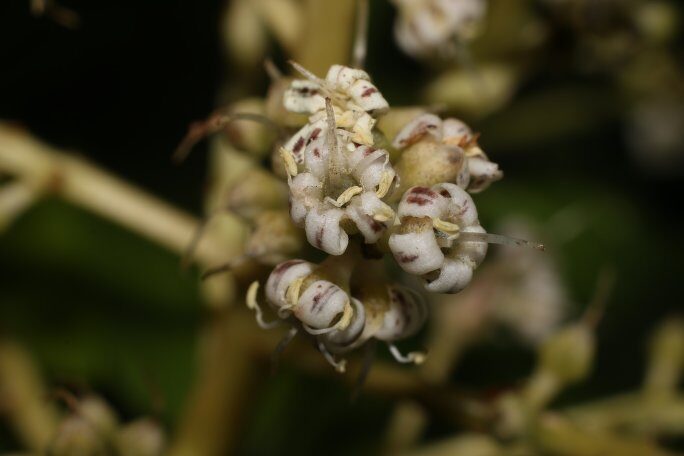
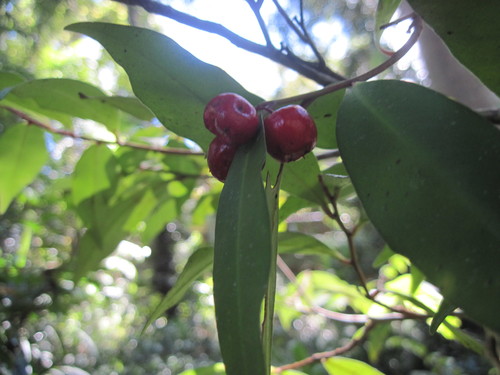
Ardisia obovata
Desv. ex Ham.
Guadeloupe marlberry, Mameyuelo
iNaturalist· cc-by-nc-sa
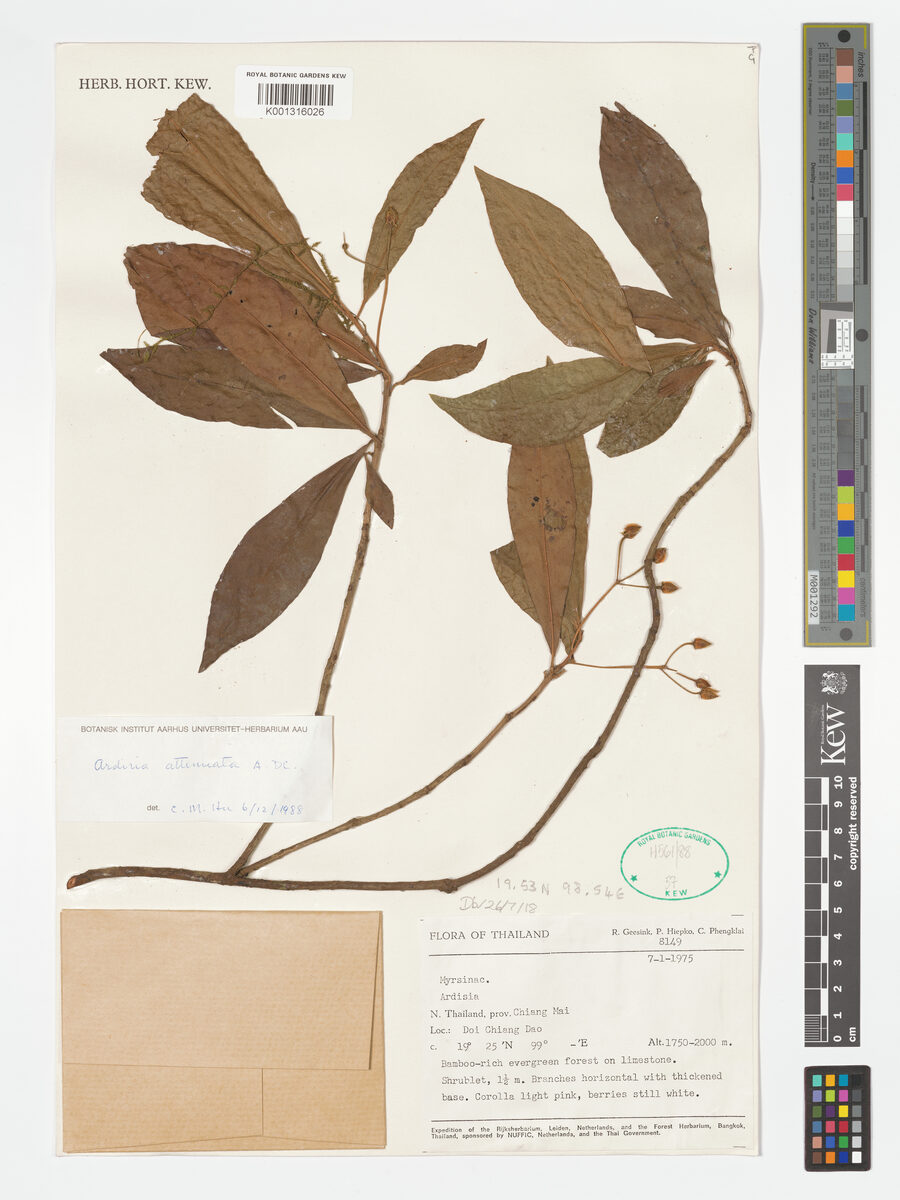
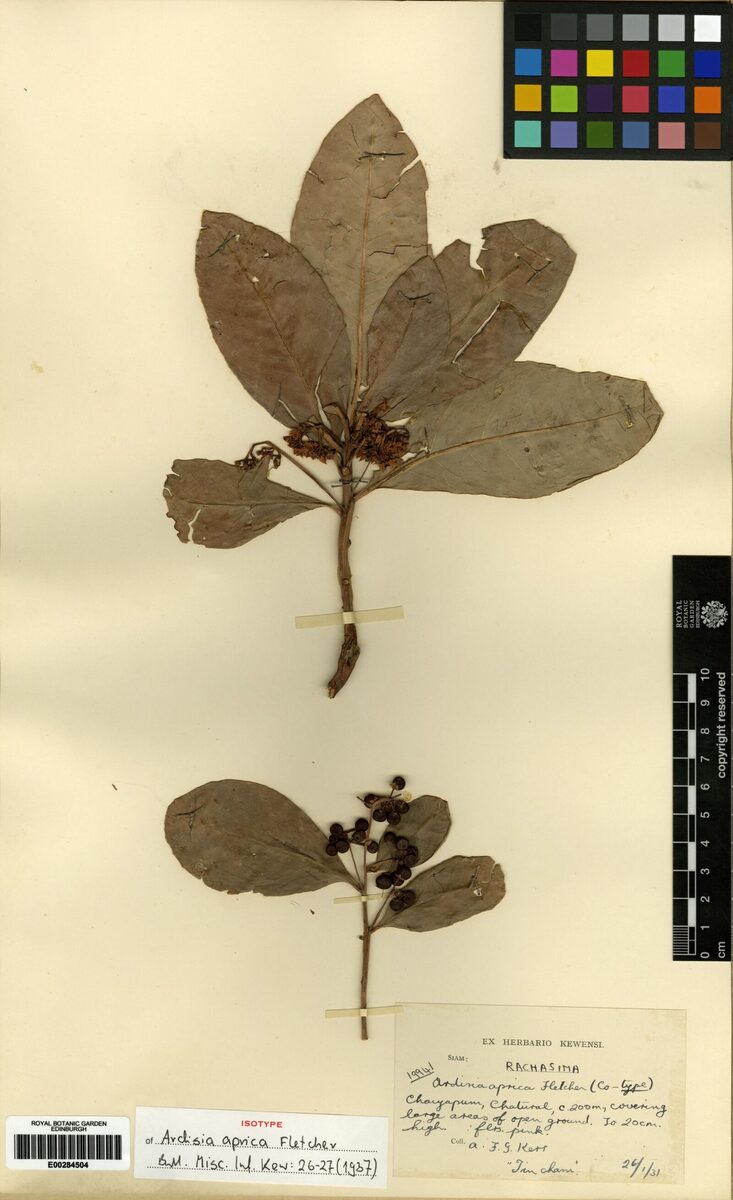
(c) Smithsonian Institution, National Museum of Natural History, Department of Botany, some rights reserved (CC BY-NC-SA)
iNaturalist· cc-by-nc
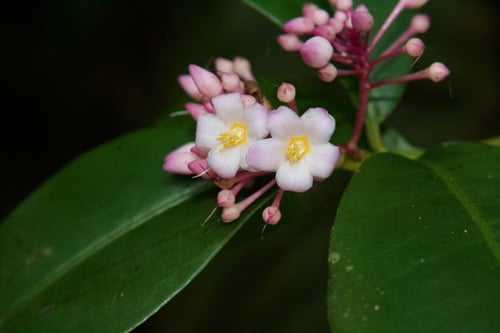
(c) Omar Monzon Carmona, some rights reserved (CC BY-NC), uploaded by Omar Monzon Carmona
iNaturalist· cc-by-nc
(c) Steve Maldonado Silvestrini, some rights reserved (CC BY-NC), uploaded by Steve Maldonado Silvestrini
Description
A small tree. The leaves are dark green and drooping. The fruit are produced in large numbers. They are green but turn pink, red then dark purple.
This description is brief — help expand it
Edible Uses
The fruit are eaten.
Distribution
A tropical plant.
Where It Grows
Asia, Bahamas, Central America, Dominican Republic, Guadeloupe, Haiti*, Indochina, Lesser Antilles, Malaysia, North America, Puerto Rico, SE Asia, USA, Virgin Islands, West Indies*,
Cultivation
Plants are grown by seeds.
Other Uses
The heartwood is light reddish brown; the sapwood pinkish. The wood is hard and heavy. It is only used for posts.
Notes
There are about 250-300 Ardisia species. They are mainly in the tropics. Also put in the family Myrsinaceae.
Synonyms
References (3)
- http://www.tradewindsfruit.com/guadeloupe_marlberry.htm
- Plants of Haiti Smithsonian Institute http://botany.si.edu/antilles/West Indies
- Reis, S. V. and Lipp, F. L., 1982, New Plant Sources for Drugs and Foods from the New York Botanical Garden herbarium. Harvard. p 231