Silybum marianum
(L.) Gaertner
Milk thistle, Holy thistle
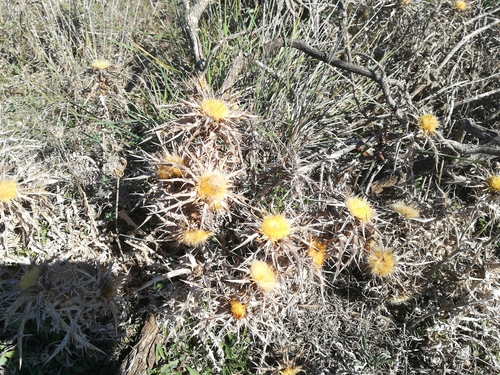
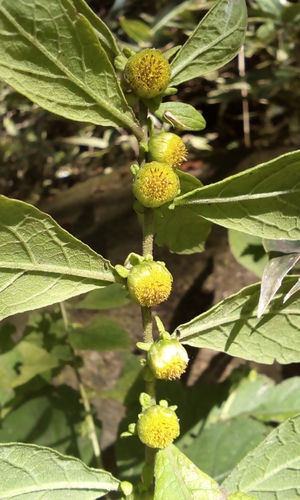
iNaturalist· cc0
no rights reserved, uploaded by Jesse Rorabaugh
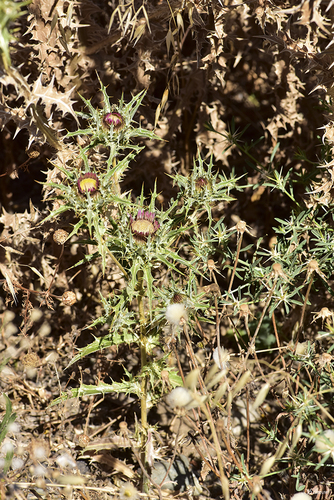
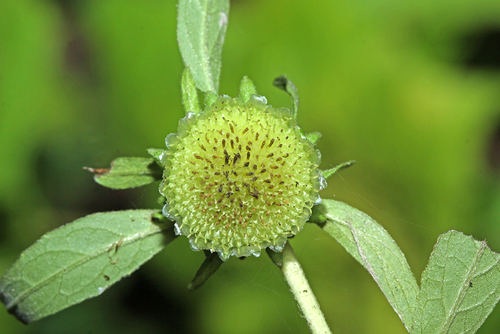
iNaturalist· cc-by
(c) Millie Basden, some rights reserved (CC BY), uploaded by Millie Basden
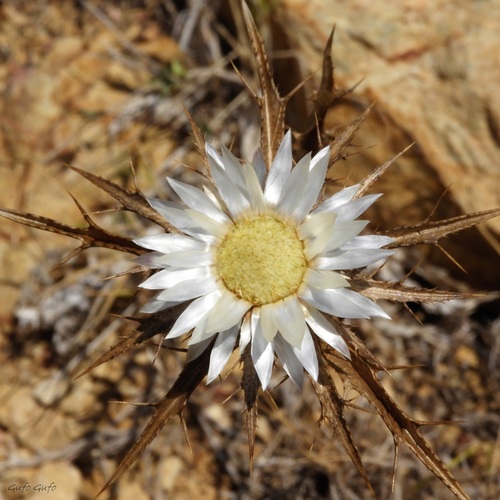
iNaturalist· cc-by-nc-nd
(c) Tommaso Martinelli, some rights reserved (CC BY-NC-ND), uploaded by Tommaso Martinelli
Summary
Source: WikipediaSilybum marianum is a species of thistle. It has various common names including milk thistle, blessed milkthistle, Marian thistle, Mary thistle, Saint Mary's thistle, Mediterranean milk thistle, variegated thistle and Scotch thistle (not to be confused with Onopordum acanthium or Cirsium vulgare). This species is an annual or biennial plant of the family Asteraceae. This fairly typical thistle has red to purple flowers and shiny pale green leaves with white veins. Once native from Southern Europe through Asia, it has spread throughout the world.
Description
An annual herb. It is stout and erect. It grows 1-3 m tall. The leaves are shiny and green. They have a white mottle or marks on the upper surface. The lower leaves grow out from the main stem in a ring. The upper leaves clasp the stem. They are 10-50 cm long by 5-25 cm wide. They have rounded wings. The flower heads are reddish-purple. They are at the top of the plant. They have broad ridged bracts around them. These end in spines. The seedling leaves are free of spines.
Edible Uses
The root can be eaten raw or cooked — it has a mild flavour and somewhat mucilaginous texture, and when boiled resembles salsify (Tragopogon hispanicus). Leaves can be eaten raw or cooked, but the sharp spines must be removed first, which is a fiddly task. Young leaves are quite thick with a mild flavour and work well in mixed salads, though they can turn bitter in hot, dry weather. Cooked, they make an acceptable spinach substitute. Successional sowings can provide leaves year round. Flower buds are cooked as a globe artichoke substitute, used before the flowers open — the flavour is mild but the buds are small and even more fiddly to prepare than globe artichokes. Stems can be eaten raw or cooked; they are best peeled and can be soaked to reduce bitterness. Palatable and nutritious, they can be prepared like asparagus or rhubarb, or added to salads, and are best used young in spring. A good-quality oil is obtained from the seeds, and the roasted seed can be used as a coffee substitute.
Traditional Uses
The prickles must be removed then the leaves can be eaten raw in salads or cooked. They are used in stews. The leaves are used for sarma in Turkey. They are rolled around a filling of rice or minced meat. Young stems are peeled, boiled and eaten. The bases of the flower heads can be eaten. The roots can be cooked and eaten. They are used as famine food after boiling in water. The seeds contain an edible fatty oil. They can also be roasted and used as a coffee substitute. CAUTION: In fertile soils plants can contain high nitrate levels which are poisonous.
Medicinal Uses
Milk Thistle has a long history of use in Western herbalism for depression and liver complaints. Recent research confirms a remarkable ability to protect the liver from damage caused by alcohol and other poisons. The whole plant is astringent, bitter, cholagogue, diaphoretic, diuretic, emetic, emmenagogue, hepatic, stimulant, stomachic and tonic. It is used internally for liver and gall bladder disease, jaundice, cirrhosis, hepatitis and poisoning. The plant is harvested in flower and dried for later use. Silymarin, an extract from the seed, acts on liver cell membranes to prevent the entry of viral toxins and other harmful compounds, and dramatically improves liver regeneration in hepatitis, cirrhosis, mushroom poisoning and other liver diseases. German research indicates that silybin, a flavonoid component of the seed, is clinically useful in treating severe poisoning by Amanita mushrooms, and seed extracts are produced commercially in Europe. Liver regeneration is considered particularly important in cancer treatment, as the disease is consistently associated with a severely compromised liver. A homeopathic remedy is prepared from equal parts of the root and seed with hulls attached, used for liver and abdominal disorders. The German Commission E Monographs approve Silybum marianum for dyspeptic complaints and liver and gallbladder conditions.
Known Hazards
Milk thistle based supplements have been measured to have the highest mycotoxin concentrations of up to 37 mg/kg when compared to various plant-based dietary supplements. Use of milk thistle may cause stomach upset and produce allergic reactions in some people. Eyelid edema, ocular pruritus, dry eye, diplopia, and blurred vision are among the reported complications based on registered side effects in the WHO global database of adverse drug reactions. Because of nitrate content, the plant has been found to be toxic to cattle and sheep. When potassium nitrate is eaten by ruminants, the bacteria in the animal's stomach breaks the chemical down, producing nitrite ions. Nitrite ions then combine with hemoglobin to produce methemoglobin, blocking the transport of oxygen. The result is a form of oxygen deprivation.
Distribution
It is a temperate plant. It usually grows on volcanic or alluvial soils rich in nitrogen. It grows in damp areas. It can grow in arid places. In Argentina it grows between sea level to 1,500 m above sea level. It suits hardiness zones 6-10. Tasmania Herbarium.
Where It Grows
Afghanistan, Africa, Argentina, Asia, Australia, Balkans, Brazil, Britain, Canada, Caucasus, Central Asia, Chile, China, Croatia, Egypt, Europe, France, India, Iran, Iraq, Israel, Italy, Jordan, Korea, Lebanon, Libya, Macedonia, Mediterranean*, Middle East, Morocco, New Zealand, North Africa, North America, Pakistan, Palestine, Portugal, Russia, Serbia, Sicily, Slovenia, South America, Spain, Syria, Tajikistan, Tasmania, Turkey, Türkiye, Uruguay,
Cultivation
Plants can be grown by seed.
Propagation
Sown in situ during March or April, the plant typically flowers in its first summer and completes its life cycle as an annual. Seed sown between May and August will generally overwinter and flower the following year, behaving as a biennial. The best edible roots are produced from a May or June sowing. Sowing in both spring and summer should ensure a continuous supply of edible leaves throughout the year.
Other Uses
Milk Thistle makes a good green manure plant, producing substantial bulk for incorporation into the soil. An oil is also obtained from the seeds.
Other Information
It is cultivated.
Notes
There are 2 Silybum species.
Nutrition
| Part | Moisture | kJ | kcal | Protein | Vit A | Vit C | Iron | Zinc |
|---|---|---|---|---|---|---|---|---|
| Leaves | — | — | 0.6 | — | — | — | — | — |
References (77)
- Aceituno-Mata, L., et al, 2021, The Persistence of Flavor: Past and Present Use of Wild Food Plants in Sierra Norte de Madrid, Spain. Front. Sustain. Food Syst., 11 January 2021
- Ahmad, S. A. & Askari, A. A., 2015, Ethnobotany of the Hawraman Region of Kurdistan Iraq. Harvard Papers in Botany, Vol. 20, No. 1, 2015, pp. 85–89.
- Ali-Shtayeh, M. S., et al, 2008, Traditional knowledge of wild edible plants used in Palestine (Northern West Bank): A comparative study. J Ethnobiol Ethnomed. 4: 13
- Al-Qura'n, S. A., 2010, Ethnobotanical and Ecological Studies of Wild Edible Plants in Jordan. Libyan Agriculture Research Center Journal International 1(4):231-243
- Ambasta, S.P. (Ed.), 2000, The Useful Plants of India. CSIR India. p 575
Show all 77 references Hide references
- Bidak, L. M., et al, 2015, Goods and services provided by native plants in desert ecosystems: Examples from the northwestern coastal desert of Egypt. Global Ecology and Conservation 3 (2015) 433–447
- Biscotti, N. et al, 2018, The traditional food use of wild vegetables in Apulia (Italy) in the light of Italian ethnobotanical literature. Italian Botanist 5:1-24
- Bodkin, F., 1991, Encyclopedia Botanica. Cornstalk publishing, p 214
- Blanco-Salas, J., et al, 2019, Wild Plants Potentially Used in Human Food in the Protected Area “Sierra Grande de Hornachos” of Extremadura (Spain). Sustainability 2019, 11, 456
- Bremness, L., 1994, Herbs. Collins Eyewitness Handbooks. Harper Collins. p 269
- Cordero, S. E., Abello, L. A., & Galvez, F. L., 2017, Plantas silvestres comestibles y medicinales de Chile y otras partes del mundo. CORMA p 230
- Cundall, P., (ed.), 2004, Gardening Australia: flora: the gardener's bible. ABC Books. p 1341
- Curtis, W.M., 1963, The Students Flora of Tasmania Vol 2 p 378
- Davis, S.D., Heywood, V.H., & Hamilton, A.C. (eds), 1994, Centres of plant Diversity. WWF. Vol 2. p 340
- Della, A., et al, 2006, An ethnobotanical survey of wild edible plants of Paphos and Larnaca countryside of Cyprus. J. Ethnobiol. Ethnomed. 2:34
- Dogan, Y., et al, 2015, Of the importance of a leaf: the ethnobotany of sarma in Turkey and the Balkans. Journal of Ethnobiology and Ethnomedicine, 11:56
- Demir, I. & Ayaz, N., 2022, Wild edible plants contributing to the traditional foods of Mardin (Turkey) Province. Indian Journal of Traditional Knowledge Vol 21(3), July 2022, pp 569-582
- Dolina, K. & Luczaj, L., 2014, Wild food plants used on the Dubrovnik coast (south-eastern Croatia) Acta Soc Bot Pol 83(3):175–181
- Ertug, F, Yenen Bitkiler. Resimli Türkiye Florası -I- Flora of Turkey - Ethnobotany supplement
- Esperanca, M. J., 1988. Surviving in the wild. A glance at the wild plants and their uses. Vol. 1. p 128 (As Carduus benedictus)
- Facciola, S., 1998, Cornucopia 2: a Source Book of Edible Plants. Kampong Publications, p 42
- Famine foods (As Carduus marianus)
- Flora of Australia Volume 49, Oceanic Islands 1, Australian Government Publishing Service, Canberra. (1994) p 367
- Galalaey, A. M. K., et al, 2021, Ethnobotanical study of some wild edible plants in Hujran Basin, Kurdistan Region of Iraq. ZANCO Journal of Pure and Applied Sciences. Salahaddin University-Erbil p 25
- Geraci, A., et al, 2018, The wild taxa utilized as vegetables in Sicily (Italy): a traditional component of the Mediterranean diet. Journal of Ethnobiology and Ethnomedicine (2018) 14:14
- Gunes, S. et al, 2018, Survey of wild food plants for human consumption in Karaisali (Adana-Turkey). Indian Journal of Traditional Knowledge. Vol. 17(2), April 2018, pp 290-298
- Hedrick, U.P., 1919, (Ed.), Sturtevant's edible plants of the world. p 607
- Hermandez Bermejo, J.E., and Leon, J. (Eds.), 1994, Neglected Crops. 1492 from a different perspective. FAO Plant Production and Protection Series No 26. FAO, Rome. p 263
- Hinnawi, N. S. A., 2010, An ethnobotanical study of wild edible plants in the Northern West Bank "Palestine". An-Najah National University. p 92
- http://www.botanic-gardens-ljubljana.com/en/plants
- Hussey, B.M.J., Keighery, G.J., Cousens, R.D., Dodd, J., Lloyd, S.G., 1997, Western Weeds. A guide to the weeds of Western Australia. Plant Protection Society of Western Australia. p 104
- Hu, Shiu-ying, 2005, Food Plants of China. The Chinese University Press. p 745
- Hyde-Wyatt, B.H. & Morris D.I., 1975, Tasmanian Weed Handbook. Dept of Ag Tasmania. p 31
- Jardin, C., 1970, List of Foods Used In Africa, FAO Nutrition Information Document Series No 2.p 101
- Kang, Y., et al, 2012, Wild food plants and wild edible fungi in two valleys on the Qinling Mountains (Shaanxi, central China) Journal of Ethnobiology and Ethnomedicine; 9:26
- Kayabasi, N. P., et al, 2018, Wild edible plants and their traditional use in the human nutrition in Manyas (Turkey). Indian Journal of Traditional Knowledge. Vol. 17(2), April 2018, pp 299-306
- Kermath, B. M., et al, 2014, Food Plants in the Americas: A survey of the domesticated, cultivated and wild plants used for Human food in North, Central and South America and the Caribbean. On line draft. p 806
- Kizilarslan, C. & Ozhatay, N., 2012, An ethnobotanical study of the useful and edible plants of İzmit. Marmara Pharmaceutical Journal 16: 134-140, 2012.
- Lamp, C & Collet F., 1989, Field Guide to Weeds in Australia. Inkata Press. p 271
- Lazarides, M. & Hince, B., 1993, Handbook of Economic Plants of Australia, CSIRO. p 220
- Lentini, F. and Venza, F., 2007, Wild food plants of popular use in Sicily. J Ethnobiol Ethnomedicine. 3: 15
- Licata, M., et al, 2016, A survey of wild plant species for food use in Sicily (Italy) – results of a 3-year study in four Regional Parks. Journal of Ethnobiology and Ethnomedicine 12:12
- Lim, T. K., 2015, Edible Medicinal and Non Medicinal Plants. Volume 9, Modified Stems, Roots, Bulbs. Springer p 76
- Lim, T. K., Edible Medicinal and Non-Medicinal Plants Volume 7 Flowers
- Low, T., 1991, Wild Herbs of Australia and New Zealand. Angus & Robertson. p 35 (Drawing)
- Low, T., 1992, Bush Tucker. Australia’s Wild Food Harvest. Angus & Robertson. p 175
- Luczaj, L. et al, 2012, Wild food plant use in 21st century Europe: the disappearance of old traditions and the search for new cuisines involving wild edibles. Acta Soc Bot Pol 81(4):359–370
- Mabey, R., 1973, Food for Free. A Guide to the edible wild plants of Britain, Collins. p 115
- Mahklouf, M. H., 2019, Ethnobotanical Study of Edible Wild Plants in Libya. European Journal of Ecology. 5(2): 30-40
- Malezas Comestibles del Cono Sur, INTA, 2009, Buernos Aires
- Martin, F.W. & Ruberte, R.M., 1979, Edible Leaves of the Tropics. Antillian College Press, Mayaguez, Puerto Rico. p 186
- Mattalia, G., et al, 2012, Traditional uses of wild food and medicinal plants among Brigasc, Kye ́, and Provenc ̧al communities on the Western Italian Alps. Genet Resour Crop Evol. Springer
- Mirdeilami, S. Z., et al, 2011, Ethnopharmacological survey of medicinal plants in Maraveh Tappeh region, north of Iran. Iranian Journal of Plant Physiology 2(1): 327‐338
- Molina, M. et al, 2014, Weeds and Food Diversity: Natural Yield Assessment and Future Alternatives for Traditionally Consumed Wild Vegetables. Journal of Ethnobiology 34(1): 44–67
- Nassif, F., & Tanji, A., 2013, Gathered food plants in Morocco: The long forgotten species in Ethnobotanical Research. Life Science Leaflets 3:17-54
- Özdemir, E. and Kültür, S., 2017, Wild Edible Plants of Savaştepe District (Balıkesir, Turkey), Marmara Pharm J 21/3: 578-589
- Paczkowska, G. & Chapman, A.R., 2000, The Western Australian Flora. A Descriptive Catalogue. Western Australian Herbarium. p 176
- PARMENTIER (As Carduus marianus)
- Pasta, S., et al, 2020, An Updated Checklist of the Sicilian Native Edible Plants: Preserving the Traditional Ecological Knowledge of Century-Old Agro-Pastoral Landscapes. Frontiers in Plant Science. Volume 11|Article 388
- Pieroni A, Nebel S, Santoro RF, Heinrich M., 2005, Food for two seasons: culinary uses of non-cultivated local vegetables and mushrooms in a south Italian village. Int J Food Sci Nutr. 56(4):245-72
- Pieroni, A., et al, 2017, The spring has arrived: traditional wild vegetables gathered by Yarsanis (Ahl-e Haqq) and Sunni Muslims in Western Hawraman, SE Kurdistan (Iraq). Acta Soc Bot Pol 86(1):3519
- Plants for a Future database, The Field, Penpol, Lostwithiel, Cornwall, PL22 0NG, UK. http://www.scs.leeds.ac.uk/pfaf/
- Rivera, C., et al, 2005, The Ethnobotanical Study of Local Mediterranean Food Plants as Medicinal Resources in Southern Spain. Journal of Physiologyand Pharmacology. 56, Suppl. 1, 97-114
- Royal Botanic Gardens, Kew (1999). Survey of Economic Plants for Arid and Semi-Arid Lands (SEPASAL) database. Published on the Internet; http://www.rbgkew.org.uk/ceb/sepasal/internet [Accessed 14th April 2011]
- Sanchez-Mata, M. C., et al, 2010, Wild vegetables of the Mediterranean area as valuable sources of bioactive compounds. Genet. Resourc. Crop Evol. 59:431-443
- Sansanelli, S., et al, 2017, Ethnobotanical survey of wild food plants traditionally collected and consumed in the Middle Agri Valley (Basilicata region, southern Italy). Journal of Ethnobiology and Ethnomedicine (2017) 13:50
- Signorini, M. A., et al, 2009, Plants and traditional knowledge: An ethnobotanical investigation on Monte Ortobene (Nuoro, Sardinia). Journal or Ethnobiology and Ethnomedicine, 5:6
- Skinner, G. & Brown, 1981, C., Simply Living. A gatherer's guide to New Zealand's fields, forests and shores. Reed. p 25
- Tasmanian Herbarium Vascular Plants list p 14
- Tardio, J., et al, Ethnobotanical review of wild edible plants in Spain. Botanical J. Linnean Soc. 152 (2006), 27-71
- Tbatou, M, et al, 2016, Wild Edible Plants traditionally used in the countryside of El Jadida, Coastal Area in the Center of Morocco. Life Sciences Leaflets 75:28-48
- Tukan, S. K., et al, 1998, The use of wild edible plants in the Jordanian diet. International Journal of Food Sciences and Nutrition. 49:225-235
- Ulian, T., et al, 2020, Unlocking plant resources to support food security and promote sustainable agriculture. Plants, People, Planet. 2020;2:421–445.
- Wiersema, J. H. & Leon, B., 2013, World Economic Plants. A Standard Reference CRC Press. 2nd Ed. p 638
- World Checklist of Useful Plant Species 2020. Royal Botanic Gardens, Kew
- www.wildediblefood.com
- Zeven, A. C. & de West, J. M. J., 1982, Dictionary of cultivated plants and their regions of diversity. Wageningen. p 105