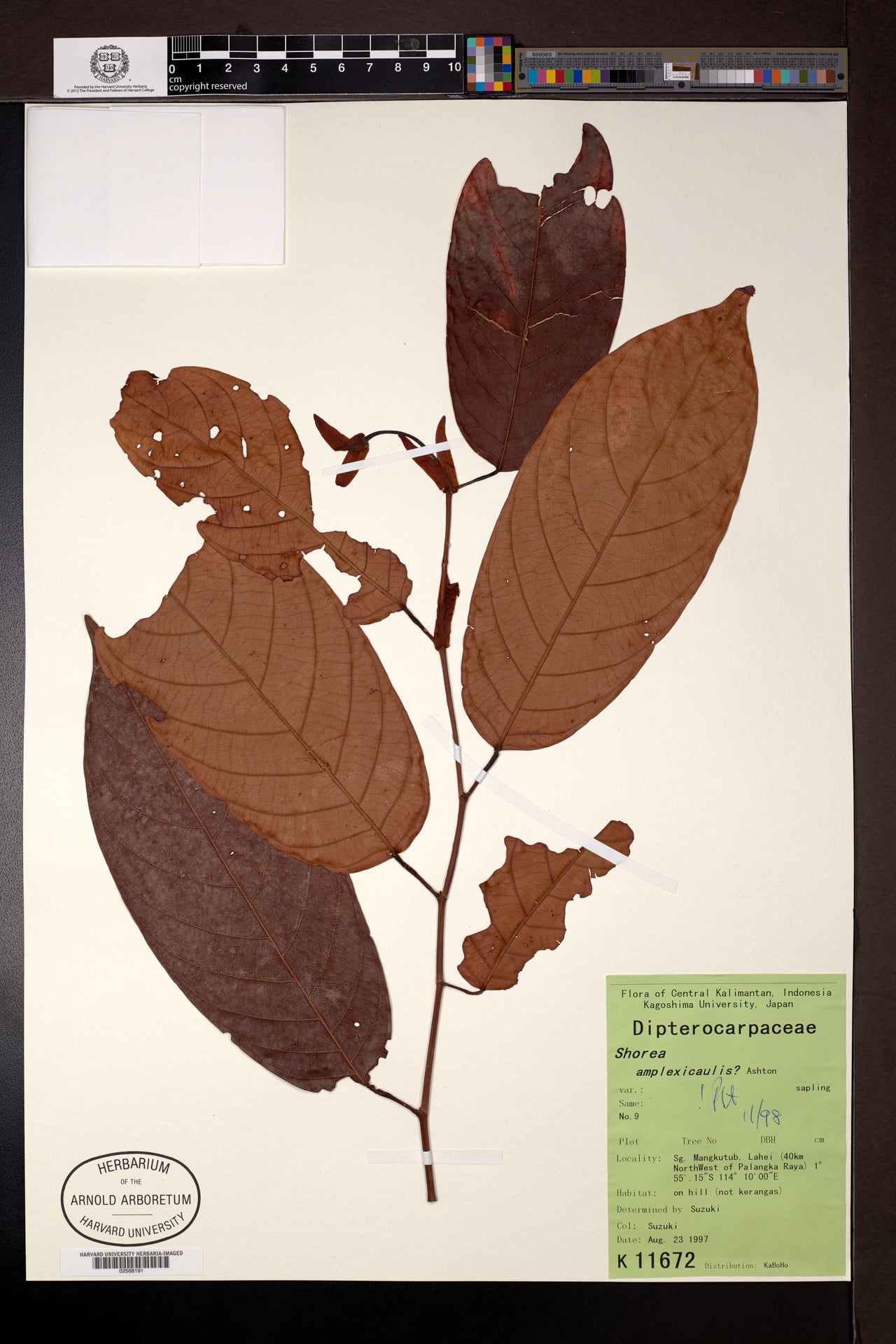
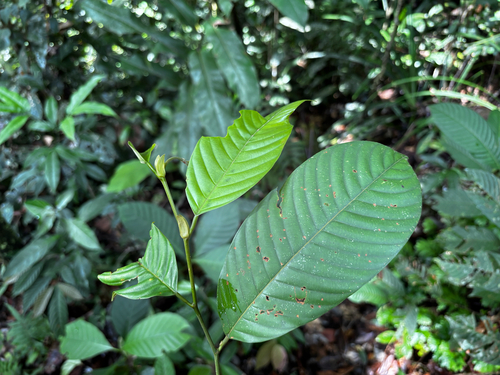
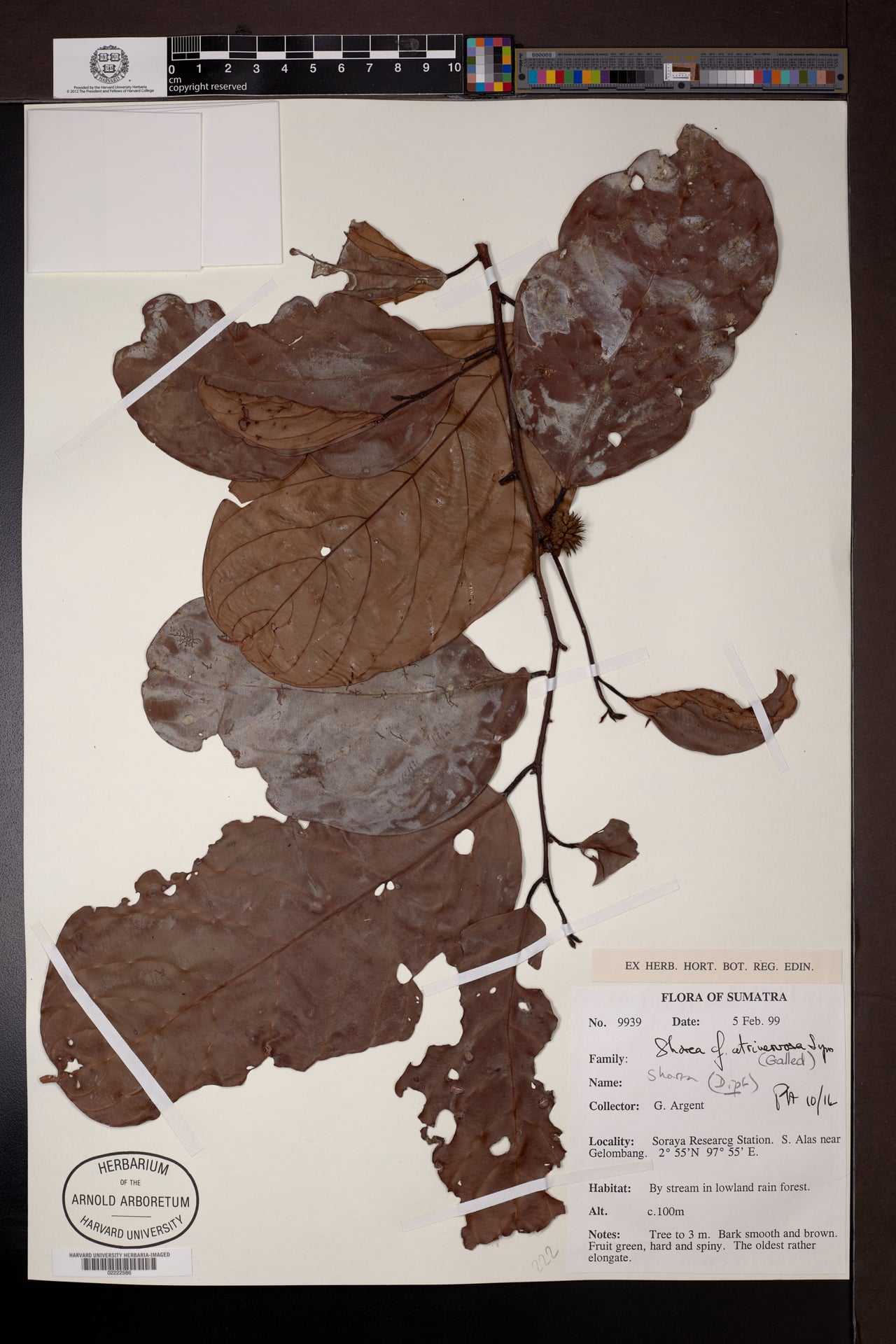
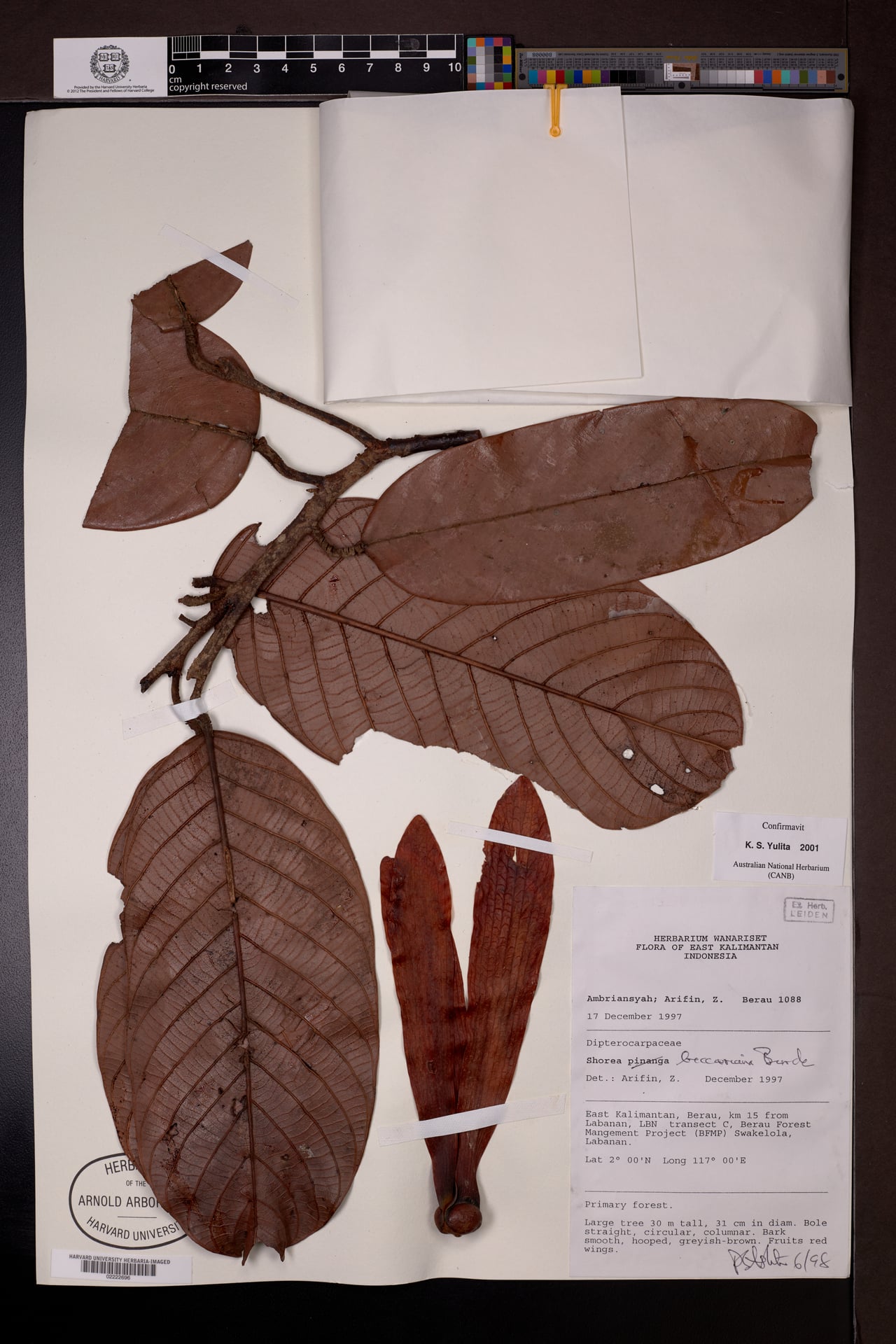
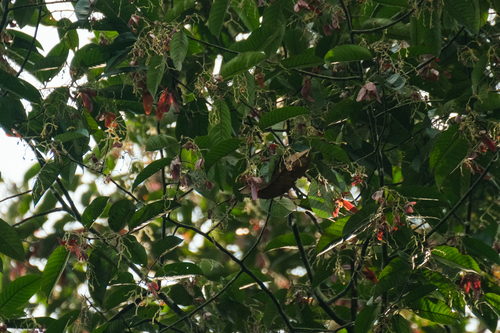
Shorea macrophylla
(de Vriese) P. S. Ashton
Light red meranti
iNaturalist· cc-by-sa
(c) Ong Jyh Seng, some rights reserved (CC BY-SA)
iNaturalist· cc-by-nc
(c) pfaucher, some rights reserved (CC BY-NC)
iNaturalist· cc-by-nc
(c) alstonia scholaris, some rights reserved (CC BY-NC)
Summary
Shorea macrophylla is a fast-growing evergreen tree reaching 35 m tall by 25 m wide. It thrives in medium loamy and heavy clay soils with good drainage, tolerating mildly acidic to basic pH levels. The tree requires full sun and prefers consistently moist soil. It is hardy to UK zone 10.
Description
A large tree. It grows 45 m tall. The trunk can be 1.5 m across. It has buttresses up to 2 m tall. The seeds are oval.
This description is brief — help expand it
Edible Uses
An edible fat extracted from the seeds has similar culinary properties to cacao butter obtained from Theobroma species.
Medicinal Uses
The edible fat from the seeds is readily absorbed by the skin and can be used to treat skin problems. It is also commonly used as a carrier for applying other substances to the skin.
Distribution
A tropical plant. It grows on land that is occasionally flooded. It is also along river banks. It grows from sea level to 600 m above sea level. It suits hardiness zones 10-12.
Where It Grows
Asia, Australia, Borneo, China, Indonesia, Malaysia, Sarawak, SE Asia,
Cultivation
A plant of lowland areas in the moist tropics, where it is found at elevations up to 600 metres. Plants are tolerant of periodically inundated soils. This species is one of the fastest growing trees in the genus. Yields of 1,138 kg/ha of dried kernels have been reported. The tree does not start to bear fruit until it is 18 - 25 years old.
Propagation
The following is a general guide for the genus. Sow seed as soon as possible; no pre-treatment is required, though soaking for 12 hours before sowing is recommended. Sow in seedbeds covered with a 1:1 mixture of sand and soil, or a thin layer of sawdust. Fresh seed germinates well and rapidly. About two weeks after germination, when seedlings are 5–6cm tall, pot them individually into containers approximately 15 × 23cm with good drainage. A potting mix of forest soil and sand at 3:1 is recommended to introduce appropriate mycorrhizae. Grow seedlings in 50–60% sunlight, watering twice daily. Plant out when 30–40cm tall, after hardening off in full sunlight for one month.
Other Uses
Like many species in the genus, the seeds yield a fat with an unusually high melting point that is solid at room temperature. Average yields range from 45–70% depending on species. The fat is broadly similar to cacao butter and is sometimes used in combination with it. Beyond culinary and medicinal applications, it is used in making soap, candles, polishes, and cosmetics. The obovoid seeds are around 6cm long and 4cm wide. The tree also yields a high-quality timber known as Light Red Meranti. The heartwood is light red to pink or pink-brown with white resin streaks, clearly demarcated from the 5–8cm-wide sapwood band. The texture is medium, the grain interlocked with a ribbon-like aspect, and the surface is lustrous. The wood is light, soft, moderately durable — resistant to dry wood borers, somewhat resistant to fungi, and susceptible to termites. It seasons well with slight risk of checking or distortion, and once dry is stable to moderately stable. It works well with normal tools (kept sharp to avoid woolliness), finishes fairly well with filling recommended, and takes screwing, nailing, and gluing well. Uses include interior and exterior panelling and joinery, light carpentry, boxes and crates, and veneer.
Production
It grows quickly.
Other Information
It is cultivated.
Synonyms
Also Known As
Engkabang jantong, Engkabang, False Ilipe Nut, Tangkawang
References (13)
- Ashton, P.S., 1982, Dipterocarpaceae in Flora Malesiana 9(2) p 523
- Blicher-Mathiesen, U., 1994, Borneo Illipe, A Fat Product from Different Shorea spp. (Dipterocarpaceae). Economic Botany Vol. 48, No. 3, pp. 231-242
- Chai, P. P. K. (Ed), et al, 2000, A checklist of Flora, Fauna, Food and Medicinal Plants. Lanjak Entimau Wildlife Sanctuary, Sarawak. Forestry Malaysia & ITTO. p 171
- Coolen, Q. T., 2013, The Illipe nut (Shorea spp.) as additional resource in plantation forestry. Van Hall Larenstein University and Sarawak Forestry.
- Gard. Bull. Singapore 20:278. 1963
Show all 13 references Hide references
- Giesen, W., 2013, Paludiculture: sustainable alternatives on degraded peat land in Indonesia (revised draft)
- Menninger, E.A., 1977, Edible Nuts of the World. Horticultural Books. Florida p 29
- Milow, P., et al, 2013, Malaysian species of plants with edible fruits or seeds and their evaluation. International Journal of Fruit Science. 14:1, 1-27
- Plants For a Future.
- Tankard, G., 1990, Tropical fruit. An Australian Guide to Growing and using exotic fruit. Viking p 128
- Useful Tropical Plants.
- Wiersema, J. H. & Leon, B., 2013, World Economic Plants. A Standard Reference CRC Press. 2nd Ed. p 635
- World Checklist of Useful Plant Species 2020. Royal Botanic Gardens, Kew