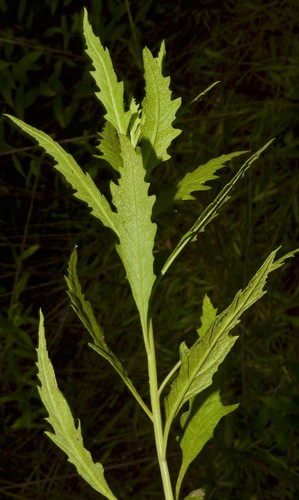
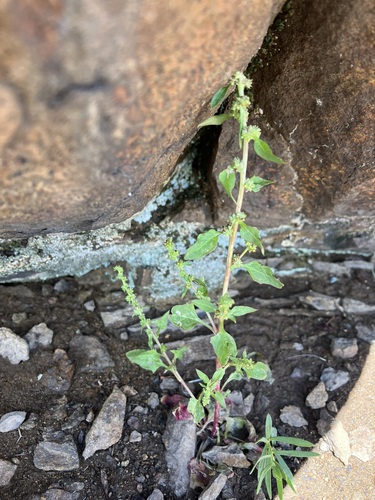
Sericostachys scandens
Gilg et Lopr.
iNaturalist· cc-by-nc
(c) Botanica, some rights reserved (CC BY-NC), uploaded by Botanica
iNaturalist· cc-by-nc
(c) thomasundtoni, some rights reserved (CC BY-NC)
Description
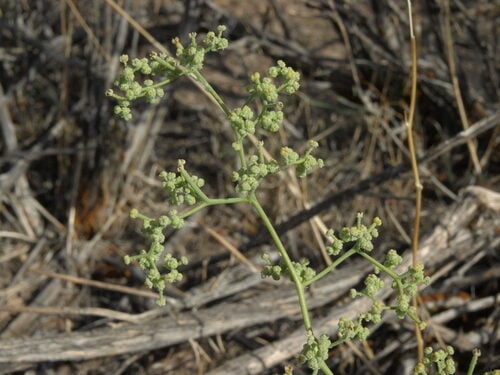
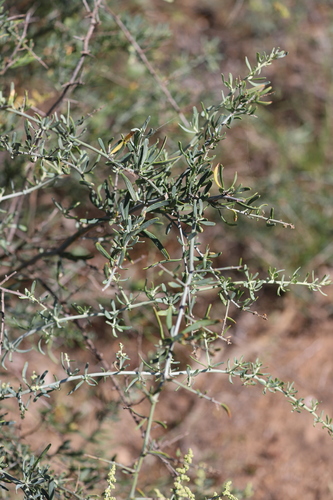
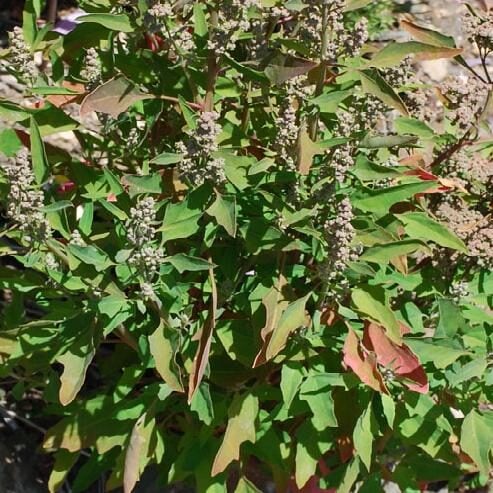
A stout climber or shrub. It grows 20 m high. The leaves are opposite. The leaf blade is 8 cm long by 3 cm wide. The leaves are narrowed at both ends. The leaf stalk is 12 mm long. The flowers are in the axils of leaves in 3-4 spikes. The fruit is a thin walled oval capsule. It is 3 mm long and has one seed. The seeds is almost 3 mm long. It is shiny brown.
Edible Uses
The leaves are cooked and eaten as a vegetable.
Traditional Uses
The leaves are cooked and eaten as a vegetable.
This uses section is brief — help expand it
Medicinal Uses
The leaves are applied as a poultice on wounds. A medicine used in the treatment of venereal diseases is prepared from the bark.
Distribution
A tropical plant. It grows in forests in West Africa growing into the canopy. In East Africa it grows between 1,200-2,600 m altitude. It is often near rivers and lakes.
Where It Grows
Africa, Angola, Cameroon, Central Africa, Central African Republic, CAR, Congo, Côte d'Ivoire, East Africa, Equatorial Guinea, Ethiopia, Ivory Coast, Kenya, Malawi, Nigeria, Rwanda, Sudan, Uganda, West Africa,
Cultivation
The plant is thought to flower only once every 7 - 8 years in Kenya. Another report says that the plant can be found flowering throughout the year. This probably means that the plant flowers in low concentrations most of the time, but only at certain intervals does mass flowering take place.
Other Uses
A key species for the production of honey in the forest.
Other Information
A minor vegetable.
Notes
There is only one Sericostachys species.
Synonyms
References (10)
- Burkill, H. M., 1985, The useful plants of west tropical Africa, Vol. 1. Kew.
- Grubben, G. J. H. and Denton, O. A. (eds), 2004, Plant Resources of Tropical Africa 2. Vegetables. PROTA, Wageningen, Netherlands. p 461
- Harris, D. J., 2002, The vascular plants of the Dzanga-Sangha Reserve, Central African Republic. National Botanic Garden of Belgium, 2002. – 274 pages p 39
- Jardin, C., 1970, List of Foods Used In Africa, FAO Nutrition Information Document Series No 2.p 100
- JSTOR Global Plants edible
Show all 10 references Hide references
- Martin, F.W. & Ruberte, R.M., 1979, Edible Leaves of the Tropics. Antillian College Press, Mayaguez, Puerto Rico. p 174
- Thiselton-Dywer, W.T., (Ed.), 1913, Flora of Tropical Africa. Vol VI-section 1. Reeve, p 71
- von Katja Rembold, 2011, Conservation status of the vascular plants in East African rain forests. Dissertation Universitat Koblenz-Landau p 182
- White, F., Dowsett-Lemaire, F. and Chapman, J. D., 2001, Evergreen Forest Flora of Malawi. Kew. p 121
- World Checklist of Useful Plant Species 2020. Royal Botanic Gardens, Kew