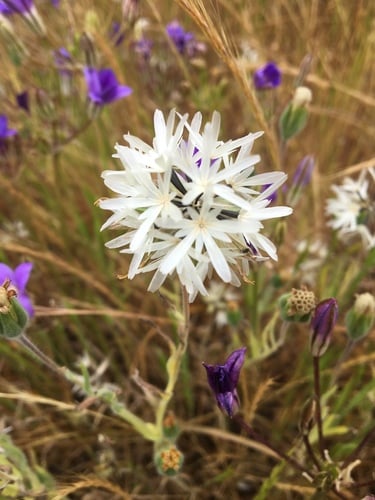
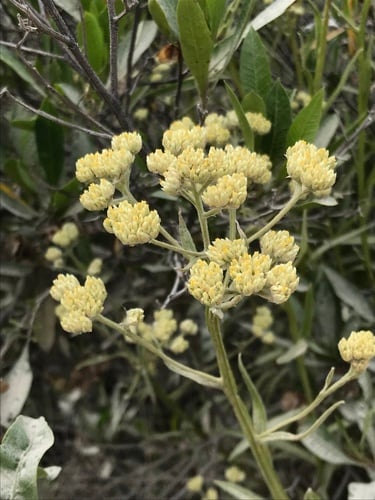
Scolymus maculatus
L.
Spotted thistle, Spotted golden thistle
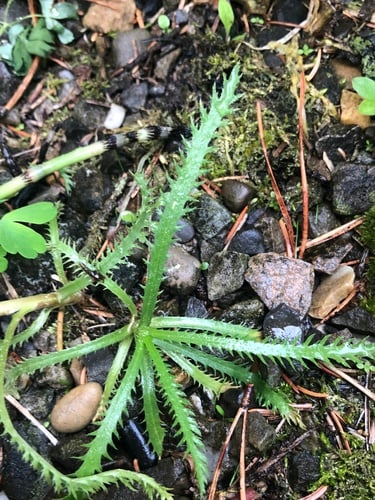
iNaturalist· cc-by-nc-sa
(c) Tamsin Carlisle, some rights reserved (CC BY-NC-SA)
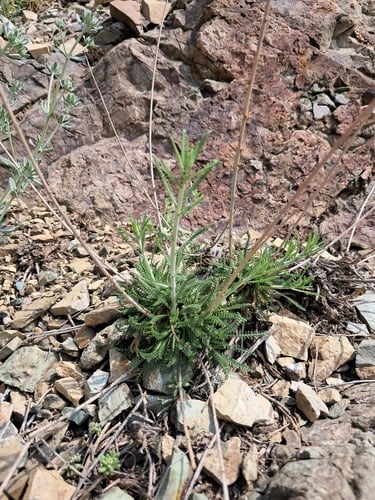
iNaturalist· cc-by-nc
(c) faluke, some rights reserved (CC BY-NC), uploaded by faluke
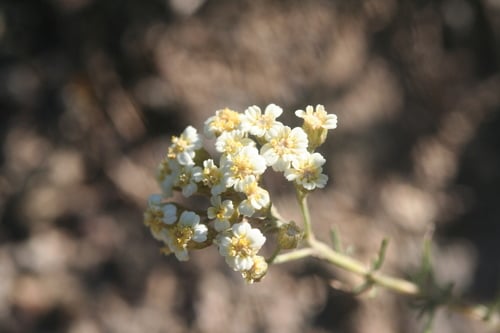
iNaturalist· cc-by-nc
(c) Uriah Resheff, some rights reserved (CC BY-NC), uploaded by Uriah Resheff
Summary
Source: WikipediaScolymus maculatus is a spiny annual plant in the family Asteraceae. It is known as scolyme taché in French, cardogna macchiata in Italian, cardo borriquero in Spanish, and escólimo-malhado in Portuguese, חוח עקוד in Hebrew and سنارية حولية in Arabic. In English it is called spotted golden thistle or spotted oyster thistle. The plant has pinnately incised prickly leaves and prickly wings along the stems, both with a white marginal vein. The yellow flower heads stand solitary or with a few together at the tip to the stems, and subtended by more than five leaflike bracts. It is native to the Mediterranean region in southern Europe, southwest Asia, and northern Africa, and also the Canary Islands.
Description
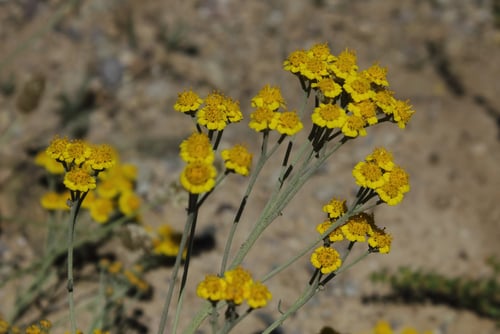
A hairy annual herb plant. It grows 1.5-2 m high. The leaves and wings of the stem have a thick white margin and veins. The flower heads are golden yellow. They are thistle like. They are 20-30 mm across. The corolla of the flower is brown and hairy in the lower half.
Edible Uses
Young leaves can be cooked and used as a spinach. The root is also edible when cooked.
Traditional Uses
The thick root can be prepared the same way as salsify. They are boiled and eaten. The young leaves can be cooked and eaten. They are also used in salads. They can be added to casseroles and omelettes. The young stems can be eaten raw. The spines are removed!
Medicinal Uses
None known.
Distribution
It grows in warm temperate and Mediterranean climates.
Where It Grows
Africa, Australia, Britain, Europe, France, Greece, Italy, Jordan, Mediterranean, Middle East, Morocco, North Africa, Portugal, Sicily,Spain,
Cultivation
Grows well in an ordinary garden soil in sun or semi-shade.
Propagation
Seed: sow in spring or autumn in situ.
Other Uses
None known.
Other Information
It is a commercially cultivated vegetable.
Also Known As
Cardeune, Guernina, Scuoddo, Sinnariah, Tagarnina, Taghediwt
References (22)
- Al-Ismail, A. et al, 2007, Antioxidant Activities of some Edible Wild Mediterranean Plants. Ital. J. Food Sci. n. 3, vol. 19 - 2007 287
- Al-Qura'n, S. A., 2010, Ethnobotanical and Ecological Studies of Wild Edible Plants in Jordan. Libyan Agriculture Research Center Journal International 1(4):231-243
- Biscotti, N. et al, 2018, The traditional food use of wild vegetables in Apulia (Italy) in the light of Italian ethnobotanical literature. Italian Botanist 5:1-24
- Blamey, M and Grey-Wilson, C., 2005, Wild flowers of the Mediterranean. A & C Black London. p 459
- Della, A., et al, 2006, An ethnobotanical survey of wild edible plants of Paphos and Larnaca countryside of Cyprus. J. Ethnobiol. Ethnomed. 2:34
Show all 22 references Hide references
- Facciola, S., 1998, Cornucopia 2: a Source Book of Edible Plants. Kampong Publications, p 41
- Geraci, A., et al, 2018, The wild taxa utilized as vegetables in Sicily (Italy): a traditional component of the Mediterranean diet. Journal of Ethnobiology and Ethnomedicine (2018) 14:14
- Hedrick, U.P., 1919, (Ed.), Sturtevant's edible plants of the world. p 600
- Hermandez Bermejo, J.E., and Leon, J. (Eds.), 1994, Neglected Crops. 1492 from a different perspective. FAO Plant Production and Protection Series No 26. FAO, Rome. p 263, 326
- Jardin, C., 1970, List of Foods Used In Africa, FAO Nutrition Information Document Series No 2.p 99
- Kays, S. J., and Dias, J. C. S., 1995, Common Names of Commercially Cultivated Vegetables of the World in 15 languages. Economic Botany, Vol. 49, No. 2, pp. 115-152
- Lazarides, M. & Hince, B., 1993, Handbook of Economic Plants of Australia, CSIRO. p 214
- Licata, M., et al, 2016, A survey of wild plant species for food use in Sicily (Italy) – results of a 3-year study in four Regional Parks. Journal of Ethnobiology and Ethnomedicine 12:12
- Lim, T. K., 2015, Edible Medicinal and Non Medicinal Plants. Volume 9, Modified Stems, Roots, Bulbs. Springer p 76
- Low, T., 1991, Wild Herbs of Australia and New Zealand. Angus & Robertson. p 37 (Drawing)
- Martin, F.W. & Ruberte, R.M., 1979, Edible Leaves of the Tropics. Antillian College Press, Mayaguez, Puerto Rico. p 186
- Nassif, F., & Tanji, A., 2013, Gathered food plants in Morocco: The long forgotten species in Ethnobotanical Research. Life Science Leaflets 3:17-54
- Pasta, S., et al, 2020, An Updated Checklist of the Sicilian Native Edible Plants: Preserving the Traditional Ecological Knowledge of Century-Old Agro-Pastoral Landscapes. Frontiers in Plant Science. Volume 11|Article 388
- Plants for a Future database, The Field, Penpol, Lostwithiel, Cornwall, PL22 0NG, UK. http://www.scs.leeds.ac.uk/pfaf/
- Sp. pl. 2:813. 1753
- Tardio, J., et al, 2006, Ethnobotanical review of wild edible plants in Spain. Botanical J. Linnean Soc. 152, 27-71
- Tukan, S. K., et al, 1998, The use of wild edible plants in the Jordanian diet. International Journal of Food Sciences and Nutrition. 49:225-235