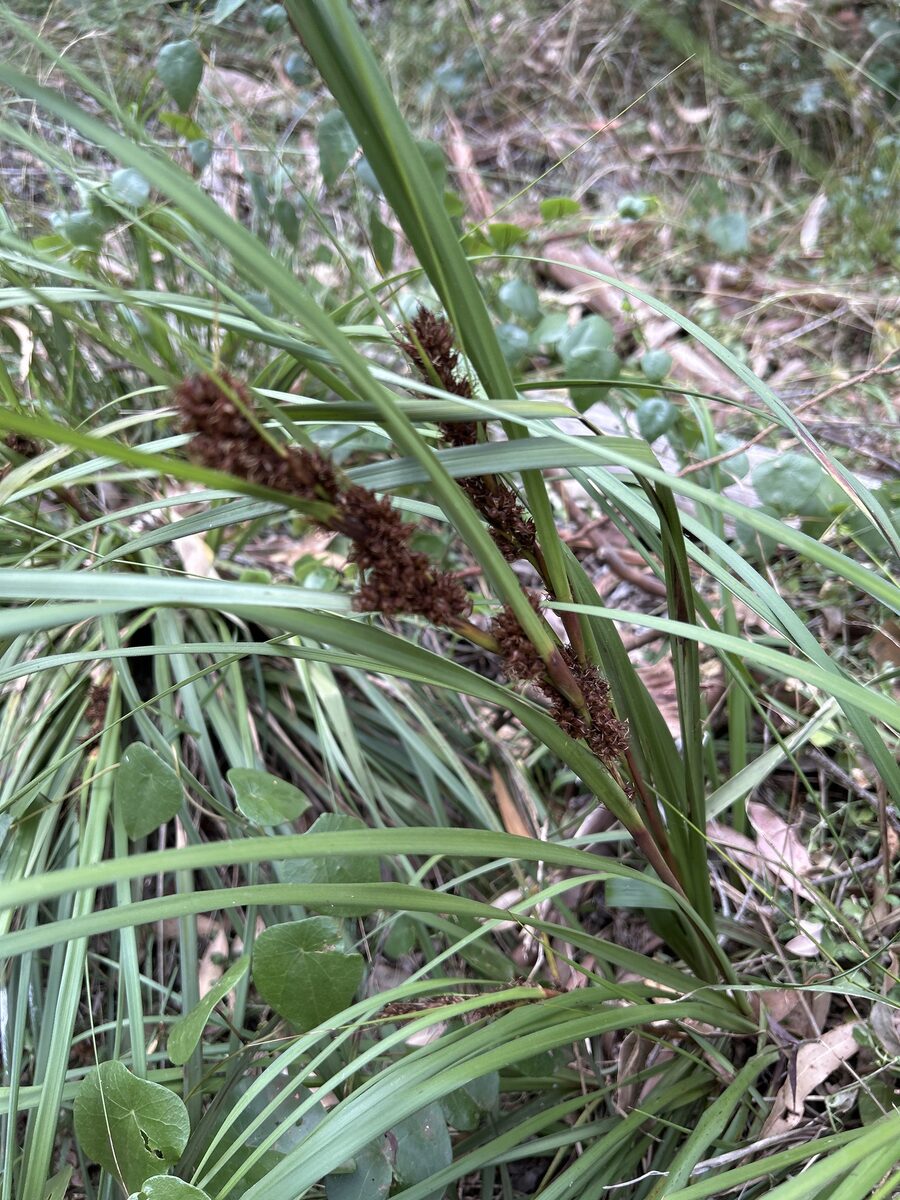
Actinoscirpus grossus
(L.f.) Goetgh and D. A. Simpson
Giant bulrush, Greater club-rush
iNaturalist· cc-by-nc
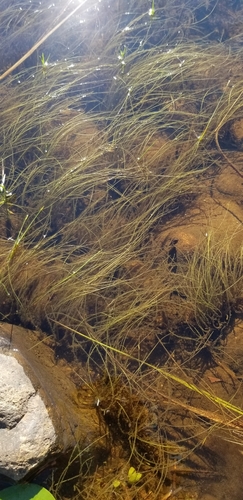
(c) Tony Iwane, some rights reserved (CC BY-NC), uploaded by Tony Iwane
iNaturalist· cc-by
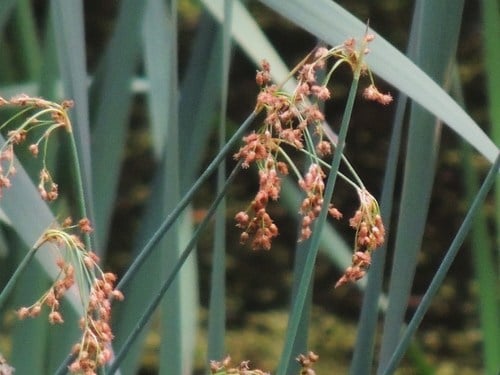
(c) Rongrong Angkaew, some rights reserved (CC BY), uploaded by Rongrong Angkaew
iNaturalist· cc-by
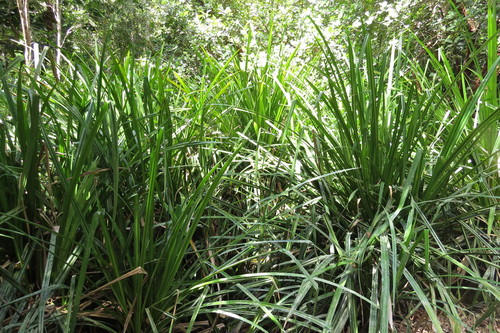
(c) Oleg Kosterin, some rights reserved (CC BY), uploaded by Oleg Kosterin
Description
A coarse sedge with triangular stems up to 2 m high. It develops runners. The stems are sharply triangle shaped. The edges are rough and it curves inwards. The leaves are about half the length of the stem. The leaf sheaths are 14-20 cm long. The leaf blade is 60-100 cm long and 1-2 cm wide. The large flower clusters have broad leaf-like bracts up to 60 cm long.
Edible Uses
The roots are edible after proper processing: they must be crushed, burnt, dried, and ground into flour before cooking.
Traditional Uses
CAUTION: The roots are poisonous unless properly processed. The roots are edible after proper processing and then cooked. They are crushed and burnt then ground into flour. They are dried before being ground into flour. (NB Drying often removes a poison.)
Medicinal Uses
The tubers of A. grossus are used in folk medicine as a treatment for liver disease, although experimental evidence to support this is limited. Ganapathi et al. (2018) showed a protective effect of ethanolic extract of the A. grossus tubers when treating ethanol-induced hepatotoxicity in rats; treatment of the extract significantly restored the liver enzymes, reduced lipid peroxidation, and restored altered catalase and glutathione peroxidase activity.
Known Hazards
The roots are poisonous unless properly processed (dried and burnt before grinding into flour).
Distribution
A tropical plant. Common in open swamps at low altitudes and widely distributed in the Philippines. In southern China it grows in paddy fields and moist places between 100-900 m above sea level. In Yunnan.
Where It Grows
Asia, Australia, Cambodia, China, Himalayas, India, Indochina, Indonesia, Japan, Laos, Malaysia, Myanmar, Nepal, Pacific, Pakistan, Papua New Guinea, PNG, Philippines, SE Asia, Sri Lanka, Taiwan, Thailand, Vietnam,
Notes
Chemical composition (after Paton & Dunlop) (grams per 100g): Protein = 4.12g. Fat = 1.0g. Carbohydrate (soluble) = 76.18g. Fibre = 6.80g. Ash = 3.40g. Water = 8.50g. Calories = 338.
Synonyms
Also Known As
Dila, Gunda-tunga gaddi, Gundaro, Jomekesari, Kachar, kaandaa, Kachera, Kasara, Kaseru, Kaseruka, Kasoor maati, Kasuru, Kesar, Kesari, Kesur, Ketemboh, Kherasi, Lingi, Mansiang, Mansiro, Marangkhesari, Mesiang, Reduk, Rumput menderong, Rumput morong, Santara, Tikiu, Walingi, Wlingen
References (15)
- Ambasta S.P. (Ed.), 2000, The Useful Plants of India. CSIR India. p 559
- BHARGAVA,
- Burkill, I.H., 1966, A Dictionary of the Economic Products of the Malay Peninsula. Ministry of Agriculture and Cooperatives, Kuala Lumpur, Malaysia. Vol 2 (I-Z) p 2016
- Dey, A. & Mukhererjee, A., 2015, Living and Survival Amidst Hunger: Wild Edible Botanicals as a Prime Forest Productivity in the Rural Purulia District, West Bengal, India from Colonial to Present. Research Journal of Forestry 9(3): 71-86
- Flora of Pakistan. www.eFloras.org
Show all 15 references Hide references
- Hedrick, U.P., 1919, (Ed.), Sturtevant's edible plants of the world. p 598
- Leach, G.J., & Osborne, P.L., 1985, Freshwater Plants of Papua New Guinea. UPNG Press, p 118
- Lim, T. K., 2015, Edible Medicinal and Non Medicinal Plants. Volume 9, Modified Stems, Roots, Bulbs. Springer p 75
- Monsalud, M.R., Tongacan, A.L., Lopez, F.R., & Lagrimas, M.Q., 1966, Edible Wild Plants in Philippine Forests. Philippine Journal of Science. p 457
- PATON & DUNLOP,
- PROSEA handbook Volume 9 Plants yielding non-seed carbohydrates. p 189
- Setiya, A. V., et al, 2016, Exploration and documentation of some wild edible plants used by the aboriginals from Gadchiroli District (M.S.) India. International Advanced Research Journal in Science, Engineering and Technology. 3(7) (As Scirpus grossus)
- Singh, G. & Kumar, J., 2014, Studies on Indigenous Traditional Knowledge of some Aquatic and Marshy Wild Edible Plants used by the Munda Tribe of District Khunti, Jharkhand, India. International Journal of Bioassays. 3(2), 1738-1743
- Suppl. pl. 104. 1782 ("1781")
- World Checklist of Useful Plant Species 2020. Royal Botanic Gardens, Kew