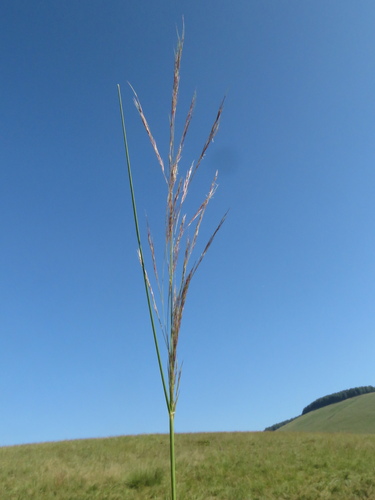
Schizostachyum brachycladum
Kurz.
Sacred Bali bamboo
iNaturalist· cc-by-sa
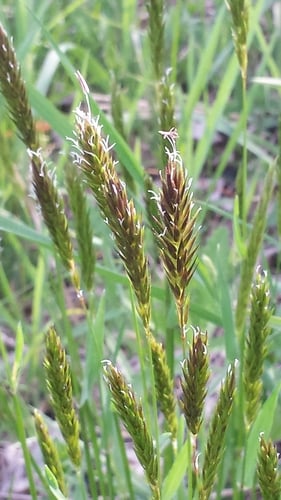
(c) Wie146,保留部分权利(CC BY-SA)
iNaturalist· cc-by-sa
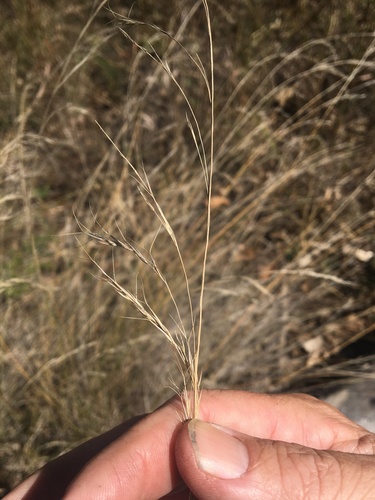
(c) Wie146,保留部分权利(CC BY-SA)
iNaturalist· cc-by-nc-sa
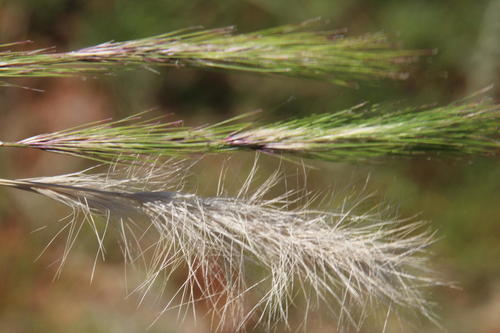
(c) 106611639464075912591,保留部分权利(CC BY-NC-SA), 由 106611639464075912591 上传
Description
An erect bamboo. It forms dense clumps. It grows about 10-20 m high and 5-10 cm across the stem. The shoots are smooth and with shorter internodes than Schizostachyum lima. They are 20-50 cm long. The sheaths stay on the stem and have reddish hairs. The leaves are sword shaped and hairy underneath.
Edible Uses
The young shoots are cooked and eaten.
Traditional Uses
The young shoots are cooked and eaten.
This uses section is brief — help expand it
Distribution
A tropical plant. It grows in secondary forests up to 600 m above sea level. Common in the Philippines in Palawan and Culion on dry open slopes. Also occurs in Nueva Nizcaya, Leyte, Butuan and Palawan. In the Cairns Botanical Gardens. In XTBG Yunnan.
Where It Grows
Asia, Australia, China, Indochina, Indonesia, Laos, Malaysia, Pacific, Philippines, SE Asia, Singapore, Taiwan, Thailand,
Cultivation
Plants can be grown from seeds and suckers.
Propagation
Seed - rarely formed. Rhizome cuttings, consisting of a rhizome part, roots and a culm part, are the most common method of propagation. Cuttings should be planted at the beginning of the rainy season, horizontally and with fresh buds side- ways, about 20 - 30 cm deep. The soil should be finely crumbed. Recommended spacing is 3 x 3 metres. Culm cuttings.
Other Uses
The culms are widely used for purposes such as roofs (split lengthwise as for the Toraja rice barn and traditional house in Sulawesi), water containers, handicrafts, banana props and as a container for cooking glutinous rice ('lemang'). The culms are 10 - 15 metres long and 60 - 80mm in diameter with a thin wall that is easily split. The internodes are used for making water pipes to smoke tobacco; decorated with a pattern carved in low relief ('serobok'), also for various carved containers, for instance, the one used for holy wine served during the Gawai festival ('Garong basket'). The internodes are 20 - 50cm long. Clothes have been made from the fibres in the culm. The fibres are quite easy to separate from the internodes; they are strong and supple and can be woven into cloth. Traditionally, the soft inner part of the culms were chewed and washed to extract the fibres. Planted on hill slopes to prevent landslides.
Other Information
It is cultivated.
Synonyms
Also Known As
Bagakan, Bambu gading suci, Buloh nipis, Buloh urat rusa, Buloh pelang, Phai pho, Pulu bulu telang
References (9)
- Burkill, I.H., 1966, A Dictionary of the Economic Products of the Malay Peninsula. Ministry of Agriculture and Cooperatives, Kuala Lumpur, Malaysia. Vol 2 (I-Z) p 2011
- Hibbert, M., 2002, The Aussie Plant Finder 2002, Florilegium. p 288
- Hoare, A., 2003, Food use of the Lundayeh SW Sabah. Borneo Research Council.
- Martin, F.W. & Ruberte, R.M., 1979, Edible Leaves of the Tropics. Antillian College Press, Mayaguez, Puerto Rico. p 194
- Monsalud, M.R., Tongacan, A.L., Lopez, F.R., & Lagrimas, M.Q., 1966, Edible Wild Plants in Philippine Forests. Philippine Journal of Science. p 473
Show all 9 references Hide references
- PROSEA
- Sukarya, D. G., (Ed.) 2013, 3,500 Plant Species of the Botanic Gardens of Indonesia. LIPI p 850
- Terra, G.J.A., 1973, Tropical Vegetables. Communication 54e Royal Tropical Institute, Amsterdam, p 27
- Zeven, A. C. & de West, J. M. J., 1982, Dictionary of cultivated plants and their regions of diversity. Wageningen. p 55