Sarcocornia quinqueflora
(Bunge ex Ung.-Sternb.) A. L. Scott;
Samphire, Beaded Glasswort, Marsh samphire, Beaded samphire, Ureure, Glasswort, Chicken-claws, Salthorn
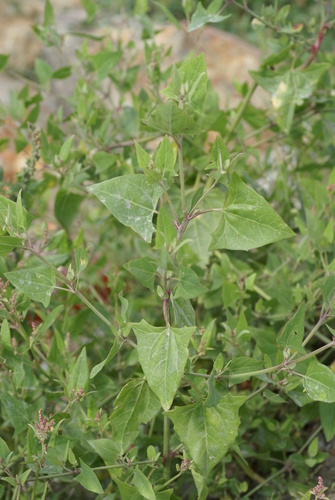
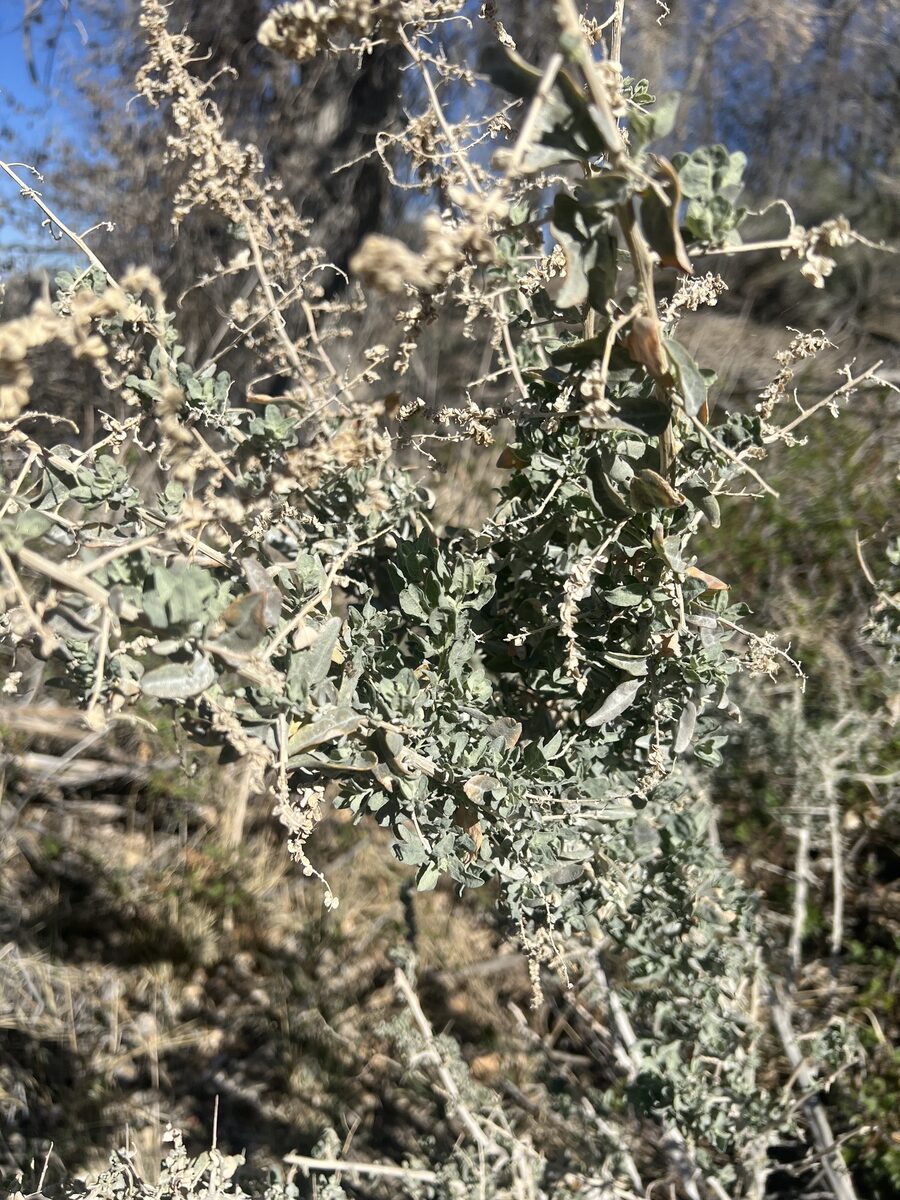
iNaturalist· cc-by-nc
(c) David Spencer Muirhead, some rights reserved (CC BY-NC)
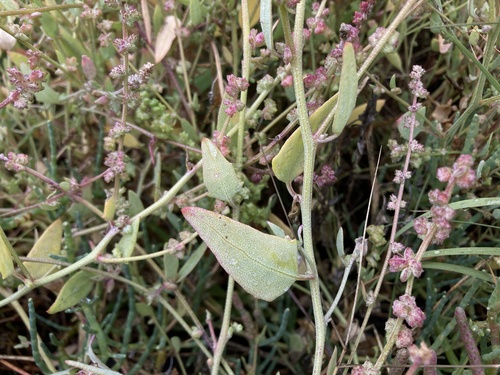
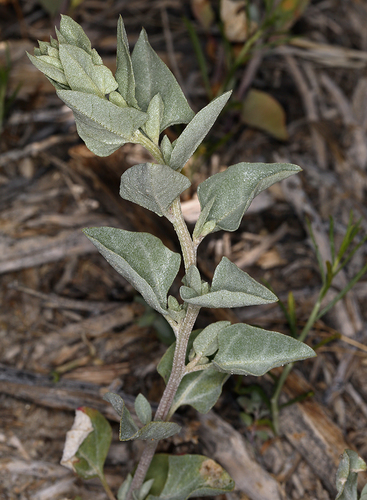
iNaturalist· cc-by-nc
(c) tangatawhenua, some rights reserved (CC BY-NC)
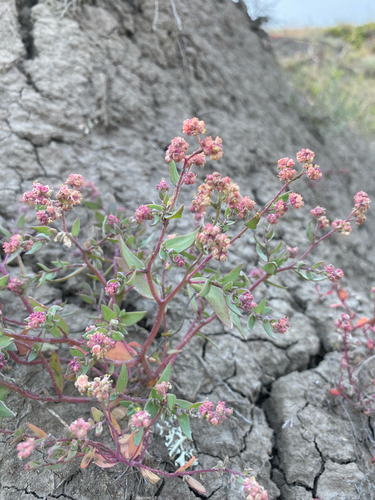
iNaturalist· cc-by-nc
(c) Max Clark, some rights reserved (CC BY-NC)
Description
A low growing plant. It keeps growing from year to year. It is a leafless plant. It grows 20-50 cm high. The stems are succulent and greenish red. These are clearly divided into segments. These are 2 cm long by 0.5 cm wide. They root at the nodes. The flowers are small and yellow. They appear at the joints of the segments near the ends of the stems. The flowers occur in rows of more than 3. The seeds are round with slightly hooked hairs. From the small spikes 5-8 cm high, jointed shoots extend upwards. It has a series of finger joints about 3-4 mm across.
Edible Uses
The succulent stems can be eaten raw or cooked, added fresh to salads, or pickled. The very young shoots can be boiled and eaten like asparagus, with water changes recommended during cooking to reduce saltiness.
Traditional Uses
The stems can be eaten raw or cooked. It can be eaten fresh in salads. They can also be pickled. The very young shoots can be boiled then eaten like asparagus. It is often best to change the cooking water.
Distribution
It is a temperate plant. It occurs in the wetter parts of the salt marshes. It also grows in other wet coastal locations. It grows on coral rocks near the sea. It is salt tolerant. It grows near water in salt marshes and in tide lands.
Where It Grows
Australia*, Britain, Europe, New Caledonia, New Zealand, Norfolk Island, Tasmania*,
Cultivation
Plants can be grown by division. They need to be in a salty situation.
Notes
There are about 15 Sarcocornia species. They grow in salty locations. Also put in the family Chenopodiaceae.
Synonyms
References (24)
- Breidahl H., 1997, Australian Southern Shores. Lothian. p 148
- Caton, J.M. & Hardwick, R. J., 2016, Field Guide to Useful Native Plants from Temperate Australia. Harbour Publishing House. p 98
- Cherikoff V. & Isaacs, J., The Bush Food Handbook. How to gather, grow, process and cook Australian Wild Foods. Ti Tree Press, Australia p 196
- Cribb, A.B. & J.W., 1976, Wild Food in Australia, Fontana. p 128 (As Salicornia quinqueflora)
- Crowe, A., 1997, A Field Guide to the Native Edible Plants of New Zealand. Penguin. p 79
Show all 24 references Hide references
- Curtis, W.M., 1993, The Student's Flora of Tasmania. Part 3 St David's Park Publishing, Tasmania, p 577 (As Salicornia quinqueflora)
- Dashorst, G.R.M., and Jessop, J.P., 1998, Plants of the Adelaide Plains & Hills. Botanic Gardens of Adelaide and State Herbarium. p 60
- Flora of Australia, Volume 4, Phytolaccaceae to Chenopodiaceae, Australian Government Publishing Service, Canberra (1984) p 278
- Flora of Australia Volume 49, Oceanic Islands 1, Australian Government Publishing Service, Canberra. (1994) p 84
- Hardwick, R.J., 2000, Nature's Larder. A Field Guide to the Native Food Plants of the NSW South Coast. Homosapien Books. p 38
- Harris, S., Buchanan, A., Connolly, A., 2001, One Hundred Islands: The Flora of the Outer Furneaux. Tas Govt. p 220
- Hastings Advance Community College, 2017, Uses for Native Plants of the Mornington Peninsula. 86pp. p 68
- Howells, C & Gulline, H., 2003, Coastal Plants of Tasmania. Plant Identikit. Australian Plant Society, Tasmania. p 34
- Low, T., 1991, Wild Food Plants of Australia. Australian Nature FieldGuide, Angus & Robertson. p 27
- Low, T., 1992, Bush Tucker. Australia’s Wild Food Harvest. Angus & Robertson. p 19
- Melzer, R. & Plumb, J., 2011, Plants of Capricornia. Belgamba, Rockhampton. p 518
- Paczkowska, G. & Chapman, A.R., 2000, The Western Australian Flora. A Descriptive Catalogue. Western Australian Herbarium. p 208
- Plants for a Future database, The Field, Penpol, Lostwithiel, Cornwall, PL22 0NG, UK. http://www.scs.leeds.ac.uk/pfaf/ (As Salicornia quinqueflora)
- Robins, J., 1996, Wild Lime. Cooking from the Bush food garden. Allen & Unwin p 121
- Ryan, M. (Ed.), 2003, Wild Plants of Greater Brisbane. Queensland Museum. p 39
- Skinner, G. & Brown, 1981, C., Simply Living. A gatherer's guide to New Zealand's fields, forests and shores. Reed. p 20 (As Salicornia australis)
- Tasmanian Herbarium Vascular Plants list p 22
- Whiting, J. et al, 2004, Tasmania's Natural Flora. Tasmania's Natural Flora Editorial Committee PO Box 194, Ulverstone, Tasmania, Australia 7315 p 47
- Woolmore, E et al, 2002, King Island Flora: A Field Guide. p 38