Triadica sebifera
(L.) Small
Candleberry-tree, Chinese tallowtree, Popcorntree, Vegetable tallow, White wax-berry
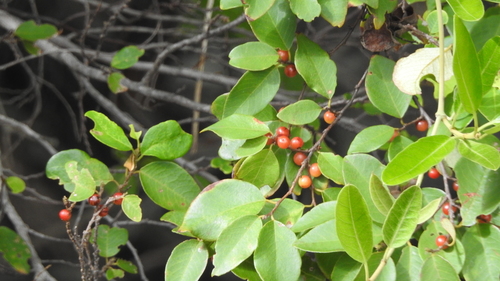
iNaturalist· cc-by-nc
(c) J. Richard Abbott, some rights reserved (CC BY-NC), uploaded by J. Richard Abbott
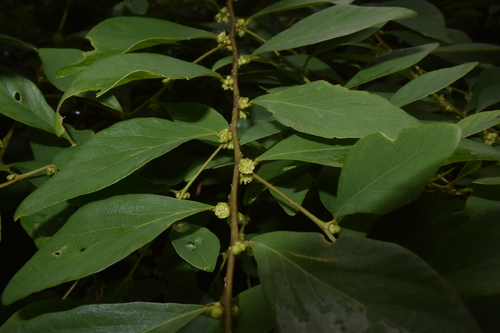
iNaturalist· cc-by-nc
(c) J. Richard Abbott, some rights reserved (CC BY-NC)
iNaturalist· cc-by-nc
(c) Konrad and Roland Greinwald, some rights reserved (CC BY-NC), uploaded by Konrad and Roland Greinwald
Summary
Source: WikipediaTriadica sebifera is a tree native to eastern Asia (Chinese 乌桕, wū jiù). It is commonly called Chinese tallow, Chinese tallowtree, Florida aspen, chicken tree, gray popcorn tree, or candleberry tree. The seeds (as well as from those of Triadica cochinchinensis) are the sources of stillingia oil, a drying oil used in paints and varnishes. The fatty coat of the seeds, used for candle and soap making, is known as stillingia tallow; hence its common name. It is relevant to biodiesel production because it is the third most productive vegetable oil producing crop in the world, after algae and oil palm. The leaves are used as herbal medicine to treat boils. The plant sap and leaves are reputed to be toxic, and decaying leaves from the plant are toxic to other species of plants. The species is classified as a noxious invader in the southern U.S. This species and T. cochinchinensis were formerly classified in the genus Stillingia, as Stillingia sebifera and Stillingia discolor (hence the name still used for the oil and tallow). The specific epithet sebifera is derived from Latin sebum (meaning "tallow") and fero (meaning "to bear"), thus "tallow-bearing". At some time before 1950, this tree was reclassified into the genus Sapium as Sapium sebiferum, and many papers about the oil still refer to the tree by this name. In 2002 or so it was reclassified again into the genus Triadica with its present name.
Description
A tree which loses its leaves. It grows 6-9 m high and spreads 4.5-6 m wide. It has a rounded crown. The leaves are 5-10 cm long. They are rounded or almost diamond shaped and dull green. The leaves turn orange or red in autumn. The flowers are yellow-green. The fruit are about the size of peas. The fruit splits open to reveal 3 seeds. These are covered with a layer of pure wax. The seeds are 6 mm across.
Edible Uses
The seed oil can be used in food after refining. Seed flour can also be refined into flour fit for eating. The outer waxy covering of the seed has been used as a substitute for lard or cacao butter.
Traditional Uses
The seed oil can be used in food after refining. The seed flour can also be converted by refining into flour fit for eating. The outer waxy covering of the seed has been used as a substitute for lard or cacao butter
Medicinal Uses
The leaves and the roots are depurative, diuretic and laxative. A decoction is used in the treatment of oedema, constipation, poisoning by two plants - Polygonum perfoliatum and Tripterygium wilfordii, skin diseases etc. The leaves are particularly useful for treating boils and shingles. The seed is antidote, emetic, hydragogue and purgative. In China it is taken internally, which is a rather questionable practice considering its toxic nature. The root bark is diuretic. It is used in the treatment of snake bites and skin ulcers. It is said to be effective in the treatment of schistosomiasis. The juice of the tree (the sap is probably meant here) is acrid and vesicant.
Known Hazards
The seed's white waxy aril is used in soap making (stillingia tallow). While the seed's inner oil (stillingia oil) is toxic but has industrial applications in the manufacturing of cloth dressing and drying oils. The nectar is non-toxic, and it has become a major honey plant for beekeepers. The honey produced from the plant is reputedly clear and of high quality. It is produced copiously during the month of June on the US Gulf Coast. In that region, beekeepers migrate with their honey bees to good tallow locations near the gulf. The tree is ornamental, fast growing, and provides shade. It is especially noteworthy if grown in areas that have strong seasonal temperature ranges with the leaves becoming a multitude of colours rivaling maples in the autumn. It is not choosy about soil types or drainage, but will not grow in deep shade. It has naturalized all over in Japan, and is reasonably hardy. It should not be planted outside of its native range due to its invasive tendencies.
Distribution
It grows in forests on limestone below 100 m above sea level in China. It suits hardiness zones 8-11. In Sichuan and Yunnan.
Where It Grows
Africa, Asia*, Australia, Britain, Caucasus, China, Europe, India, Indochina, Indonesia, Japan, Korea, Laos, North America, SE Asia, Taiwan, USA, Vietnam,
Cultivation
Plants can be grown from seeds or cuttings.
Propagation
Seed - do not cold stratify the seed since this can lead to secondary dormancy. It usually germinates within 4 weeks. Prick out the seedlings into individual pots when they are large enough to handle and plant out when large enough. Cuttings of half-ripe wood. Layering. Suckers
Other Uses
The seed is coated with a wax known as Chinese vegetable tallow. This wax, which comprises about 24% of the seed, can be used to make candles and soap. It has excellent burning quality, and gives an inodorous clear bright flame. The wax is also used for making soap, cloth dressing and fuel. Pure tallow fat is known in commerce as Pi-yu. The wax is separated from the seed by steeping it in hot water and skimming off the wax as it floats to the surface. The wax is solid at temperatures below 40°c. It is said to change grey hair to black. The seed contains about 20% of a drying oi known as Stillingia oill. It is used to make candles and soap. The oil is used in making varnishes and native paints because of its quick-drying properties, and as a waterproofing for umbrellas. It is also used in machine oils and as a crude lamp oil. The pure oil expressed from the inner part of the seeds is known in commerce as Ting-yu. The residual cake, after the oil is expressed, is used as a fuel or a manure, particularly for tobacco fields. The leaves are rich in tannin. A black dye can be obtained by boiling them in alum water. It is used to dye silk black. The plant is used as a soil binder along the sides of roads and canals. The wood is used as an incense. The wood is white, even and close grained, light, soft or moderately hard. It is suitable for carving and is also used for making blocks in Chinese printing, furniture making, toys. The wood is light and soft. It is used for fuel. Vegetable tallow is used for various purposes in agroforestry. A fast-growing plant, it is a good soil binder and contributes to nutrient recycling. When growing in areas polluted by heavy metals it has been shown to concentrate various of these metals in its tissues. It has a potential for use in phytoremediation projects as a means of locking these metals up and helping to restore the fertility of the soil It is used as a shade tree in tea plantations. Because it has a high woody-biomass production, the plant is potentially an important source of energy. In the United States the plant showed itself to be an interesting woody biomass supplier for energy production on poorly drained and saline soils in the hot southern coastal region, yielding 6 - 10 tonnes per hectare dry biomass (leaves, wood and seed) per year.
Other Information
It is cultivated.
Notes
There are 3 Triadica species. The oil is used in medicine and for soap.